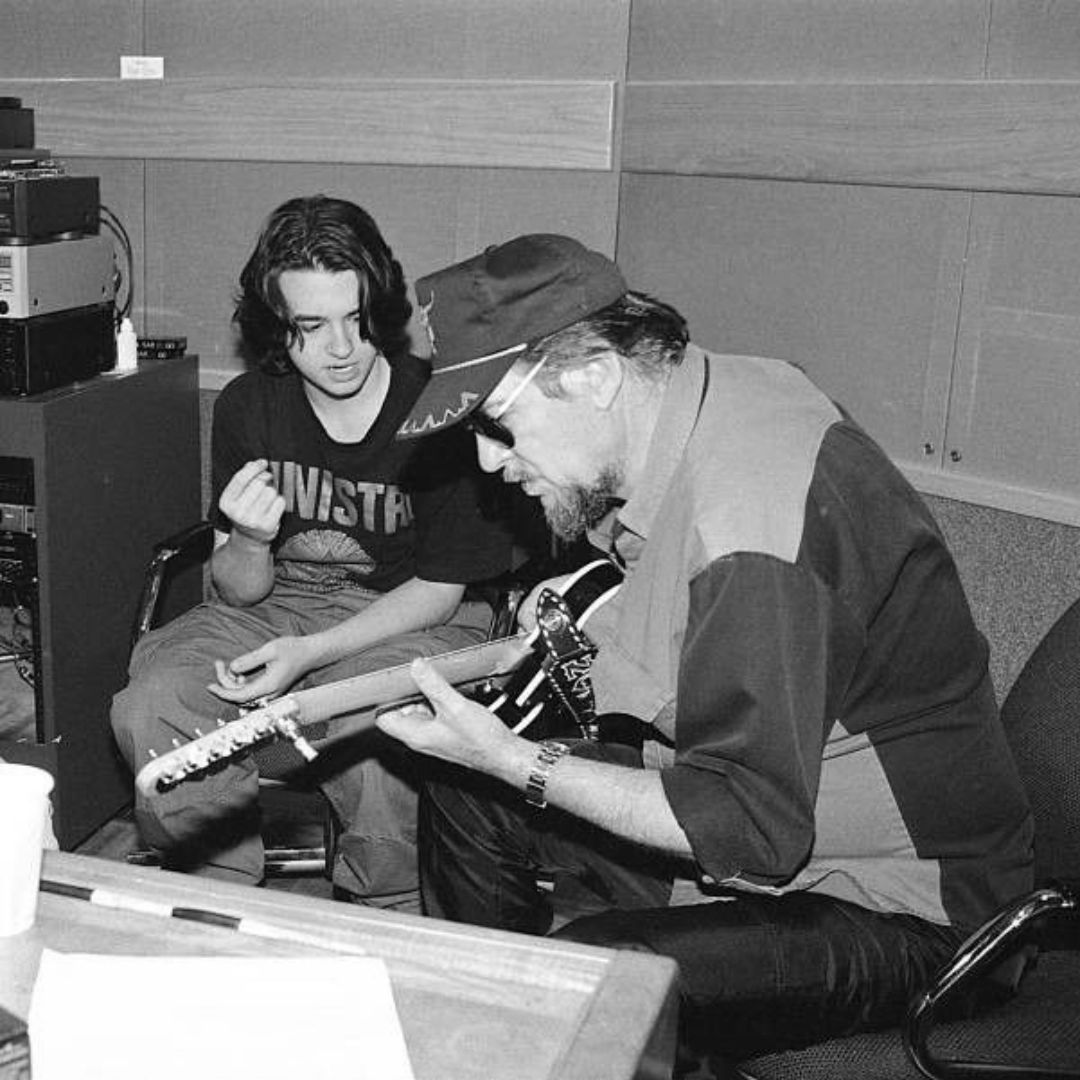
In the summer of 2024, Shooter Jennings began searching through hundreds of old recording tapes left behind by Waylon Jennings. The tapes had been sitting in storage for decades, many without proper labels. Shooter Jennings knew at least one unreleased song was somewhere in the collection.
What Shooter Jennings found was far beyond anything expected: enough previously unheard recordings to create three albums of Waylon Jennings music, more than twenty years after the country legend’s death.
And the greatest surprise wasn’t simply how many songs had survived. It was the side of Waylon Jennings those recordings revealed.
The Music Waylon Jennings Left Behind
Waylon Jennings died on February 13, 2002, at age 64. By then, Waylon Jennings had helped change country music forever, becoming one of the defining figures of the outlaw country movement.
But throughout the 1970s and early 1980s, Waylon Jennings had also spent countless hours recording music with The Waylors, often between touring commitments.
Not everything recorded during those sessions made it onto an album.
As country music production changed during the 1980s, some of those older recordings were left behind. Shooter Jennings later explained that the traditional sound of those sessions had fallen out of fashion as Nashville moved toward more polished production.
The tapes remained in the family archives.
By 2024, Shooter Jennings had both the technical experience and the opportunity to explore that collection properly. Working at Sunset Sound Studio 3 in Hollywood, Shooter Jennings began reviewing recordings dating from roughly 1973 through 1984.
The discovery was remarkable. These weren’t simply unfinished song ideas or rough home demos. Many featured complete performances by Waylon Jennings and The Waylors, with vocals and instruments already recorded.
For Shooter Jennings, the material was also a chance to hear parts of Waylon Jennings’ musical life that had never been shared with the public.
Bringing The Waylors Back Together
Shooter Jennings faced an unusual responsibility. The recordings were decades old, and some of the original musicians had died. Yet the goal wasn’t to make Waylon Jennings sound like a modern country artist.
The goal was to preserve what had already been recorded.
Most of the music needed very little additional work. Where certain arrangements required finishing touches, Shooter Jennings invited surviving members of The Waylors to participate.
Guitarist Gordon Payne, bassist Jerry Bridges, keyboardist Barny Robertson, and backing vocalist Carter Robertson contributed to portions of the project.
That decision mattered. Rather than asking unfamiliar session musicians to imitate the old records, Shooter Jennings brought back people who had actually helped create the original sound.
The old recordings already contained contributions from musicians including drummer Richie Albright and steel guitarist Ralph Mooney.
In interviews, Shooter Jennings described hearing laughter, casual conversations, and moments between takes. Those small details revealed the easy relationship between Waylon Jennings and the musicians who spent years working together.
Why a Fleetwood Mac Song Became the Centerpiece
One of the most unexpected discoveries was Waylon Jennings’ version of “Songbird,” written by Christine McVie and originally released on Fleetwood Mac’s 1977 album Rumours.
For an artist remembered for songs such as “Good Hearted Woman” and “Are You Sure Hank Done It This Way,” a gentle Fleetwood Mac ballad might seem like an unusual choice.
But Waylon Jennings had always been interested in good songs, regardless of where they came from.
The recovered performance was already substantially complete. Shooter Jennings kept the original recording largely intact, adding background harmonies from Ashley Monroe and Elizabeth Cook.
The resulting track showcased a quieter, more tender quality in Waylon Jennings’ voice.
And near the end came a small moment that no modern recording session could recreate.
After finishing the song, Waylon Jennings could be heard offering a simple assessment:
“That sounded good.”
Three ordinary words, preserved on tape for decades, became one of the most memorable moments of the project.
A New Waylon Jennings Album in 2025
On October 3, 2025, Songbird was released through Shooter Jennings’ Son of Jessi label.
The ten-track album brought together previously unreleased Waylon Jennings performances, including “The Cowboy (Small Texas Town),” “I’d Like to Love You Baby,” and “I Don’t Have Any More Love Songs.”
For longtime fans, the album offered more than familiar songs in new packaging. These were performances many listeners had never heard before.
Shooter Jennings also explained that Songbird was only the beginning. The archive contained enough material for two additional albums, making the release the first installment in a larger effort to preserve and share Waylon Jennings’ recordings.
The Father Behind the Outlaw Legend
Perhaps the most personal discovery concerned the personality heard between the songs.
Waylon Jennings had spent much of a career associated with independence, rebellion, and a refusal to follow Nashville’s rules.
But the old recordings showed another part of that story: a musician who enjoyed working with friends, experimenting with arrangements, and recording songs simply because the songs appealed to him.
For Shooter Jennings, producing Songbird became a way of understanding Waylon Jennings more fully, both as an artist and as a father.
The project also gave country music fans something few would have expected in 2025: the chance to hear previously unreleased performances by Waylon Jennings with the musicians who knew that voice best.
More than twenty-three years after Waylon Jennings died, a collection of forgotten tapes had become new music for the world to hear.
And at the end of “Songbird,” there was still that familiar voice, calmly acknowledging a performance recorded so many years before.
“That sounded good.”