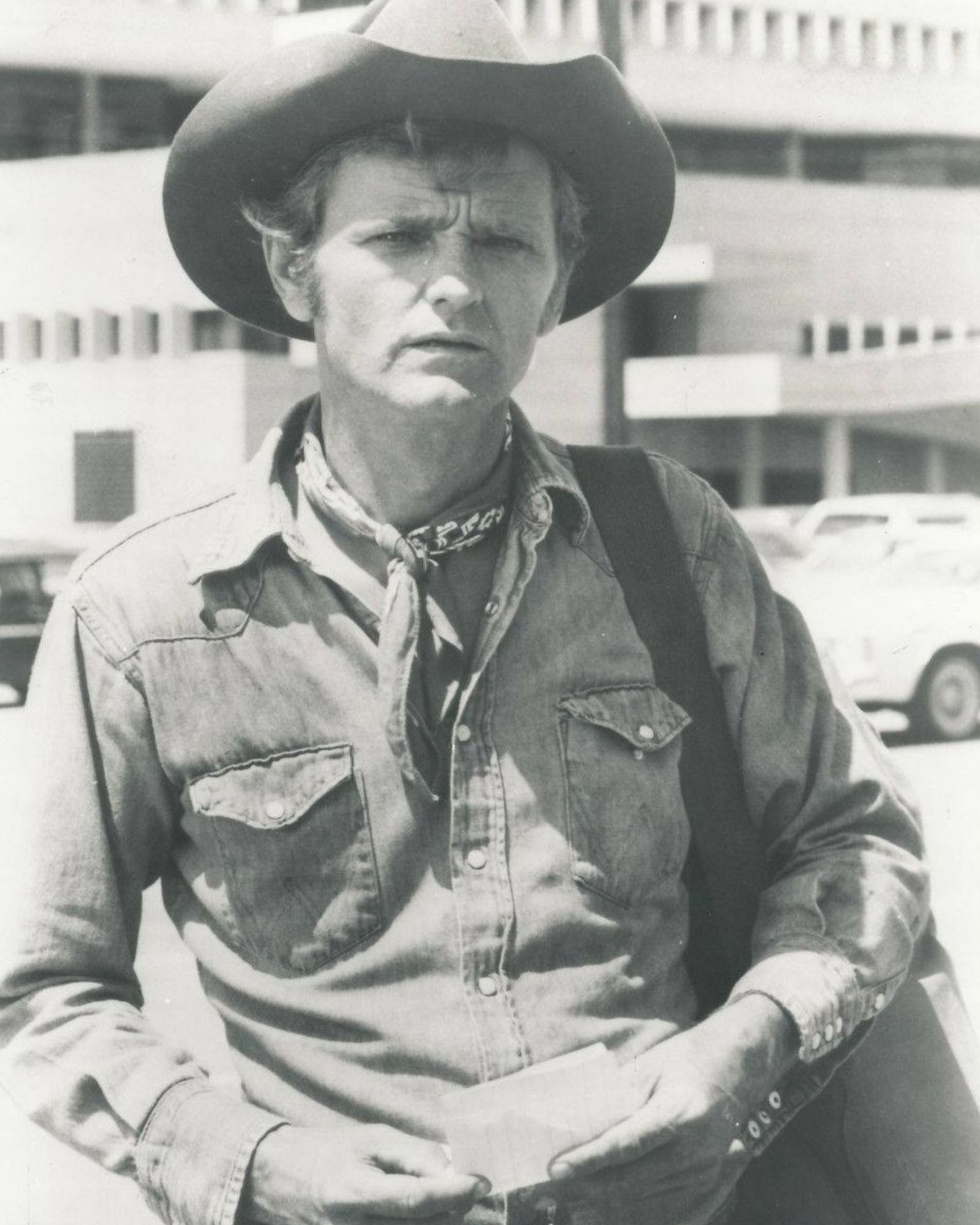
Long before Jerry Reed became one of Nashville’s most remarkable guitarists, there was a young boy in Georgia who wanted to play music so badly that a hairbrush could become a guitar and a pile of firewood could become a stage.
Jerry Reed didn’t own a real instrument then. For years, Jerry Reed had also lived apart from his mother.
But when Cynthia Howard finally had the opportunity to help her son pursue his love of music, Cynthia Howard saved seven dollars and bought a secondhand guitar from a neighbor.
It was a modest beginning for a musician whose playing would one day earn the admiration of Chet Atkins and Elvis Presley.
A Childhood Spent Away From Home
Jerry Reed was born Jerry Reed Hubbard on March 20, 1937, in Atlanta, Georgia. Jerry Reed’s parents, Robert Spencer Hubbard and Cynthia Hubbard, separated when Jerry Reed was still an infant.
Over the following years, Jerry Reed and his sister spent time in orphanages and foster homes across Georgia. The children were eventually reunited with their mother in 1944, after Cynthia married mill worker Hubert Howard.
Music had already captured Jerry Reed’s imagination.
In a 1979 interview with Bob Anderson, Jerry Reed remembered listening to the Grand Ole Opry on the radio as a small child. Jerry Reed would climb onto a pile of stove wood, pretend it was a stage, and use a hairbrush to imitate a guitar.
The performances were make-believe, but the ambition was real. Jerry Reed remembered wanting to entertain people from a remarkably young age.
The Seven-Dollar Guitar
Cynthia Howard saw how much music meant to Jerry Reed and saved seven dollars to purchase a used guitar from a neighbor.
It wasn’t an expensive instrument, and Jerry Reed didn’t have proper guitar picks. According to Jerry Reed’s later recollections, nickel coins sometimes served as substitutes.
More importantly, Cynthia Howard knew enough guitar to give Jerry Reed a beginning.
In the 1979 interview, Jerry Reed remembered the chords Cynthia Howard taught:
“She taught me C and G, a clawhammer G, and I proceeded to drive her crazy.”
Jerry Reed also remembered climbing onto a trunk in the kitchen to perform, still wanting the feeling of standing on a stage.
The boy who once pretended to play guitar was finally making music on a real one.
When Jerry Reed Refused to Put Down the Thumbpick
That inexpensive guitar became the starting point for years of experimentation.
Jerry Reed developed a fascination with fingerstyle playing, especially after hearing Merle Travis. The ability to produce rhythm and melody together on one guitar fascinated Jerry Reed.
But Jerry Reed wasn’t interested in following every conventional rule.
During an interview in 1969, Jerry Reed recalled taking only one or two formal guitar lessons. When the teacher insisted that Jerry Reed abandon the thumbpick, Jerry Reed quit the lessons instead.
Jerry Reed kept experimenting with the techniques that felt natural.
Eventually, the combination of a driving thumb, independent fingers, syncopated rhythms, and unusual musical ideas became part of Jerry Reed’s unmistakable sound.
From a Used Guitar to Elvis Presley
By the 1950s, Jerry Reed was writing songs and pursuing a professional music career. Nashville eventually brought Jerry Reed into the orbit of producer and guitar legend Chet Atkins.
In 1967, Elvis Presley recorded Jerry Reed’s “Guitar Man,” with Jerry Reed providing the distinctive guitar part that helped define the recording.
The same musician who once played along with the Grand Ole Opry using a hairbrush was now playing guitar on a record by one of the world’s most famous entertainers.
Jerry Reed would go on to record celebrated guitar collaborations with Chet Atkins, create hits including “Amos Moses” and “When You’re Hot, You’re Hot,” and introduce movie audiences to “East Bound and Down” through Smokey and the Bandit.
Yet the beginning of that musical journey remained remarkably ordinary.
What Seven Dollars Made Possible
There is no need to imagine that Cynthia Howard knew Jerry Reed would become famous. The available accounts simply describe a mother who recognized her son’s enthusiasm, saved enough money for a used instrument, and showed Jerry Reed how to begin playing.
Talent, persistence, influences, and years of practice all mattered in the career that followed.
But before the Nashville studios, before Elvis Presley, and before the famous guitar recordings with Chet Atkins, there was a seven-dollar guitar and a mother willing to help her son learn.
For Jerry Reed, that was where playing the guitar became more than pretending.