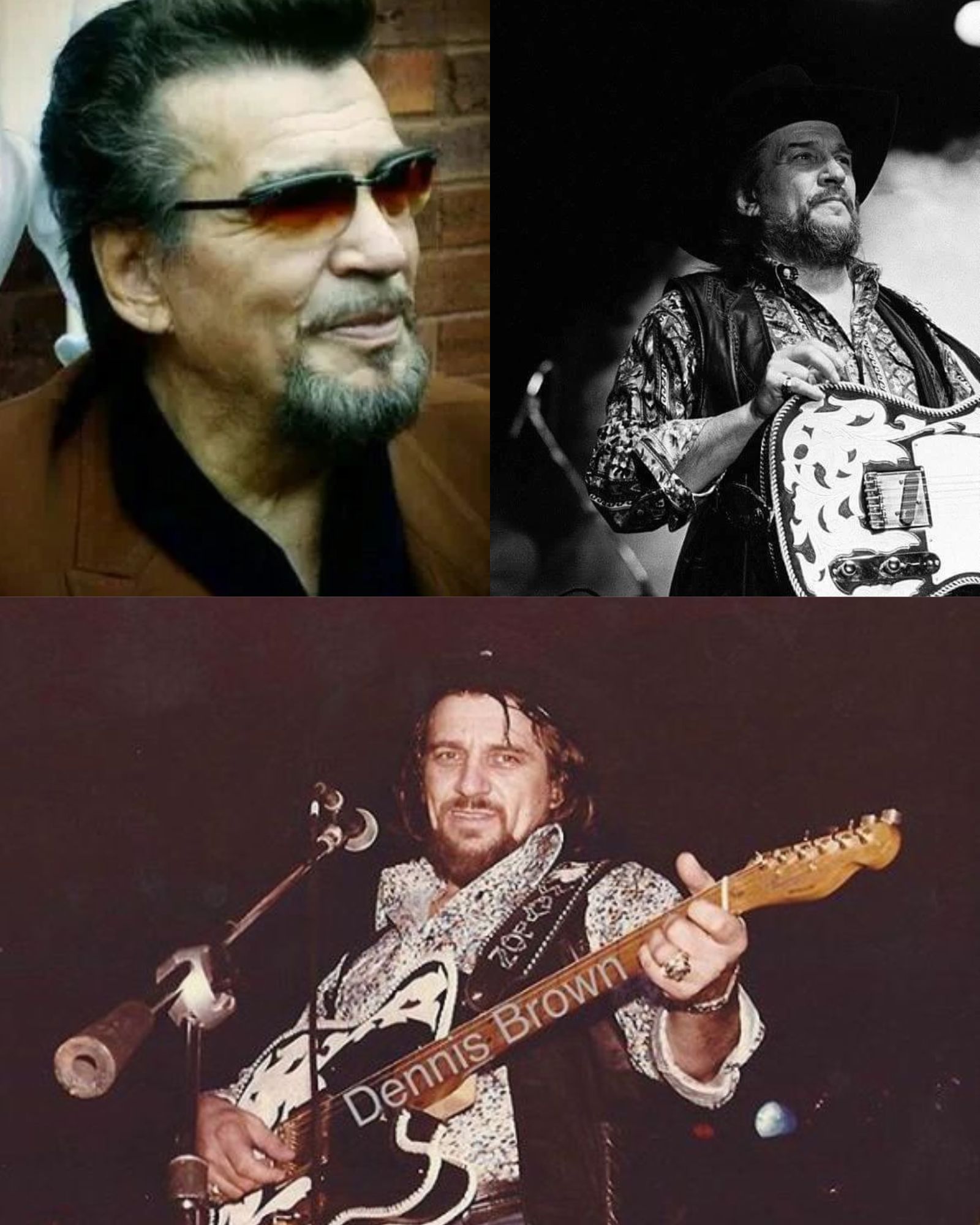
On Wednesday, February 13, 2002, Waylon Jennings died at his home in Chandler, Arizona. He was 64 years old.
The country music legend had spent his final years dealing with serious health problems. In December 2001, complications from diabetes had led to the amputation of his left foot. By February, the man whose unmistakable voice had helped change Nashville was nearing the end of his life.
But Waylon Jennings had already made one important decision about what should happen after his death.
There would be no grand public funeral. No elaborate farewell. Waylon Jennings wanted to be buried quietly, surrounded by family.
A Private Goodbye in Arizona
On Friday, February 15, 2002, just two days after his death, Waylon Jennings was laid to rest at Mesa Cemetery in Mesa, Arizona, not far from the home he had shared with his wife, Jessi Colter.
The ceremony was private. His longtime spokeswoman, Schatzi Hageman, explained that the family was honoring his final request for a burial without fanfare.
Jessi Colter later described the service as “beautiful” and said it was the kind of farewell Waylon Jennings would have wanted.
For a man who had spent decades challenging the conventions of Nashville, the decision seemed consistent with the independence that had defined his public life. Waylon Jennings had never been particularly interested in doing things simply because other people expected them.
Yet Jessi Colter also understood how much Waylon Jennings meant to the people who had followed his music for decades.
Although the burial was private, plans were soon made for a public memorial in Nashville, giving friends and fans an opportunity to say goodbye.
March 23, 2002: Nashville Says Goodbye
More than a month later, on Saturday, March 23, 2002, musicians, friends, and admirers gathered at Nashville’s historic Ryman Auditorium.
The stage displayed a black backdrop bearing Waylon Jennings’ familiar silver Flying W emblem. His black guitar rested beneath his cowboy hat, with red rose petals nearby.
Among the performers were Kris Kristofferson, Travis Tritt, Billy Ray Cyrus, David Lee Murphy, and Shooter Jennings, who led his band Stargunn in honoring his father.
Travis Tritt performed Lonesome, On’ry and Mean, while Shooter Jennings spoke about the musical influence his father had left behind.
The two-hour memorial brought together the rebellious spirit, friendships, and music that had defined Waylon Jennings’ career.
Then came the final moment.
Instead of ending with another artist singing a tribute, the memorial closed with Waylon Jennings’ own recorded voice.
The audience heard The Dream, reported at the time as the last song Waylon Jennings had written and recorded.
As the recording ended, people in the auditorium called out their love and appreciation for the singer they had come to remember.
It was a public farewell very different from the quiet burial in Arizona, but both honored different parts of the same man’s life.
The Grave That Had No Headstone for a Year
Back in Mesa, another unusual chapter was unfolding.
Waylon Jennings had been buried in a municipal cemetery, but for nearly a year, his grave had no permanent headstone.
Fans who visited the cemetery sometimes struggled to locate his resting place. According to cemetery operations coordinator Rob McCauley, several people each week asked where Waylon Jennings was buried.
The delay was not because the grave had been forgotten.
Jessi Colter needed time to decide what words would appear on the memorial, and the specially made granite stone required additional time to complete.
On February 15, 2003, exactly one year after the burial, a polished black granite headstone was installed.
It featured Waylon Jennings’ portrait, his distinctive Flying W emblem, and words that captured both the musician and the man:
“A vagabond dreamer, a rhymer and singer of songs.”
The inscription also remembered Waylon Jennings as a revolutionary in country music and as a beloved member of his family.
The Farewell Waylon Jennings Wanted
Waylon Jennings had recorded more than 60 albums, earned 16 No. 1 country hits, and entered the Country Music Hall of Fame in 2001.
But the final events of his life were not defined by awards or chart positions.
On February 13, 2002, Waylon Jennings died at home in Arizona. Two days later, his family fulfilled his wish for a private burial. In March, Nashville gathered to honor him, and his own voice closed the memorial. A year after his burial, the headstone finally marked his resting place.
Today, visitors to Mesa Cemetery can find the black granite monument that took Jessi Colter a year to complete.
And there, beneath the familiar Flying W, are the words his family chose to remember him by: a dreamer, a rhymer, and a singer of songs.