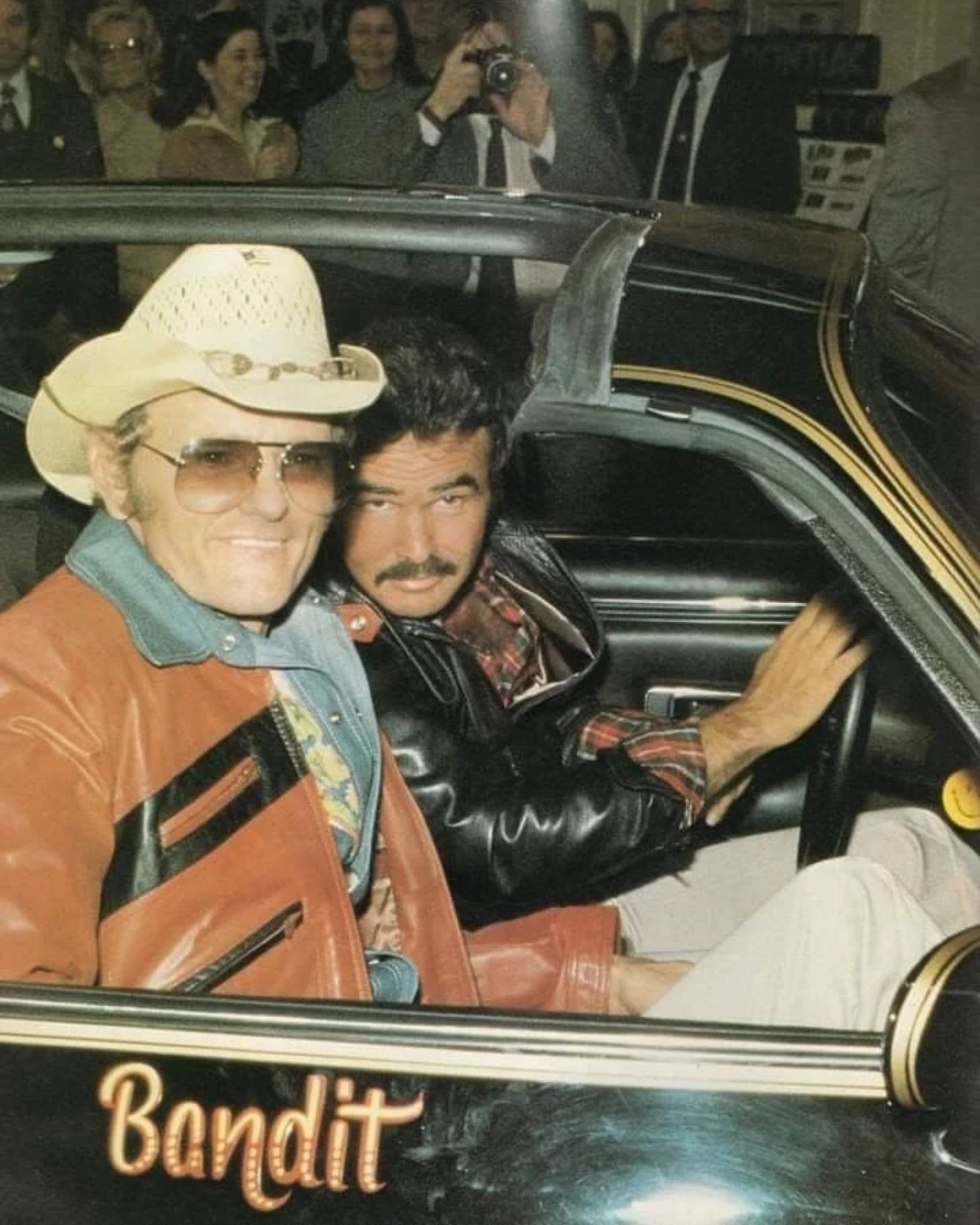
Long before Jerry Reed became one of Nashville’s greatest guitar players, the future country music star spent much of his childhood moving between orphanages and foster homes. His family had little money, his parents had separated, and the stability most children take for granted was missing from his earliest years.
Yet behind the difficult beginning was a little boy who loved music. Jerry Reed would eventually record with Elvis Presley, win three Grammy Awards, and become a Hollywood favorite alongside Burt Reynolds. But one of the most remarkable parts of his story began with a hairbrush, a pile of firewood, and a secondhand guitar that cost just seven dollars.
Seven Years Without a Permanent Home
Jerry Reed Hubbard was born in Atlanta, Georgia, on March 20, 1937. His parents, Robert Spencer Hubbard and Cynthia Hubbard, worked in cotton mills and struggled financially. Just four months after Jerry Reed was born, the couple separated.
For approximately seven years, Jerry Reed and his sister moved between orphanages and foster homes in Georgia. The children were finally reunited with their mother in 1944, after Cynthia married another mill worker, Hubert Howard.
Even before that reunion, Jerry Reed had discovered something that made him happy: country music.
In a 1979 interview with Bob Anderson, Jerry Reed remembered listening to the Grand Ole Opry on the radio as a young boy. Without a proper stage or instrument, he climbed onto a woodpile and pretended to perform. A hairbrush became his make-believe rhythm guitar.
It was an unusual beginning for someone who would eventually influence generations of professional guitarists.
The Seven-Dollar Guitar and Two Simple Chords
After the family reunited, Cynthia Howard recognized how deeply her son loved music. She saved seven dollars and purchased a secondhand guitar from a neighbor.
Jerry Reed was about nine years old when his mother began teaching him to play. Using a nickel as a makeshift pick, she showed him the C and G chords, including a clawhammer-style G.
Those few lessons opened an entirely new world.
Jerry Reed practiced constantly and developed strong ideas about how a guitar ought to be played. When a guitar instructor later tried to persuade him to stop using his thumb pick, Jerry Reed reportedly abandoned the lessons rather than change his playing method.
Another important influence came from Merle Travis. Hearing the guitarist perform I Am a Pilgrim convinced Jerry Reed that guitar playing could become something far more complicated and exciting than the basic chords he already knew.
By his teenage years, Jerry Reed was performing publicly, writing songs, and developing the fingerpicking technique that would eventually become his signature.
From Georgia to Nashville
Jerry Reed attracted the attention of music publisher Bill Lowery and, at just 17, secured a recording agreement with Capitol Records. His first recordings appeared in 1955.
Success did not arrive immediately. Jerry Reed spent years working as a songwriter and musician before moving to Nashville in 1962.
The turning point came through his association with legendary guitarist and producer Chet Atkins. Rather than forcing Jerry Reed into a conventional country sound, Chet Atkins encouraged the young musician’s individuality.
The result was a remarkable career. Elvis Presley recorded Jerry Reed’s compositions Guitar Man and U.S. Male, with Jerry Reed contributing lead guitar to both recordings.
Hits such as When You’re Hot, You’re Hot, Amos Moses, and East Bound and Down brought Jerry Reed national fame. His role as Snowman in Smokey and the Bandit introduced his personality to millions of moviegoers.
Jerry Reed died on September 1, 2008, at age 71. Despite those accomplishments, he had never received country music’s highest institutional honor during his lifetime.
The Hall of Fame Ceremony Jerry Reed Never Got to Attend
On April 5, 2017, the Country Music Hall of Fame announced that Jerry Reed would finally join its distinguished membership.
His daughters, Seidina Hubbard and Lottie Zavala, represented their father. Seidina later explained that the family had hoped for the recognition for years, especially while Jerry Reed was still alive.
During the official induction ceremony on October 22, 2017, something particularly fitting happened.
Three extraordinary guitarists—Tommy Emmanuel, John Knowles, and Steve Wariner—performed Jerry Reed’s demanding instrumental The Claw. All three had received the Certified Guitar Player designation from Chet Atkins.
Ray Stevens honored his longtime friend with When You’re Hot, You’re Hot, while Jamey Johnson performed East Bound and Down.
At the family’s request, Bobby Bare, a close friend and fellow Hall of Fame member, performed the official induction.
There was another touching detail. Jerry Reed’s daughters later explained that they had grown up knowing their father primarily as Dad, not as the celebrity the public admired. Following the Hall of Fame announcement, people began sharing personal memories that helped them understand even more about the lives their parents had touched.
The little boy who once stood on a woodpile pretending to entertain an audience had become a musician whose work was celebrated by some of the finest guitarists in the world.
Jerry Reed never lived to see that ceremony. But his daughters were there, and the music that began with a seven-dollar guitar was still being played in his honor.