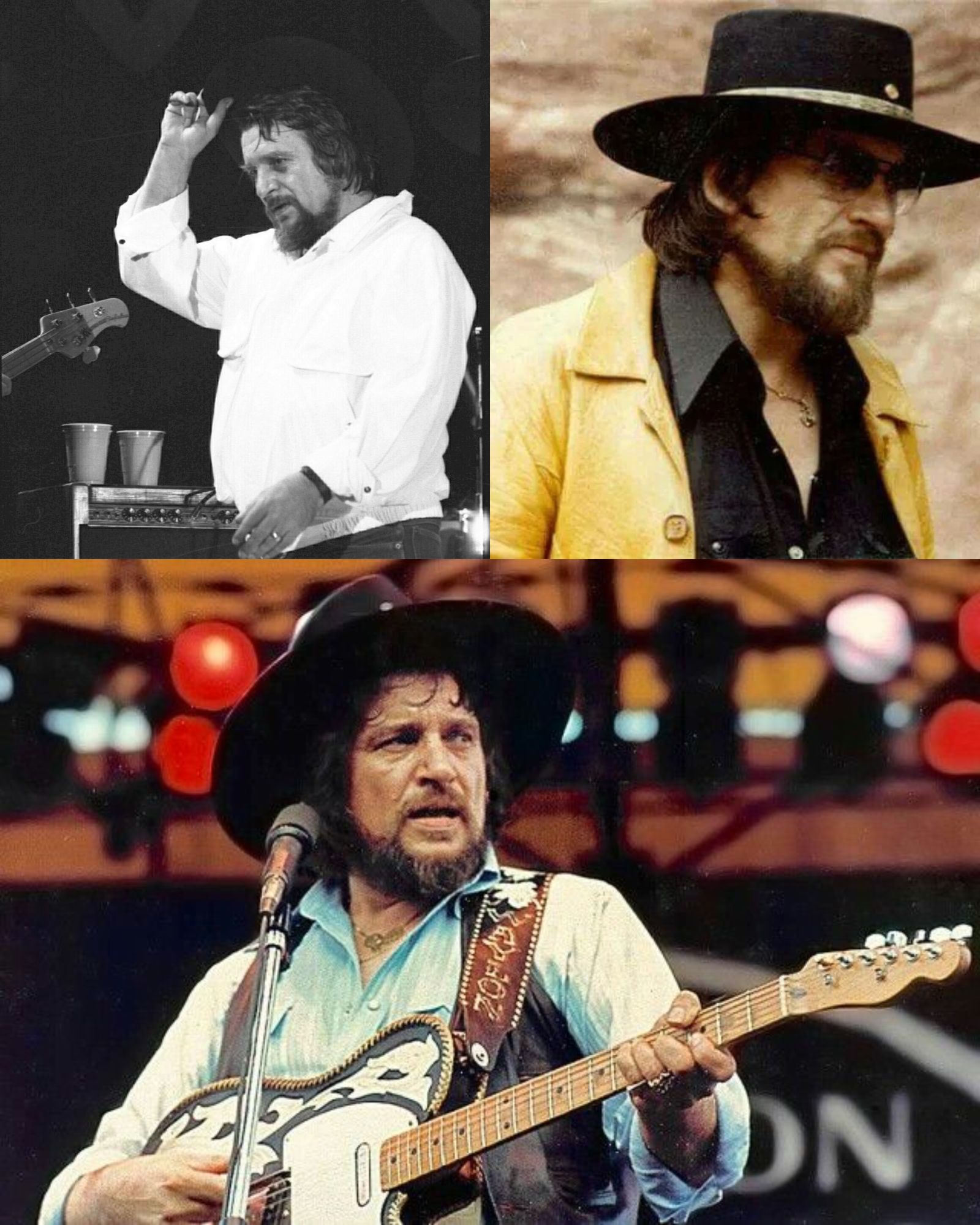
Waylon Jennings spent much of his career refusing to let other people tell him what to do. That independence made him one of country music’s most recognizable voices. But it also extended into something far more personal: his faith.
One night aboard his tour bus, a preacher named Will D. Campbell asked Waylon a simple question about what he believed. Waylon’s answer was hardly a sermon.
“Yeah.”
When Campbell asked what that meant, Waylon offered another brief reply.
“Uh-huh.”
The conversation ended there. But years later, Waylon wrote a song that Campbell would remember as a much fuller answer.
The Preacher Who Became Waylon’s Friend
Will D. Campbell was no ordinary preacher. A Baptist minister, writer, and civil rights activist, Campbell had a reputation for questioning religious conventions and reaching out to people from very different backgrounds.
Waylon Jennings and Jessi Colter first visited Campbell’s Tennessee farm for the wedding of their mutual friend, country singer Johnny Darrell.
Waylon and Campbell became close friends. According to Campbell, Waylon sometimes visited the farm simply to spend quiet time in Campbell’s writing cabin. Campbell recalled that Waylon found those visits renewing.
Eventually, Campbell joined Waylon’s touring operation when Campbell needed additional income. Campbell later joked that Campbell’s main contribution was operating the microwave and choosing places where the traveling musicians could eat.
The friendship mattered because Jessi Colter had something she wanted Campbell to discuss with her husband.
Jessi wanted Waylon to talk about his personal faith.
A Conversation That Barely Happened
In a September 2004 interview with journalist John D. Pierce, Campbell remembered Jessi’s request. Campbell admitted that questioning another person about the condition of their soul made Campbell uncomfortable.
Still, one late night on Waylon’s tour bus, Campbell found an opportunity to ask.
The exchange was brief, almost comically so. Waylon answered the first question with “Yeah” and the follow-up with “Uh-huh.”
Campbell understood that Waylon did not want a lengthy religious discussion. Rather than continue pressing, Campbell left the conversation alone.
What Campbell later discovered was that Waylon had not forgotten it. According to Campbell, Waylon even repeated the story to other people.
The Song That Finally Put His Beliefs Into Words
Years afterward, Waylon wrote I Do Believe, a deeply personal song about spirituality, doubt, and finding one’s own understanding of faith.
The song appeared on The Road Goes On Forever, the 1995 album by The Highwaymen, the country supergroup featuring Waylon Jennings, Johnny Cash, Willie Nelson, and Kris Kristofferson.
Unlike the rebellious declarations that made Waylon famous, I Do Believe offered something quieter. Waylon wasn’t demanding that everyone agree with him. He was explaining what he believed for himself.
Campbell connected the song to that earlier conversation on the bus. In Campbell’s telling, the music expressed what Waylon had chosen not to explain that night.
The connection was particularly meaningful because Campbell had known Waylon as a friend, not merely as the famous outlaw singer audiences saw on television.
What Jessi Colter Revealed After Waylon’s Death
Waylon Jennings died on February 13, 2002, at the age of 64.
Ten years later, a collection of recordings was released as Goin’ Down Rockin’: The Last Recordings. Waylon’s longtime friend and musician Robby Turner helped complete the recordings with Jessi Colter’s approval.
The collection included another recording of I Do Believe, bringing renewed attention to a song that listeners had first heard years earlier.
During an October 2012 NPR interview, Jessi discussed the song and admitted that she had been surprised when Waylon originally wrote it.
Jessi explained that Waylon’s childhood in the Church of Christ had left him with complicated feelings about religion, particularly concerning the church’s approach to music.
Yet the song showed that Waylon’s questions about organized religion had never meant he lacked personal faith.
Jessi believed Waylon was simply expressing his own convictions in his own words.
Hearing Waylon Jennings Differently
For longtime fans, I Do Believe offers a side of Waylon Jennings that rarely received the same attention as his outlaw reputation.
Waylon could challenge Nashville executives, reject unwanted rules, and speak bluntly about the music business. But when a trusted friend asked about his deepest beliefs, Waylon initially responded with just a couple of words.
And those words stayed with Campbell.
Campbell eventually officiated at Waylon’s funeral in Arizona and memorial service in Nashville. When Campbell recalled the tour-bus conversation in 2004, Campbell still considered the song an important expression of his friend’s faith.
That is what makes I Do Believe worth hearing again. It was not a sudden deathbed confession or an unreleased secret discovered after Waylon was gone. It was a song Waylon chose to write and share while he was alive.
For a man who spent his career insisting on doing things his own way, perhaps the most revealing part was that Waylon Jennings approached faith the same way.