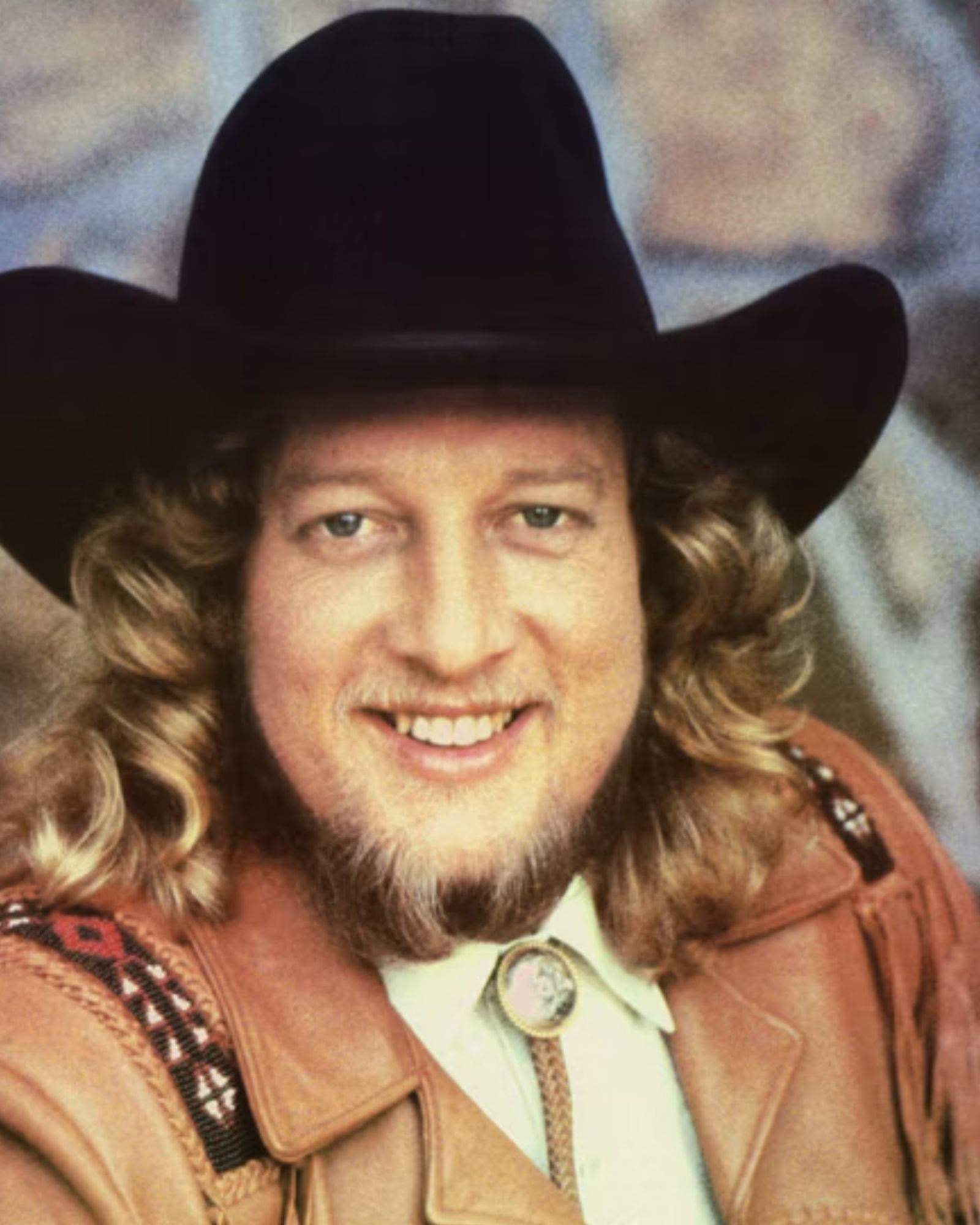
John Anderson had finished recording a song when the objections arrived. The response from the record company, as John Anderson later recalled, was straightforward: “We don’t like that song.”
The recording was “Swingin’.” Within a year, the song would become a No. 1 country hit and win the Country Music Association’s Single of the Year award. But before audiences made that judgment, John Anderson had to defend a recording the label questioned.
Two Songwriters Looking Out an Apartment Window
In a 2024 interview with Pollstar, John Anderson remembered writing “Swingin’” with longtime collaborator Lionel Delmore at an apartment complex called Hermitage Oaks in Nashville. Decades afterward, the building was still standing. Driving past before the interview, John Anderson had tried to identify the upstairs window where the writing session took place.
The circumstances were ordinary. John Anderson and Lionel Delmore had quit their jobs and needed to write. Lionel Delmore suggested the title. John Anderson went over, and within about two hours, most of the song was finished.
There was no complicated premise. “Swingin’” introduced a neighborhood girl named Charlotte Johnson, a family going about everyday business, and a young romance unfolding on a porch. The details were playful and familiar. John Anderson’s unmistakable delivery gave the little scene a personality listeners could recognize immediately.
For John Anderson, the song belonged on a record. Convincing the record company was another matter.
The Phone Call That Helped Protect the Recording
By the time John Anderson was making the album Wild & Blue, John Anderson already had experience choosing material and working with accomplished Nashville musicians. Producer Frank Jones and John Anderson had developed a working relationship that gave John Anderson considerable involvement in the records.
Still, that involvement did not eliminate disagreements. When the negative response to “Swingin’” came back, John Anderson called music publisher Al Gallico.
Al Gallico’s reaction was emphatic. According to John Anderson’s recollection, Al Gallico called the song “the only hit on there.” John Anderson answered with a little skepticism about a publisher praising a song in the publisher’s own catalog. But Al Gallico also knew Warner Bros. executive Mo Ostin, giving the disagreement a route beyond the initial objection.
“Swingin’” remained on the album. Released as a single in 1983, the recording reached No. 1 on the country chart and became a million-selling success. That autumn, the CMA named “Swingin’” Single of the Year.
A Song Families Kept Passing Down
The award established the recording’s place in John Anderson’s career. The years afterward revealed something more lasting.
Speaking to The Boot and other reporters in 2017, John Anderson described seeing young fans who knew every word. John Anderson believed those listeners had learned the song from their parents. For older audiences, the same recording could bring back the places and circumstances surrounding its first appearance on the radio.
That is a familiar experience for country fans. A song becomes attached to a particular car, a kitchen radio, a Saturday afternoon, or someone who used to sing along. Eventually, another generation learns the words without having been present for the original moment.
John Anderson repeatedly expressed gratitude for having written, recorded, and published such a successful song. Looking back, the disagreement with the label was one episode in a career that often required John Anderson to stand behind personal musical choices.
Today, “Swingin’” carries the memories of listeners who have lived with the recording for decades. The company’s initial objection survives as a remarkable footnote. The song itself survives wherever somebody hears John Anderson introduce that familiar neighborhood girl—and remembers the rest.