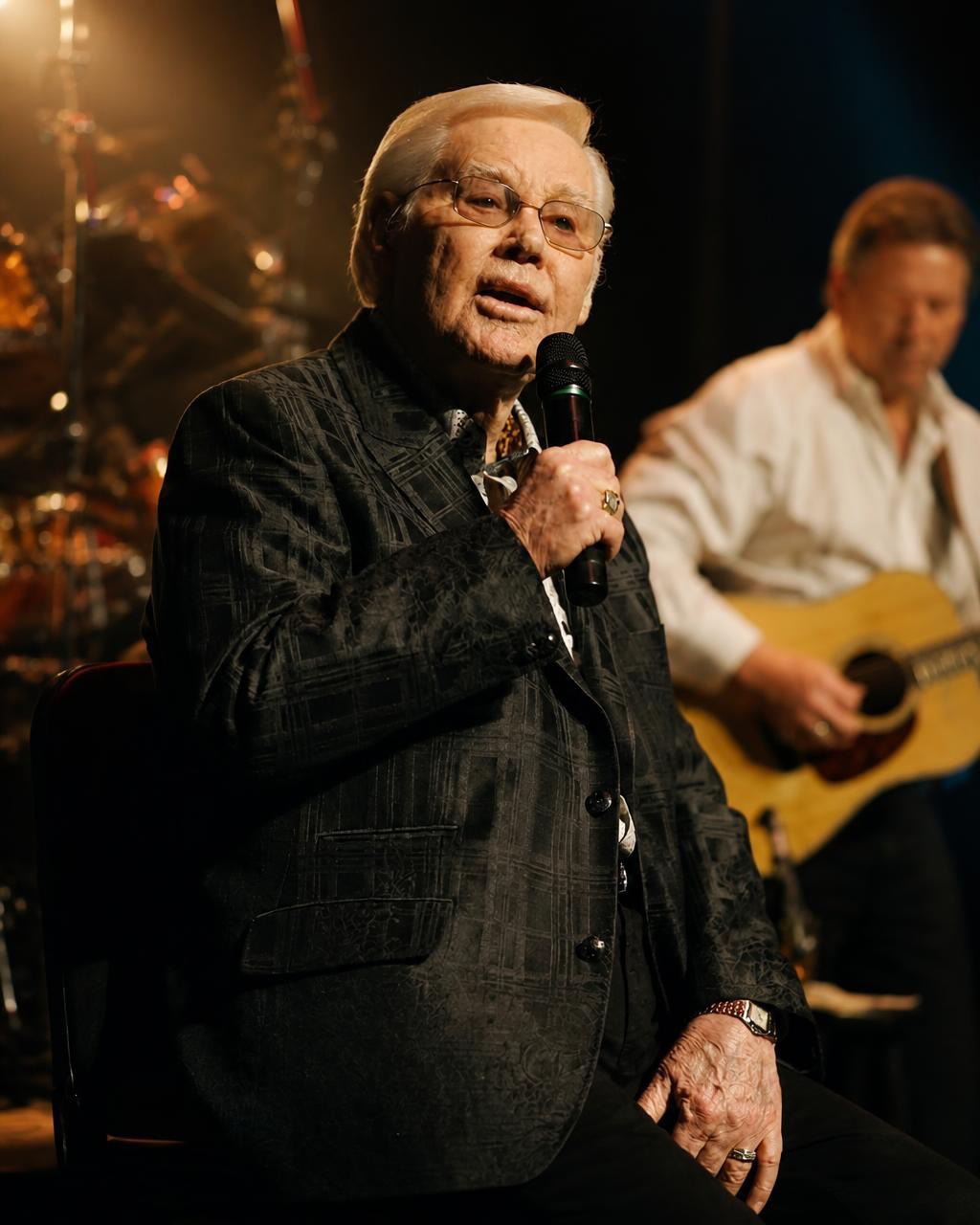
George Jones and the Night the Last Show Became a Farewell
For much of his life, George Jones carried a nickname that sounded like a joke and ended up sounding like prophecy: “No Show Jones.” But on April 6, 2013, in Knoxville, Tennessee, George Jones showed up one last time. He was 81, visibly frail, and needed help getting to the microphone at Knoxville Civic Coliseum. Still, when the lights came up, he did what he had always done best: he sang like the room belonged to him.
The final concert
The evening was billed as a final tour stop, but for fans it felt like something heavier than a regular farewell. George Jones moved through the set with the kind of effort that made every note matter more. He ended the night with “He Stopped Loving Her Today,” the song that had become inseparable from his legacy. It was a closing moment people would later remember as both devastating and fitting. Afterward, George Jones walked to the bus and told Nancy Jones, “I just did my last show. And I gave ’em hell.”
Those were not the words of a man chasing applause. They sounded like a man making peace with the end of a long, complicated road.
A career that changed country music
George Jones had spent decades building a reputation few artists could match. He was one of country music’s most celebrated voices, with more charting singles than any other artist in the history of popular music. He was inducted into the Country Music Hall of Fame in 1992, and by then his place in the genre was already secure. His voice carried pain, humor, regret, and tenderness in a way that felt lived-in rather than performed.
That is part of why the nickname “No Show Jones” never told the whole story. Yes, the name came from years of missed appearances and personal struggles. But it never erased the fact that when George Jones did appear, he often delivered something unforgettable. His final show made that contradiction impossible to ignore.
The concert that followed without him
George Jones had already asked for the farewell to become a tribute if he could not be there. He made sure Nancy Jones understood that he wanted the show to go on. On November 22, 2013, the Bridgestone Arena tribute did exactly that, with more than seventy performers taking part in a night built around his life and songs. Alan Jackson closed the event and brought Nancy Jones onstage for the final chorus, giving the evening a sense of both celebration and absence.
George Jones did not live to see that night. He entered the hospital the morning after his last performance and remained there for twenty days. On April 26, 2013, he died at 81. The story of the farewell concert and the tribute that followed became inseparable, like two verses of the same song.
The truth in the nickname
In the end, the phrase “No Show Jones” carried a strange and emotional weight. It pointed to the missed dates, but it also hinted at the final irony of his life: he spent fifty years being accused of disappearing, then named his farewell “The Final No Show,” only to appear for one last performance and leave the stage for good.
He had, in his own way, been telling the truth the whole time. When George Jones finally showed up for that last concert, he did not just say goodbye. He turned the ending into a story people would keep telling long after the house lights came up.