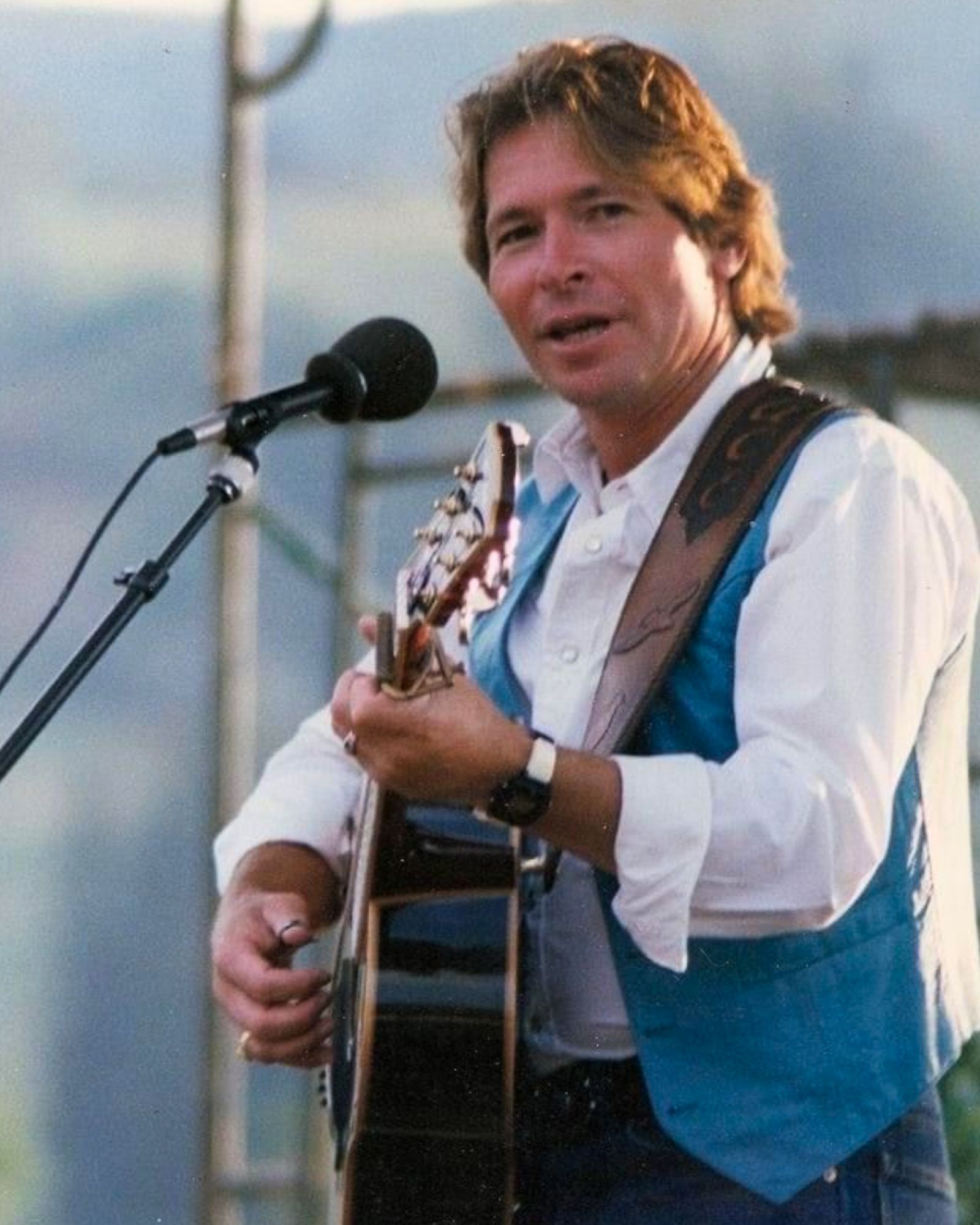
In March 1986, John Denver had a new song he wasn’t sure he should sing. It was about the seven people who died aboard the space shuttle Challenger, and their families were still grieving. So before he performed it at a benefit concert in Houston, he did something quiet and careful. He sang it privately for relatives of the crew and the event’s sponsors, to find out whether it was appropriate.
They let him sing it. That night, “Flying for Me” closed a concert that raised an estimated $50,000 for the families of the Challenger crew.
A Flight John Denver Had Hoped to Take Himself
For John Denver, the Challenger disaster was personal in a way most people didn’t realize. The son of an Air Force pilot, he was a pilot himself and a passionate supporter of space exploration. When NASA began looking for its first ordinary citizen to fly on the space shuttle, Denver wanted to be that person, and he pushed hard for the chance.
The plan changed. The first civilian seat was set aside for a teacher, and Christa McAuliffe, a high school social studies teacher from Concord, New Hampshire, was chosen from more than 11,000 applicants. On January 28, 1986, she boarded Challenger with six astronauts. The shuttle broke apart about 73 seconds after liftoff. All seven were lost.
According to later accounts, Denver said he felt that in a sense he was partly responsible for Christa being on that flight, since his push for a citizen seat helped open the door to a civilian passenger.
Writing “Flying for Me”
Out of that grief, Denver wrote “Flying for Me.” The song honors the crew and especially McAuliffe. Its message is simple and generous: the seven people aboard weren’t flying only for themselves. They were flying for everyone, reaching toward a better future for all of us.
Denver described the song in a way that explains why it still lands. He said it came
“out of my own personal feeling but also as universal as possible.”
He recorded it for his 1986 album One World. Years later, his official website shared a performance in which he introduces the song by talking about how he came to write it.
First Stop: Capitol Hill
Denver’s first public performance of “Flying for Me” took place far from any concert stage. On Wednesday, March 26, 1986, he sang it in Washington for the Senate Appropriations subcommittee that oversaw NASA’s budget. It was a striking choice of audience: the lawmakers deciding the future of the space program, two months after the disaster.
A Careful Test Before the Concert
The next stop was Houston, home of NASA’s astronaut corps and Mission Control. A benefit concert had been planned at Jones Hall to support the Challenger 7 Fund, set up to help the crew’s families.
Before the show, Denver performed the song for the event’s sponsors and for relatives, so they could decide whether it was appropriate for the evening. It’s a small detail, but it says a great deal about how he approached the moment. He did not assume he had the right to sing about their loss. He asked first.
The Night at Jones Hall
On Thursday night, March 27, 1986, every seat in Jones Hall was filled. The program brought together the Houston Symphony Orchestra, the Houston Grand Opera, the Houston Ballet and young performers from a local musical theater school.
About 20 relatives and representatives of the Challenger families were in the audience. When they were recognized, the crowd of 2,900 rose and gave them a standing ovation that lasted two minutes. A veteran shuttle astronaut spoke on behalf of the families, thanking Houston for its love and support.
John Denver closed the night with “Flying for Me.” Organizers estimated the concert raised about $50,000 for the families.
More Than a Song
Many artists wrote tributes after the Challenger disaster. What sets this one apart is what surrounded it. John Denver tested it with the people who had lost the most, sang it to the lawmakers responsible for the space program, and then used it to help raise real money for the families left behind.
Do you remember where you were on January 28, 1986? Share your memory with us.