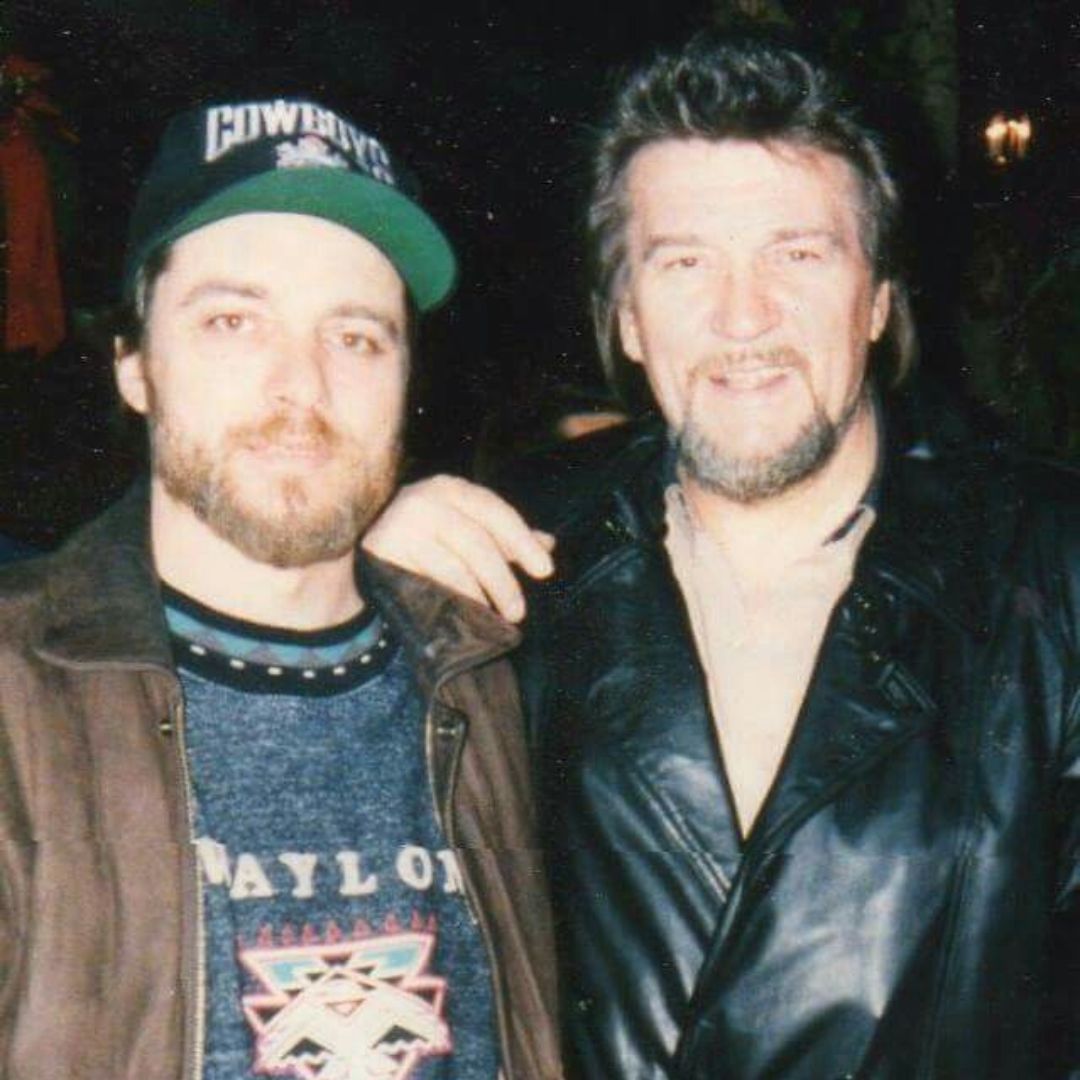
Inside a signed copy of his autobiography, Waylon Jennings wrote a personal message to his oldest son, Terry Jennings. The note ended with nine words that would take on a special meaning years later.
“I did my best. Now it’s your turn.”
For Terry Jennings, those words came from a father who had provided an extraordinary childhood, but hardly an ordinary one. Terry had grown up alongside one of country music’s biggest stars, sharing the excitement of the road and witnessing the troubles that came with it.
Eventually, Terry Jennings would tell that story in a book. And unlike many accounts of famous musicians, this one came from someone who had been there through much of it.
A Teenage Son Joins the Road Crew
Waylon Jennings was only nineteen when Terry Jennings was born in 1957. By the time Terry reached his teenage years, Waylon was building the career that would help change country music.
At fifteen, Terry Jennings had left school and become a regular member of Waylon’s touring crew.
The work started with selling merchandise. Terry later became a drum technician for longtime Waylon drummer Richie Albright and gradually took on greater responsibilities within the touring operation.
It was an unusual education. While other teenagers were attending school, Terry was learning how concerts operated, how musicians traveled, and what happened when the performances ended.
The young road worker also found himself around some of country music’s most recognizable names, including Willie Nelson, Johnny Cash, Kris Kristofferson, and Jessi Colter.
More Like Brothers Than Father and Son
With only nineteen years separating Waylon Jennings and Terry Jennings, their relationship developed differently from many traditional father-son relationships.
Both the family memoir and contemporary accounts describe the two as being more like brothers.
There was genuine closeness in that arrangement, but there were consequences, too.
Waylon Jennings was living through the demanding years of the Outlaw Country movement. Success brought hit records, sold-out shows, and increasing recognition. Away from the stage, the lifestyle included hard partying and drug use.
Terry Jennings was not simply watching from a distance. Terry became part of that environment.
In a 2016 interview with Fox News, Terry openly discussed using drugs while traveling with Waylon. Terry also made an important distinction: Waylon had not introduced Terry to drugs, and their shared use was not a constant activity.
The relationship was complicated, but Terry never described Waylon Jennings simply as a bad father.
Terry believed that Waylon’s commitment to music was partly motivated by a desire to provide a better life for the family. Even when the touring schedule kept Waylon away from home, Terry continued to recognize that intention.
The Conversation on a Plane to a Dallas Cowboys Game
One of the most revealing moments came years later, after Waylon Jennings had stopped using drugs.
Waylon Jennings and Terry Jennings were flying to a Dallas Cowboys game when their conversation turned to the remarkable experiences they had shared.
Terry brought up the possibility of writing a book about those years.
According to Terry’s 2016 interview, Waylon welcomed the idea. Waylon believed Terry was among the very few people who had been around since the early years and was willing to tell the truth about what had happened.
That encouragement mattered. Waylon Jennings understood that an honest account would include more than career achievements and entertaining stories from the road.
Still, Terry Jennings put the project aside.
Waylon Jennings died on February 13, 2002, at the age of 64. Only afterward did Terry return seriously to the idea of documenting their years together.
The Book Terry Jennings Finally Wrote
On April 19, 2016, Terry Jennings published Waylon: Tales of My Outlaw Dad, written with David Thomas.
The memoir followed the experiences of a son who had worked alongside Waylon Jennings, witnessed the rise of a country music legend, and experienced the difficult parts of that life firsthand.
It did not attempt to turn Waylon into a flawless hero. Nor did Terry Jennings dismiss the affection, humor, and generosity remembered from their years together.
When asked in 2016 what Terry missed most about Waylon, the answer was surprisingly simple: being around Waylon, especially the wit, wisdom, and enjoyment of spending time together.
That affection remained even after everything Terry had witnessed.
Waylon Jennings had written that personal message years earlier, leaving Terry with a few simple words about doing the best that could be done.
In 2016, Terry Jennings finally took the opportunity to tell the story in a way only someone who had lived so much of it could.
The result was more than another account of the Outlaw Country years. It was a son’s honest remembrance of a father whose music belonged to millions, but whose everyday life Terry Jennings knew in a way most fans never could.