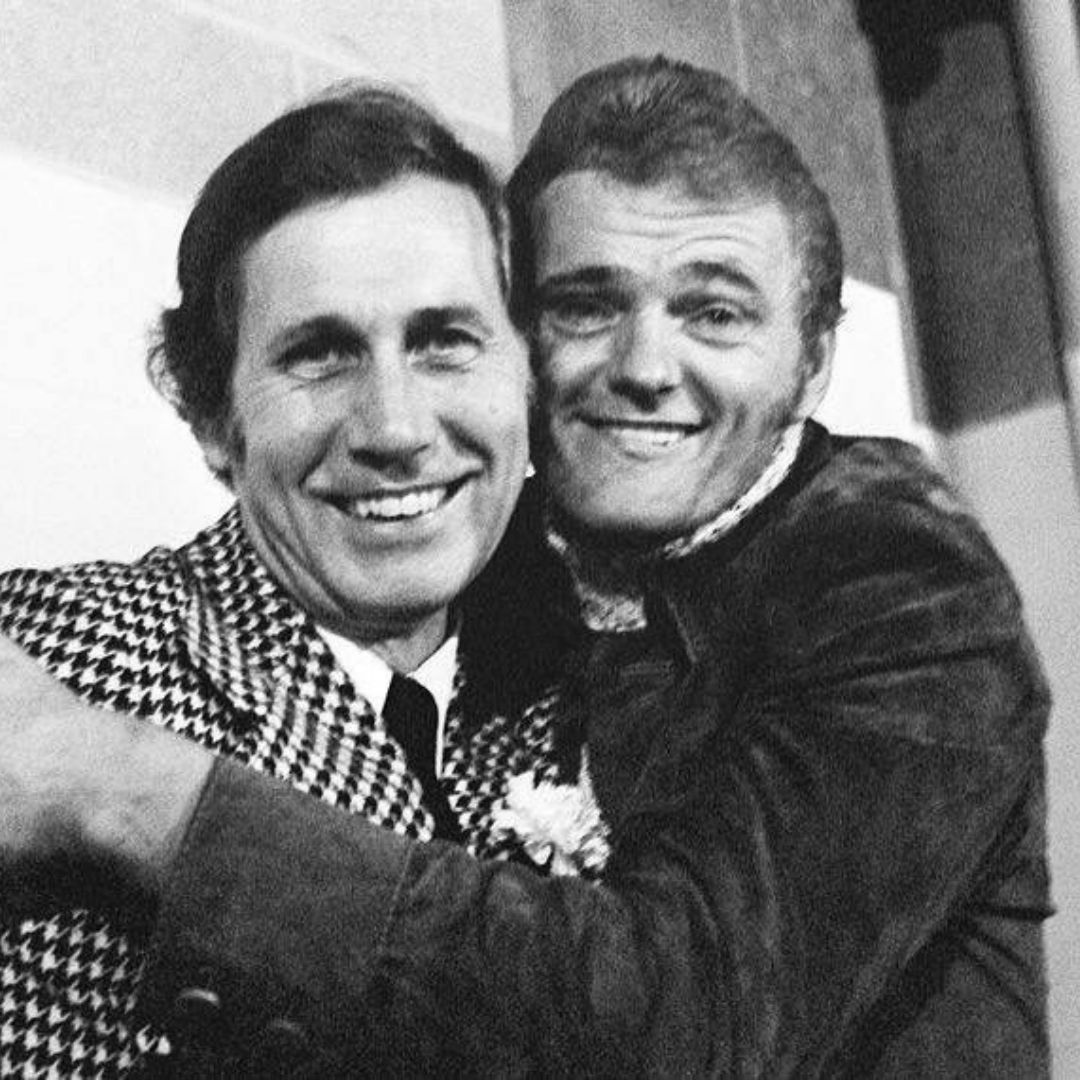
When Chet Atkins was recovering from cancer surgery, Jerry Reed came up with an unusual way to help a worried friend. Instead of writing something gentle and comforting, Jerry Reed decided to compose a guitar piece so complicated that Chet Atkins would have to concentrate on playing it.
It sounds like something Jerry Reed might have said to get a laugh. But the story was real, and Jerry Reed eventually shared it with an audience during a California concert in 1992.
The composition was called “Mister Lucky,” and behind its difficult notes was a friendship between two of country music’s most extraordinary guitar players.
Two Guitarists Who Understood Each Other
Long before Jerry Reed became famous for “When You’re Hot, You’re Hot,” “Amos Moses,” and the Smokey and the Bandit movies, Jerry Reed had established a reputation in Nashville as a remarkably inventive guitarist.
Chet Atkins was already one of the most respected musicians and producers in country music. Known for an elegant fingerpicking style, Chet Atkins could make a single guitar sound as though several instruments were playing together.
Jerry Reed approached the instrument differently. Jerry Reed’s playing was full of unexpected rhythms, unusual chord changes, and quick melodic runs. The techniques were complicated, but the music often sounded playful and effortless.
Chet Atkins recognized that talent. As Jerry Reed’s producer, Chet Atkins helped shape recordings that brought Jerry Reed to a much wider audience.
The partnership eventually grew into a lasting musical friendship. Both musicians admired what the other could do with six strings, and their recordings showed how naturally their different styles worked together.
The Unusual Gift Jerry Reed Created
When Chet Atkins was recovering from surgery for cancer, Jerry Reed knew that the experience had left Chet Atkins worried about the future.
Jerry Reed chose to respond in a language both musicians understood: guitar music.
Jerry Reed composed “Mister Lucky,” an instrumental with an active bass line, changing harmonies, and demanding passages that required considerable attention from the player.
There was a practical idea behind all that complexity. Jerry Reed wanted to give Chet Atkins something challenging enough to occupy the mind.
Years later, during a performance at the Crazy Horse Steak House in Santa Ana, California, Jerry Reed explained the idea to the audience.
“I wanted to write him a song so complicated that it would take his mind off the cancer.”
The remark was reported by music critic Jim Washburn in the Los Angeles Times on September 2, 1992.
It was a characteristically Jerry Reed approach to friendship: rather than making a grand speech, Jerry Reed wrote music that demanded everything a great guitarist could give it.
The Recording That Preserved “Mister Lucky”
“Mister Lucky” became part of the 1974 RCA album Chet Atkins Picks on Jerry Reed.
The album featured ten Jerry Reed compositions interpreted by Chet Atkins. Although both guitarists appeared on the album cover, Jerry Reed performed on only two tracks: “Mister Lucky” and “Squirrely.”
That makes the recording especially meaningful. The man who wrote the demanding piece also joined the friend for whom it had been intended.
Listeners can hear the musical complexity that made “Mister Lucky” such an unusual gift. The bass movement and shifting harmonies give the composition its distinctive character, while the interplay of the guitars shows how well Jerry Reed and Chet Atkins understood each other’s musical thinking.
Years Later, Chet Atkins Returned the Favor
By the early 1990s, Jerry Reed had become widely recognized as an entertainer and movie personality. Audiences enjoyed the stories, humor, and familiar songs, but Jerry Reed had largely stopped performing the intricate acoustic fingerpicking that had helped establish an early reputation.
Chet Atkins encouraged Jerry Reed to return to that style.
At the August 1992 California performance, Jerry Reed opened with a nylon-string guitar and played several acoustic selections. The first was “Mister Lucky.”
The moment carried a quiet connection to the past. Years earlier, Jerry Reed had written the composition to help Chet Atkins through a frightening period. Now Jerry Reed was performing that same music after Chet Atkins had encouraged a return to fingerpicking.
Neither musician needed to make the friendship into a dramatic story. The record from 1974 and the performance in 1992 already said plenty.
Jerry Reed and Chet Atkins spent decades sharing ideas, recording music, and learning from each other. “Mister Lucky” remains one of the clearest examples of that relationship: a difficult guitar piece written not to impress an audience, but to give a worried friend something else to think about.