What Johnny Cash Left the World Wasn’t a Legend — It Was a Confession
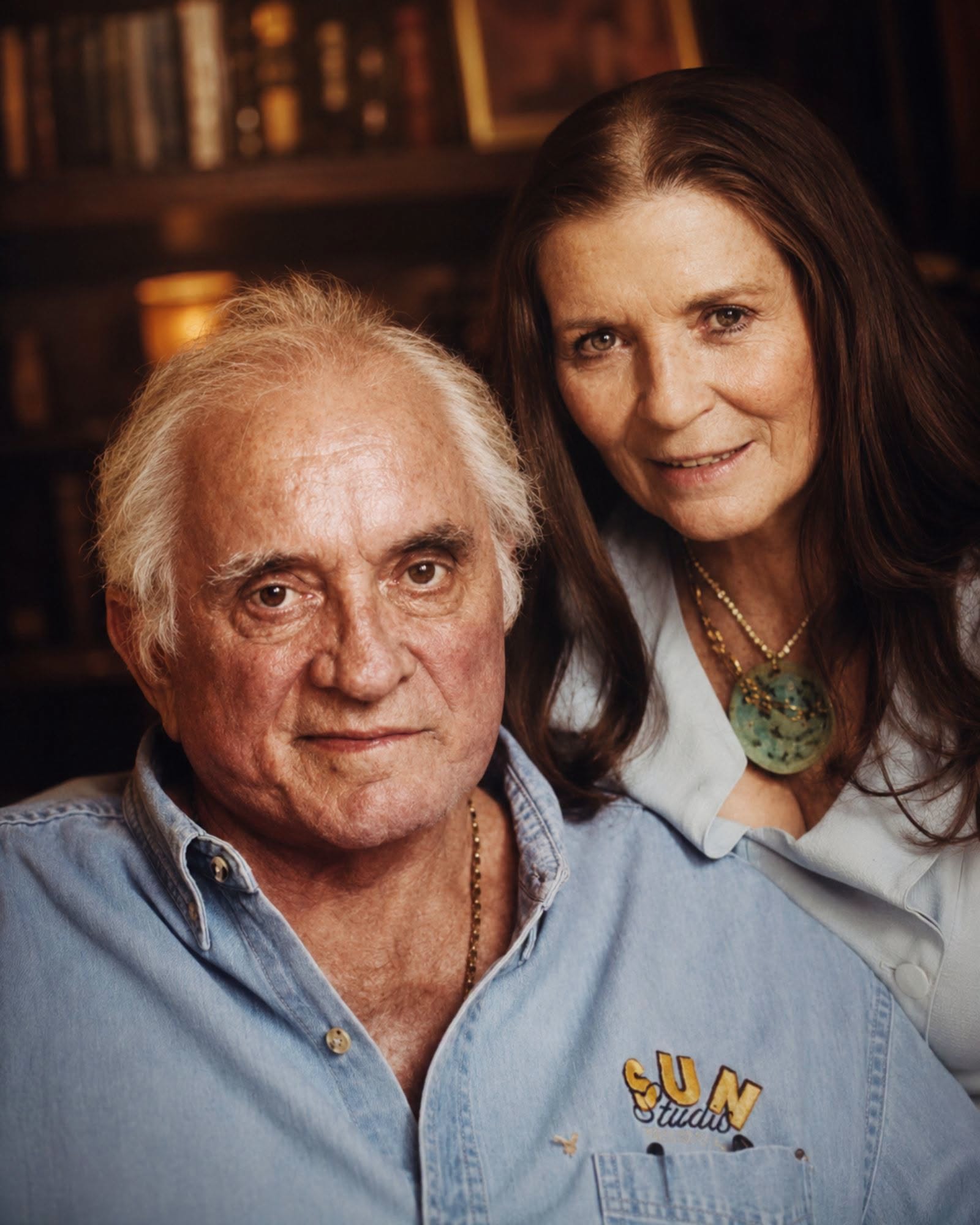
When Johnny Cash died on September 12, 2003, the world did not just lose a famous singer. It lost a man who had spent his life telling the truth, even when the truth made him look wounded, complicated, and unfinished. He was gone only four months after burying June Carter Cash, and the timing felt almost unbearable. Behind the music, behind the applause, behind the clean image of an American icon, there was something more human: grief, faith, struggle, and a stubborn refusal to pretend he had ever been perfect.
That is what made Johnny Cash different. He did not leave behind a polished legend built for museum walls. He left behind a confession. He left behind songs, yes, but also a moral honesty that sounded almost radical in a world that prefers tidy stories. He once said, “All your life, you will be faced with a choice. You can choose love or hate… I choose love.” That line was not just a quote. It was a summary of the way Johnny Cash tried to survive himself.
A Man Split in Two
Johnny Cash never claimed to be simple. He spoke openly about his inner conflict in a way that still feels startlingly modern: “Sometimes I am two people. Johnny is the nice one. Cash causes all the trouble. They fight.” In that sentence, he admitted what many people spend their entire lives hiding. He had tenderness and chaos living in the same body. He had discipline and weakness, devotion and failure, steel and softness.
And yet, instead of dressing that conflict up as myth, he named it. That honesty gave his music its power. When Johnny Cash sang about pain, loss, prison, temptation, or redemption, listeners knew he was not performing a costume. He was speaking from the middle of the struggle.
The Black Suit Was Never Just a Style
People remember the black. The simple black clothes. The dark presence. The voice that sounded like thunder and prayer at the same time. But Johnny Cash wore black for a reason. He said he wore it for the forgotten, the poor, the prisoner, and the outsider. He wanted the world to remember people who did not get much attention from polite society.
That choice mattered because it turned fame into service. Johnny Cash was not trying to decorate himself. He was trying to stand with the people who felt invisible. Even at the height of his success, he kept pointing outward. His image was strong, but it was never empty. It carried empathy.
“I wear the black for the poor and the beaten down.”
That line still resonates because it was more than branding. It was a promise. He wanted his life, and not just his songs, to say something about mercy.
Love, Loss, and the Truth of a Lifetime
Johnny Cash’s love for June Carter Cash remains one of the most moving parts of his story. It was not a perfect love in the fairytale sense. It was a real love, one that survived time, distance, pain, recovery, and the pressures of public life. After June died, Johnny Cash seemed to lose the center of his world. Four months later, he followed her.
That final season gave painful depth to the line many people now associate with him: “this morning, with her, having coffee.” It is such a small moment, and that is exactly why it hurts so much. Johnny Cash understood that paradise is not always a grand and shining place. Sometimes paradise is just an ordinary morning with the person you love, a cup of coffee in hand, and a quiet sense that life is enough.
He loved deeply enough to make ordinary life sacred. That may be one of the most powerful things he ever taught the world.
Grief Did Not Defeat Him — It Revealed Him
Johnny Cash never tried to pretend grief was easy. He understood that loss is not something people overcome by force. It must be entered, endured, and survived honestly. As he said, “There’s no way around grief and loss. You just have to go into it, through it.”
That is why his life still speaks to people who are hurting. He did not offer shallow comfort. He offered recognition. He knew that a human being can be broken and still worthy of grace. He knew that shame is not the end of the story. He knew that falling down does not cancel the chance to stand again.
Long after the last television appearance and long after the spotlight faded, Johnny Cash remained what he had always been: a man trying to tell the truth in public. And that truth was messy, beautiful, and redemptive.
What He Left Behind
Johnny Cash left records, stories, and a voice that still sounds larger than life. But the deeper inheritance was this: it is possible to be honest about darkness without surrendering to it. It is possible to carry sorrow and still choose love. It is possible to fail, to repent, to keep going, and to mean it.
That is why Johnny Cash still matters. Not because he became a legend, but because he refused to hide the human cost of being alive. He left the world a confession wrapped in music. And for many people, that confession became permission to be human too.
Johnny Cash did not leave behind a perfect story. He left behind something better: a true one.