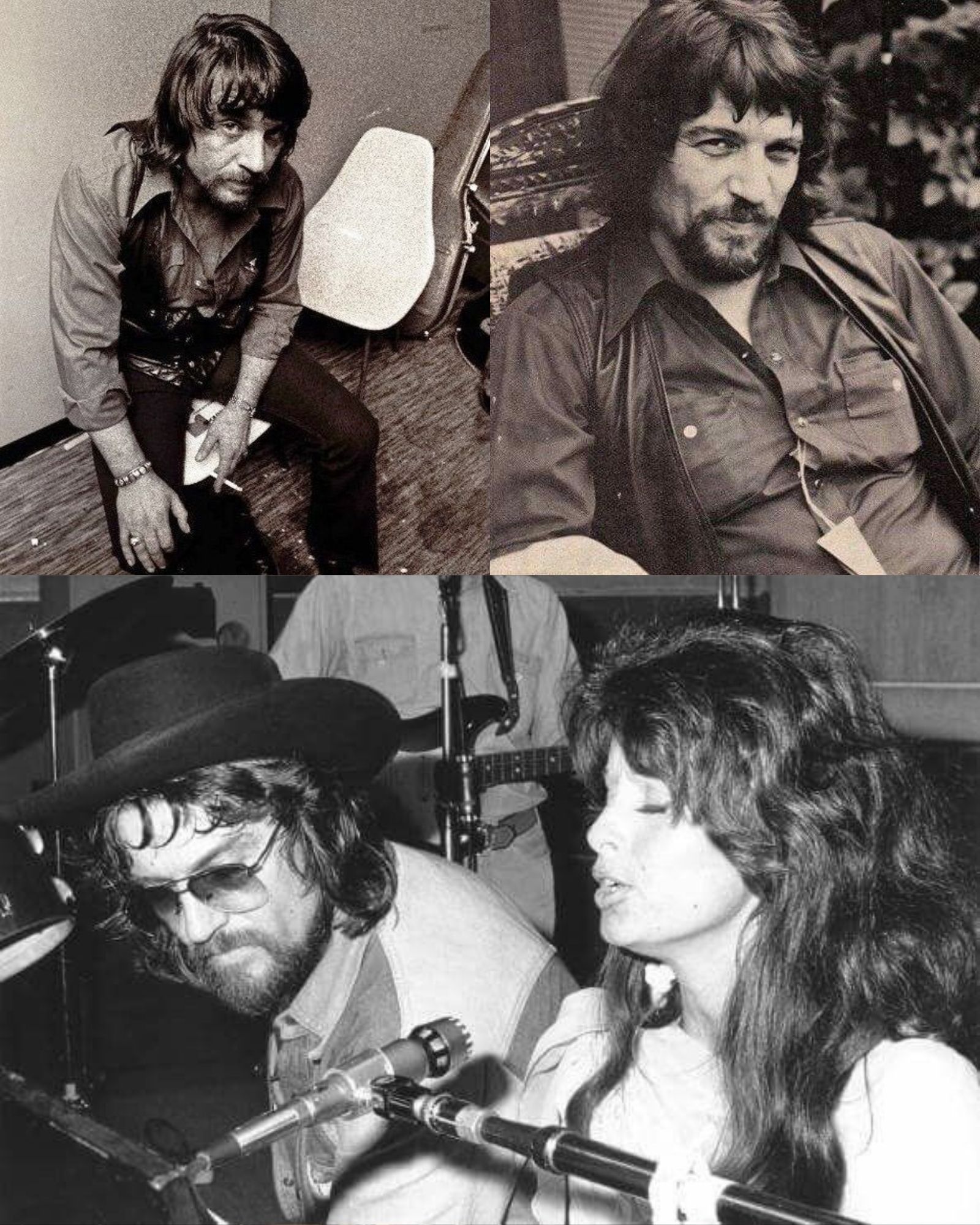
Waylon Jennings had already made hit records for RCA when a recording session in Nashville turned into one of the most outrageous stories of the outlaw country era.
Waylon Jennings walked into the studio wearing a pistol. Then Waylon Jennings warned the musicians that anyone still reading a music chart after the third run-through was going to have trouble.
The warning was meant to be intimidating, even if Waylon Jennings later told the story with laughter. But the confrontation had been building for years.
And it began with something far more important to Waylon Jennings than a gun: the sound of the records being released under the Waylon Jennings name.
Why Waylon Jennings Was Furious With RCA
Waylon Jennings signed with RCA in 1965, with Chet Atkins initially overseeing the recordings. By the late 1960s, songs such as “The Chokin’ Kind” and “Only Daddy That’ll Walk the Line” had established Waylon Jennings as a successful country singer.
But success didn’t mean satisfaction.
Waylon Jennings wanted records that sounded like the music Waylon Jennings played onstage. The singer preferred a loose, spontaneous style, with musicians responding to one another instead of following every note on a written arrangement.
RCA’s recording system often worked differently. Producers selected musicians, directed arrangements, and sometimes added instruments after the original sessions.
In a 1996 interview with Terry Gross, Waylon Jennings remembered returning to hear horns and other additions that had changed the sound Waylon Jennings originally intended.
The frustration became particularly serious when Chet Atkins assigned staff producer Danny Davis to work with Waylon Jennings.
The Argument That Brought Jessi Colter Into the Story
Danny Davis preferred tightly organized recording sessions. Waylon Jennings wanted freedom to experiment until the musicians found the right sound.
According to Brian Fairbanks’ book Willie, Waylon, and the Boys, their disagreements became increasingly personal.
During one recording session, Danny Davis complained about Waylon Jennings while working in the control room. Danny Davis apparently hadn’t realized that Jessi Colter had entered.
Jessi Colter heard the remarks and warned Danny Davis that Waylon Jennings would react badly if told what had been said.
The next recording session would become considerably more memorable.
The Pistol, Merle Haggard, and the Third Take
Waylon Jennings arrived at RCA wearing a pistol, described in the book as a .22 handgun.
The weapon had an unusual connection to two other country music figures.
In the 1996 interview, Waylon Jennings explained that the pistol originally belonged to Waylon Jennings and had been loaned to songwriter Harlan Howard. Somehow, the gun ended up with Merle Haggard, who eventually returned it.
Waylon Jennings decided to wear the holster into the studio.
When Danny Davis pressed the musicians to follow their written charts, Waylon Jennings issued the now-famous warning about anyone still looking at a chart after three takes.
Then Waylon Jennings turned toward the control room and warned Danny Davis against further interference.
It was a reckless way to handle a professional disagreement. But the confrontation exposed a serious conflict over who controlled the recordings.
Chet Atkins eventually acknowledged that the partnership with Danny Davis wasn’t working and arranged for a change of producers.
Waylon Jennings wanted something more than another producer. Waylon Jennings wanted to make the decisions.
John Lennon Heard About the Gun, Too
The story might have remained a Nashville recording-studio legend if Waylon Jennings hadn’t later revealed an extraordinary conversation involving John Lennon.
Waylon Jennings remembered that British journalists had been present during the pistol incident.
Sometime afterward, Waylon Jennings encountered John Lennon at a Grammy-related gathering. The two musicians began joking with one another, and Waylon Jennings expressed surprise at John Lennon’s sense of humor.
John Lennon responded with an observation that caught Waylon Jennings off guard:
“People in England think you shoot folks.”
Waylon Jennings laughed while recalling the exchange years later.
What began as a confrontation over recording arrangements had apparently traveled across the Atlantic and contributed to a much wilder reputation.
The Victory That Mattered More Than the Gun
In 1972, Waylon Jennings renegotiated the RCA contract and gained far greater artistic control.
Waylon Jennings could now exercise more authority over songs, musicians, studios, and production decisions.
The results were heard on landmark 1973 albums including Lonesome, On’ry and Mean and Honky Tonk Heroes.
By 1976, Wanted! The Outlaws, featuring Waylon Jennings, Willie Nelson, Jessi Colter, and Tompall Glaser, had helped bring the outlaw country movement to an enormous audience.
The pistol incident became part of the Waylon Jennings legend. But the lasting achievement was something much bigger.
Waylon Jennings had fought for the freedom to make records that sounded like Waylon Jennings.
And that freedom helped change the relationship between country singers and the Nashville recording industry.