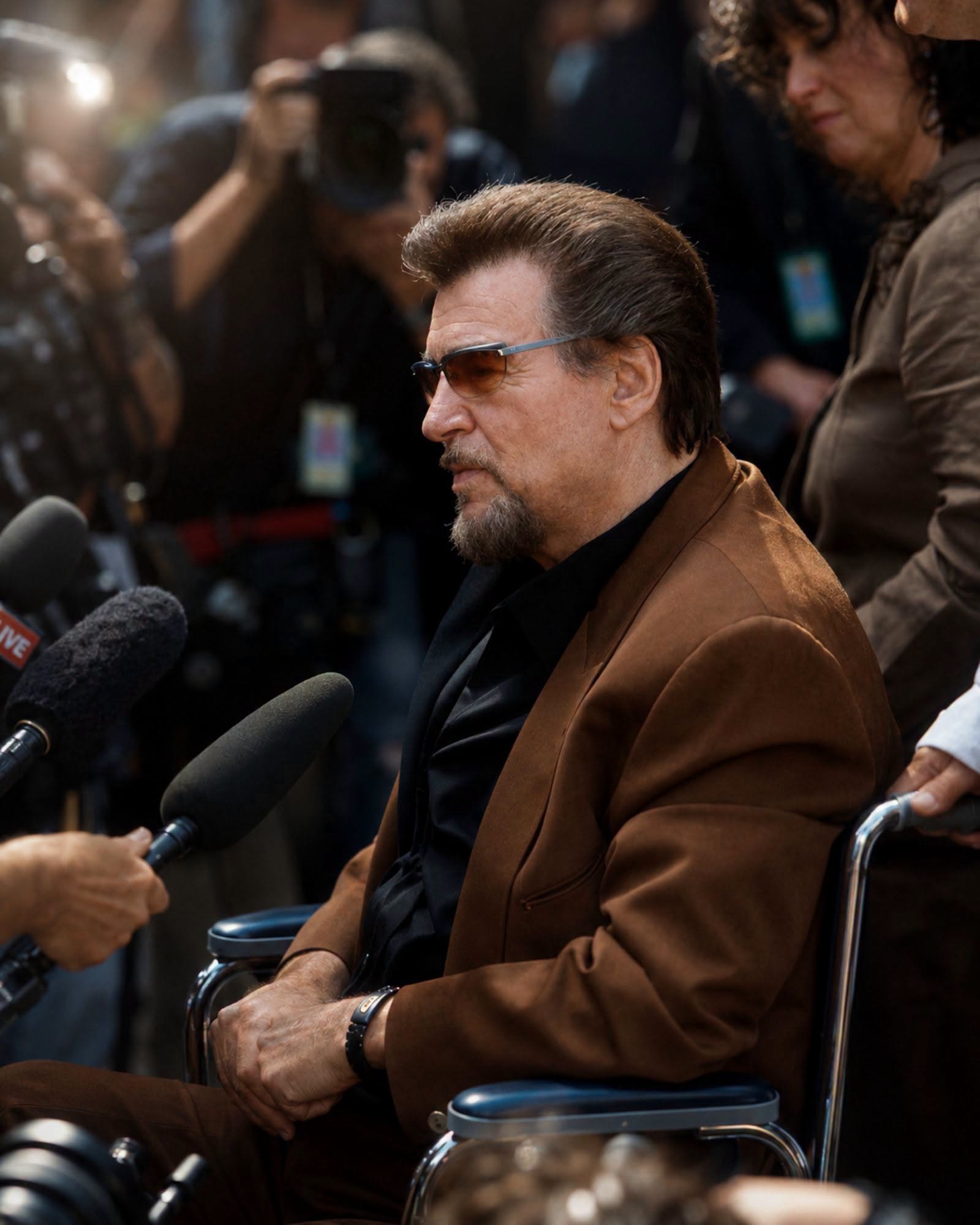
Waylon Jennings Entered the Hall of Fame — and Had 98 Days Left
On November 7, 2001, Waylon Jennings was inducted into the Country Music Hall of Fame. It should have been one of those rare nights when country music finally pauses to salute a rebel on his own terms. Instead, the seat stayed empty. Waylon Jennings did not come. The man who spent much of his career pushing against Nashville’s rules was not there to stand under its brightest light.
That absence carried its own kind of weight. By then, Waylon Jennings had already lived the story of an outlaw country legend: a hard-edged voice, a stubborn streak, and a career built on refusing to sound like anybody else. The Hall of Fame had not always been the center of his world, and for years, Waylon Jennings made sure everyone knew it. Yet the honor still mattered, even if it arrived quietly and without the man himself in the room.
There was also something haunting about the timing. In the months around that honor, Waylon Jennings was still carrying the legacy of his final live recordings, including Never Say Die: Live, captured at the Ryman Auditorium. The title alone feels like a message left behind in plain sight: defiance, survival, and the kind of belief that keeps an artist moving even when time is running short.
Then, on February 13, 2002, Waylon Jennings died in his sleep at his home in Chandler, Arizona, at the age of 64. His death came about 98 days after his name was added to the Hall of Fame class of 2001. It was reported as following complications related to diabetes.
A Final Turn in a Long Fight
What makes the moment so moving is not just the loss itself, but the shape of the ending. Waylon Jennings spent decades telling Nashville he did not need permission to be himself. And yet, near the end, Nashville gave him one of its highest honors anyway. The irony is hard to miss. The outlaw who fought the system was finally welcomed into the institution he had helped challenge.
If you are asking how it felt the day people heard Waylon Jennings was gone, the answer was probably a mix of shock and sadness, but also recognition. Fans were not just losing a singer. They were losing a voice that sounded fearless, weary, and alive all at once. The news closed a chapter that had already been written in steel guitar, stubbornness, and truth.
What Remains
Waylon Jennings did not need a Hall of Fame plaque to prove what he meant. But the empty seat from that night, and the short distance between that honor and his death, make the story linger. It feels less like an ending than a last echo: a man who never softened for the spotlight, finally recognized by it, then gone before the applause could fully settle.