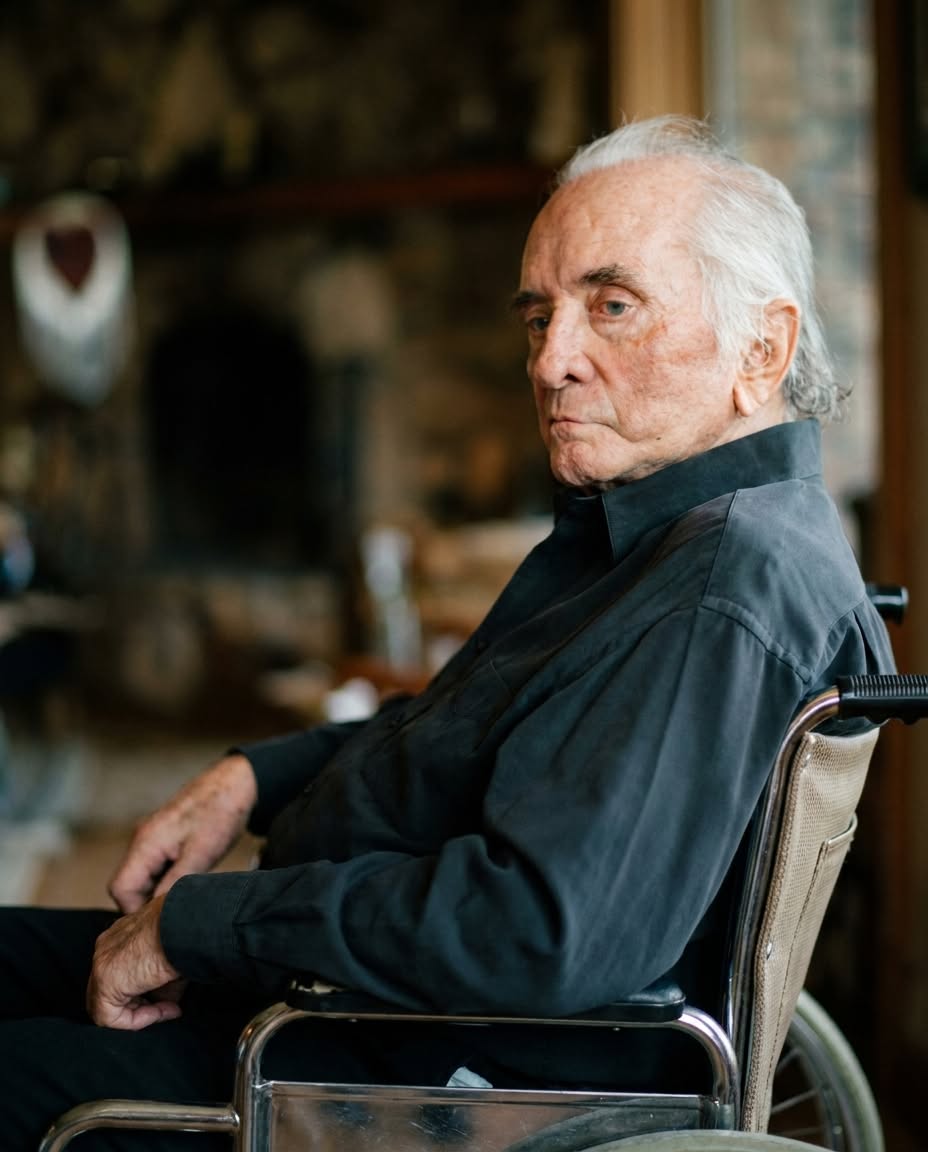
Johnny Cash’s Last Goodbye in Hendersonville
On September 15, 2003, more than 1,000 mourners gathered at First Baptist Church in Hendersonville, Tennessee, for a private funeral that felt larger than the building itself. Johnny Cash had died three days earlier, on September 12, 2003, and the church where the service was held carried a painful echo: it was the same place where June Carter Cash’s funeral had been held just four months before. The loss was still fresh, and the room was filled with grief, memory, and silence.
Johnny Cash lay in a black coffin with silver handles. The service lasted nearly two and a half hours, long enough for stories to unfold, songs to linger, and one final portrait of a life to take shape. The guests came from across the worlds Johnny Cash had touched: Vince Gill, George Jones, Emmylou Harris, Sheryl Crow, Hank Williams Jr., Kid Rock, and former Vice President Al Gore were among those present. It was not just a farewell to a singer. It was a farewell to an American original.
“Abraham Lincoln with a wild side”
Kris Kristofferson stood before the room and spoke with the kind of respect that only comes from years of friendship. He said Johnny Cash represented “the best of America,” then gave the audience a line they would not forget: “Abraham Lincoln with a wild side.”
That description captured the strange and powerful balance in Johnny Cash’s life. He could seem stern and gentle, spiritual and rebellious, wounded and strong, all at once. He was a man who sang about prisons, redemption, family, sorrow, and faith, and somehow made all of it sound personal.
Rosanne Cash delivered the eulogy and said she could not imagine a world without her father. Her words carried the private heartbreak behind the public legend. For the people in the church, the day was not about the myth of Johnny Cash. It was about the man who had sat at family tables, carried memories, and left an absence that could never be filled.
The music did not stop there
Even after the funeral, Johnny Cash’s voice was still in motion. Less than two months later, the CMA Awards recognized him with three major honors for album, single, and music video, and each announcement brought the room to its feet. The awards served as a reminder that his final chapter had not erased his reach; if anything, it sharpened it.
Three weeks before his death, Johnny Cash was still recording. He left behind more than 30 unreleased songs, a final stash of music that would keep his presence alive long after the church doors closed. Those recordings became part of the larger story: June was gone, Johnny was gone, but the tapes remained. Somewhere in Nashville, they were still waiting to sing.
And they did. Not as a miracle, but as a final gift. The voice that had carried through heartbreak, fame, faith, and time did not end on that September afternoon in Hendersonville. It continued in the recordings, in the memories, and in the lives of everyone who rose to their feet when they heard his name.