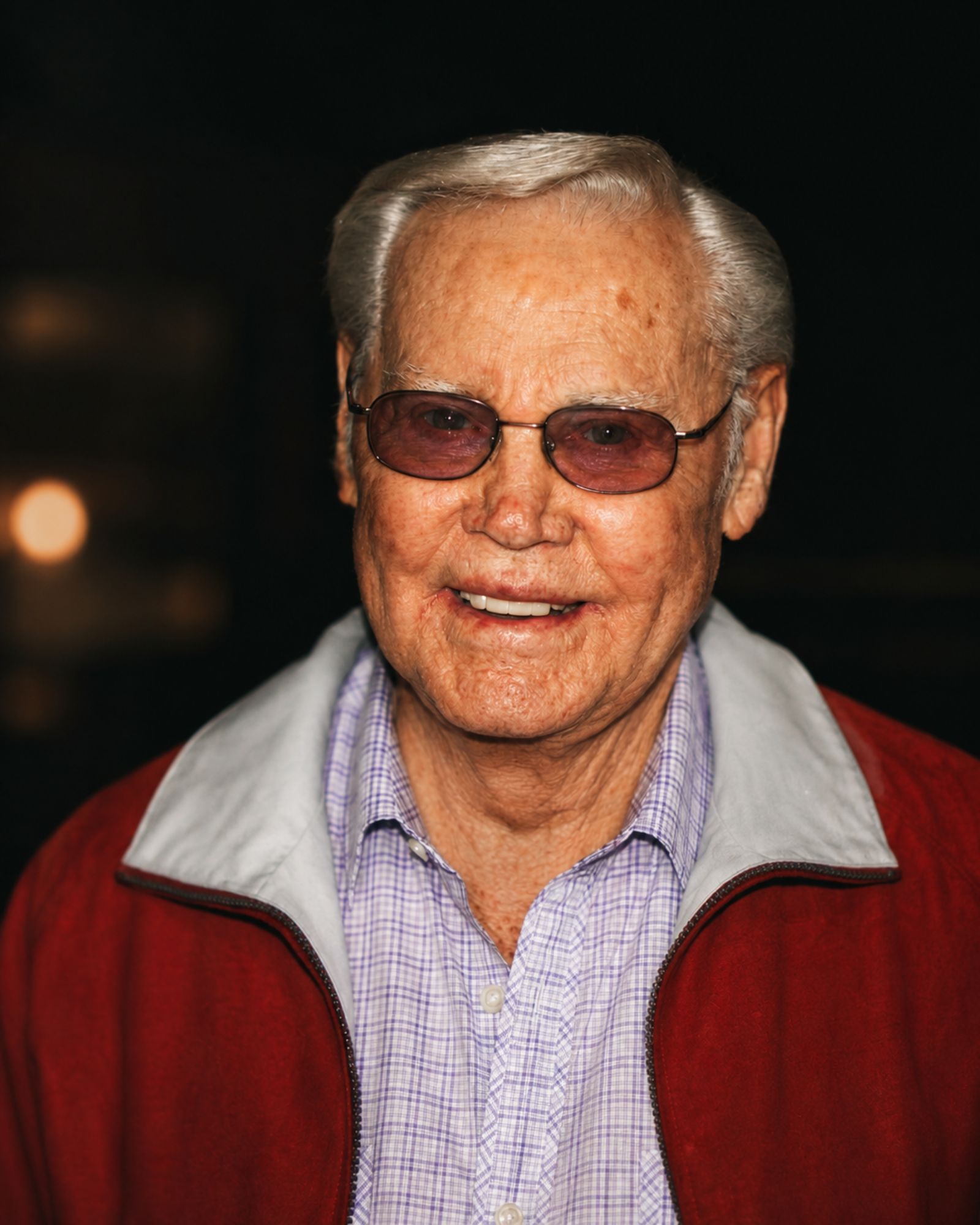
When Nashville Said Goodbye at the Grand Ole Opry House
On a morning heavy with memory, fans began lining up outside the Grand Ole Opry House long before the doors opened. Some had driven in through the night. Some had stood quietly in the dark, holding folding chairs, paper cups of coffee, and old stories they had told a hundred times before. They were not there for a concert. They were there to say goodbye.
The funeral for George Jones was held at the Grand Ole Opry House, a place that had helped define country music for generations. For many in the crowd, that choice felt right. George Jones had belonged to that stage for most of his life. He had been a Grand Ole Opry member since 1956, and his voice had carried through decades of heartbreak, regret, and unforgettable songs.
A Final Goodbye in the Heart of Country Music
Inside the building, the mood was solemn but full of love. The service lasted three hours and was carried around the world by satellite, allowing fans everywhere to witness the farewell. It felt less like a formal ceremony and more like a shared moment in country music history. Nashville had known George Jones as a legend, but it also knew him as a complicated man, someone who lived hard, sang honestly, and left behind a body of work that no one could ignore.
Barbara Mandrell had once called him, from that very stage, “the greatest singer of all time in country music”. On this day, that statement hung in the air like truth. No one in the room needed convincing. They had heard the voice, the phrasing, the ache in every note.
The Songs Carried the Grief
The service began with Tanya Tucker singing The Old Rugged Cross. It was a tender opening, and it set the tone for everything that followed. Then Randy Travis stepped up to sing Amazing Grace. His delivery was raw and spare, and the room grew so still that even the smallest sounds seemed to disappear.
“It’s my belief they don’t make those shoes anymore.”
That was Vince Gill, speaking before he and Patty Loveless performed Go Rest High on That Mountain. The line landed with the kind of quiet force only grief can create. Gill’s voice broke as he sang, and Loveless carried the song while he played through tears. It was one of those moments people do not simply watch; they remember it for the rest of their lives.
Charlie Daniels also spoke, honoring George Jones as “the most imitated singer of all time”. He reminded the crowd that countless younger artists had borrowed something from George Jones without even realizing it. A turn of phrase. A worn-in sadness. A way of making a song sound lived-in instead of performed. George Jones had influenced more singers than many fans could name.
Alan Jackson’s Closing Farewell
When Alan Jackson closed the ceremony with He Stopped Loving Her Today, the room seemed to hold its breath. That song was already one of the great country ballads, and in that setting it became something even larger. Jackson sang it with deep respect, and at the final line he removed his white cowboy hat. The gesture was simple, but everyone understood it.
By then, many in the audience were already wiping their eyes. At the end of the song, the Opry House finished with him, as if the building itself had joined in the farewell. It was a rare kind of silence that follows a powerful song, a silence filled not with emptiness but with memory.
A Life Nashville Could Never Quite Forget
Nashville had spent decades calling George Jones impossible. He had become a legend not only for his records, but for the way he carried the weight of fame, struggle, and survival. Yet on that day, none of that mattered more than the music. The arguments, the headlines, the hard years all faded behind the songs that made him unforgettable.
Fans who had lined up the night before came not just to witness history, but to be part of a goodbye that felt larger than any one person. They came because George Jones had given them songs for weddings, heartbreaks, lonely nights, and long drives. He had soundtracked real life.
In the end, that was what filled the Grand Ole Opry House. Not just grief, but gratitude. Gratitude for a voice that could make a simple line feel devastating. Gratitude for the records, the influence, and the honesty. Gratitude for the chance to say, one last time, that George Jones mattered.
“We love you, George,” they said.
And for a moment, in the heart of Nashville, it felt like the whole world said it too.