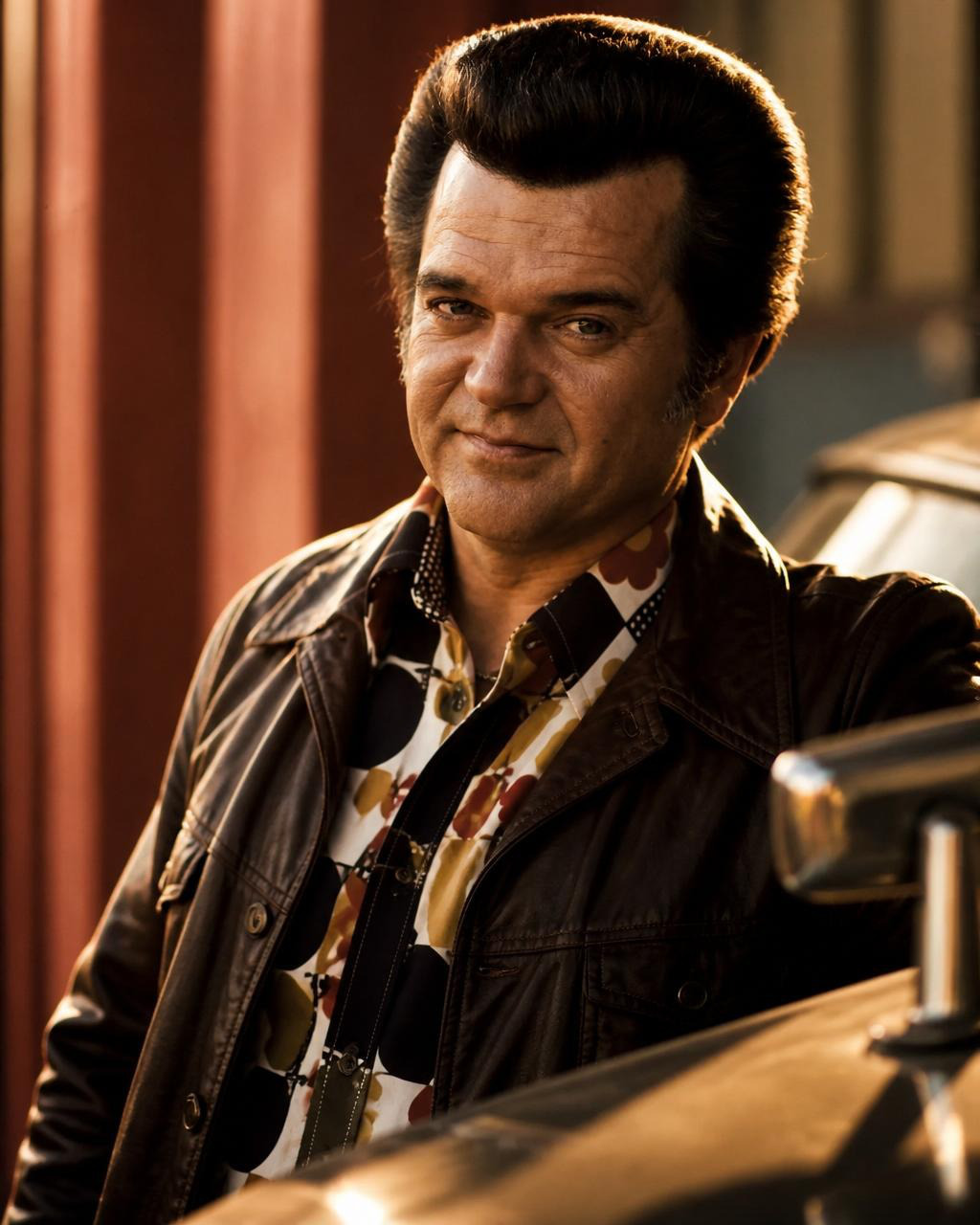
The Night Hendersonville Said Goodbye to Conway Twitty
On June 9, 1993, Hendersonville, Tennessee, stood still. At the First Baptist Church, more than 2,000 people came to fill the pews and every quiet space between them. Fans, family, and fellow artists gathered to honor Conway Twitty, the voice that had carried country music for decades with a deep, unmistakable warmth. Outside, Twitty City still glowed, as if the lights were refusing to let the story end too soon.
Conway Twitty had spent his life building something bigger than fame. By the time of his death on June 5, 1993, he had earned more No. 1 country records than any other artist had achieved at that point, along with a career that stretched across five decades. His music felt personal to millions of listeners, the kind of voice that could sound tender, confident, and lonely all at once.
A Farewell That Felt Personal
The funeral was not a performance. It was a gathering of people who understood what his songs had meant to ordinary lives. Loretta Lynn, who had been at his side in the hospital the night he died, later remembered him with clear affection and grief. The loss was not just for the industry. It was for every listener who had ever heard “Hello Darlin’” and felt spoken to directly.
“He was one of the best men I have ever known.”
Those words captured the mood around the church: respect, sadness, and gratitude. Conway Twitty had made a career out of making listeners feel seen, and in death, that connection came back to him in full.
Twitty City Kept the Lights On
Outside the service, Twitty City changed its sign to two simple words: Goodbye Darlin’. It was a small gesture, but it carried the weight of a final chorus. No press release. No long public statement. Just a quiet message from a place that had become part of Conway Twitty’s identity.
That image remains powerful because it felt true to who he was. Conway Twitty never needed to shout to be heard. His music did the work. His home, his stage presence, and his records all told the same story: this was an artist who knew how to reach people without asking for attention.
The Last Album, Released After His Death
Three weeks before he died, Conway Twitty finished his 58th album, Final Touches. The title was not chosen as a farewell, but it became one in the eyes of many fans. Released in August 1993, the album arrived with the strange tenderness that follows a great artist’s last chapter. People bought it not only to hear new songs, but to hold on to one more recording from a voice they had trusted for years.
In 1999, the Country Music Hall of Fame finally welcomed Conway Twitty, a recognition that felt overdue to many fans. By then, the industry had had time to catch up with what audiences already knew: Conway Twitty was one of country music’s defining figures, and his influence had never really faded.
What Remains
More than 30 years later, the memory of that June day still feels vivid. A packed church. A glowing sign. A final album. A career that crossed eras without losing its center. Conway Twitty’s story was never only about numbers, even though the numbers were extraordinary. It was about the comfort of a voice that sounded like it knew your heart.
And on that day in Hendersonville, the people who came to say goodbye seemed to understand that they were not only mourning a singer. They were closing the door on a chapter of country music that had shaped how the genre could sound, feel, and live in memory.