Scroll to the end of the article to hear the song.
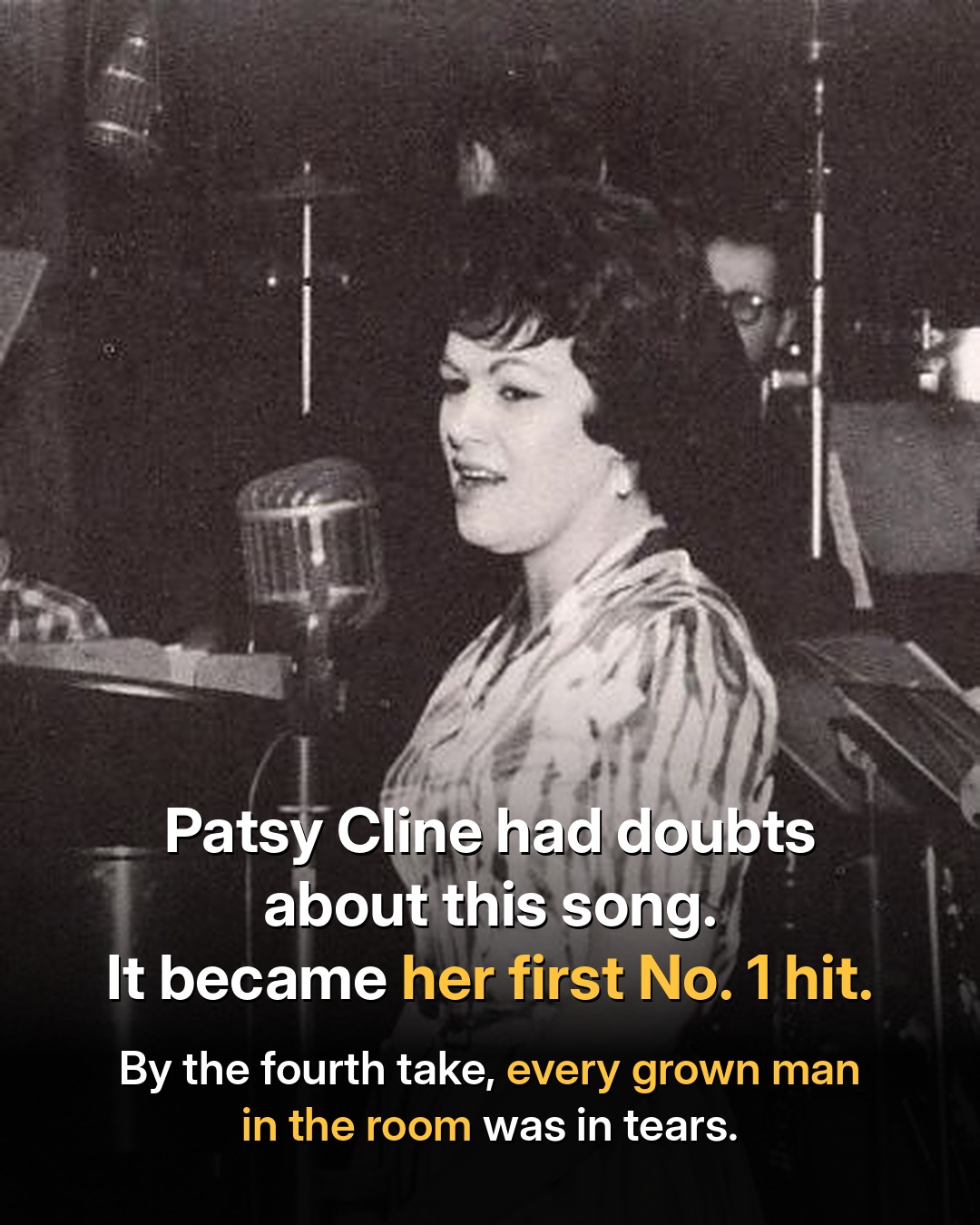
On November 16, 1960, Patsy Cline recorded “I Fall to Pieces” in Nashville, and she was not happy about it. The song had been turned down by other singers, the sound was smoother than she wanted, and the voices lined up behind her worried her. A little more than eight months later, it was the No. 1 country record in America and the song that finally turned her into a star.
A Song Other Singers Passed On
Hank Cochran came up with the title, and he and Harlan Howard finished the song together. Howard’s wife, country singer Jan Howard, sang the demo. Harlan then took it to Owen Bradley, the producer who ran Decca’s Nashville operation.
Bradley had trouble finding a taker. Brenda Lee felt it was too country for her pop style. Roy Drusky turned it down because he didn’t see it as a man’s song. Accounts differ on what happened next. Some say Patsy, who happened to be at the label offices, heard about the song and asked to record it. Others say she was the third artist to say no, and that Bradley talked her into it. Either way, it ended up in her hands.
Her First Decca Session
Patsy Cline had just finished her old contract with Four Star and signed directly with Decca. November 16, 1960, was her first session under the new deal, held at Bradley’s studio on Music Row, the building Nashville knew as the Quonset Hut. She was about seven months pregnant with her second child.
Bradley surrounded her with some of the best players in town, including Hank Garland on guitar, Floyd Cramer on organ, Hargus “Pig” Robbins on piano, Bob Moore on bass and Ben Keith on steel guitar. Behind her stood the Jordanaires, the vocal group best known for singing with Elvis Presley.
That lineup was part of the problem for Patsy. According to the Jordanaires’ Gordon Stoker, she worried that four male voices would drown her out, and she was not very friendly toward the group that day. She also felt the song was too pop for the country fans who had followed her since “Walkin’ After Midnight.” Bradley heard it as a crossover ballad. Patsy heard a record that might not sound like her.
The Fourth Take
Patsy was not the only one struggling. Harlan Howard said the musicians tried to avoid the standard country shuffle, which by then felt worn out. They tried other rhythms, and nothing worked, so they went back to the shuffle.
Jordanaires singer Ray Walker later told his own story about that night. He recalled that the group was spellbound by her low, soft tones until she cut loose with a loud, western swing style ending. Walker told her it ruined the song. Patsy answered that Owen Bradley had said the same thing, and Walker told her to stick with what Owen said.
Once she settled into the song, the room changed. Howard later described her delivery as smooth as satin, and he remembered the moment they knew they had it:
“On the fourth take, every grown man in that studio was bawling like a baby.”
Bradley called it the keeper. After Patsy heard the finished recording, she came around to his approach and grew to like the record. Her worries about the Jordanaires faded too. She went on to record with them many more times.
A Slow Climb Through a Hard Year
Decca released the single on January 30, 1961, barely a week after Patsy gave birth to her son, Randy. At first, radio ignored it, and disc jockeys on both the country and pop side were slow to give it a chance. Pamper Music’s Hal Smith believed in the song enough to hire promoter Pat Nelson to work it, and the first real break came when a pop station in Columbus, Ohio, started playing it.
The record entered the Billboard country chart in early April, more than two months after its release, and reached the Hot 100 in late May. It was still climbing on June 14, 1961, when Patsy Cline and her brother were hit head-on on a Nashville road. She was thrown into the windshield and spent about a month in the hospital.
On August 7, 1961, while she was still recovering, “I Fall to Pieces” reached No. 1 on the Billboard country chart. It held the top spot for two weeks and peaked at No. 12 on the pop chart. It was her first big hit in four years, and it opened the door for “Crazy” and “She’s Got You.”
“Thanks for the Hit”
Patsy Cline never forgot the two men who handed her that song. She gave Harlan Howard a bracelet and Hank Cochran a money clip, both engraved with the same words: “Thanks for the Hit – Patsy.”