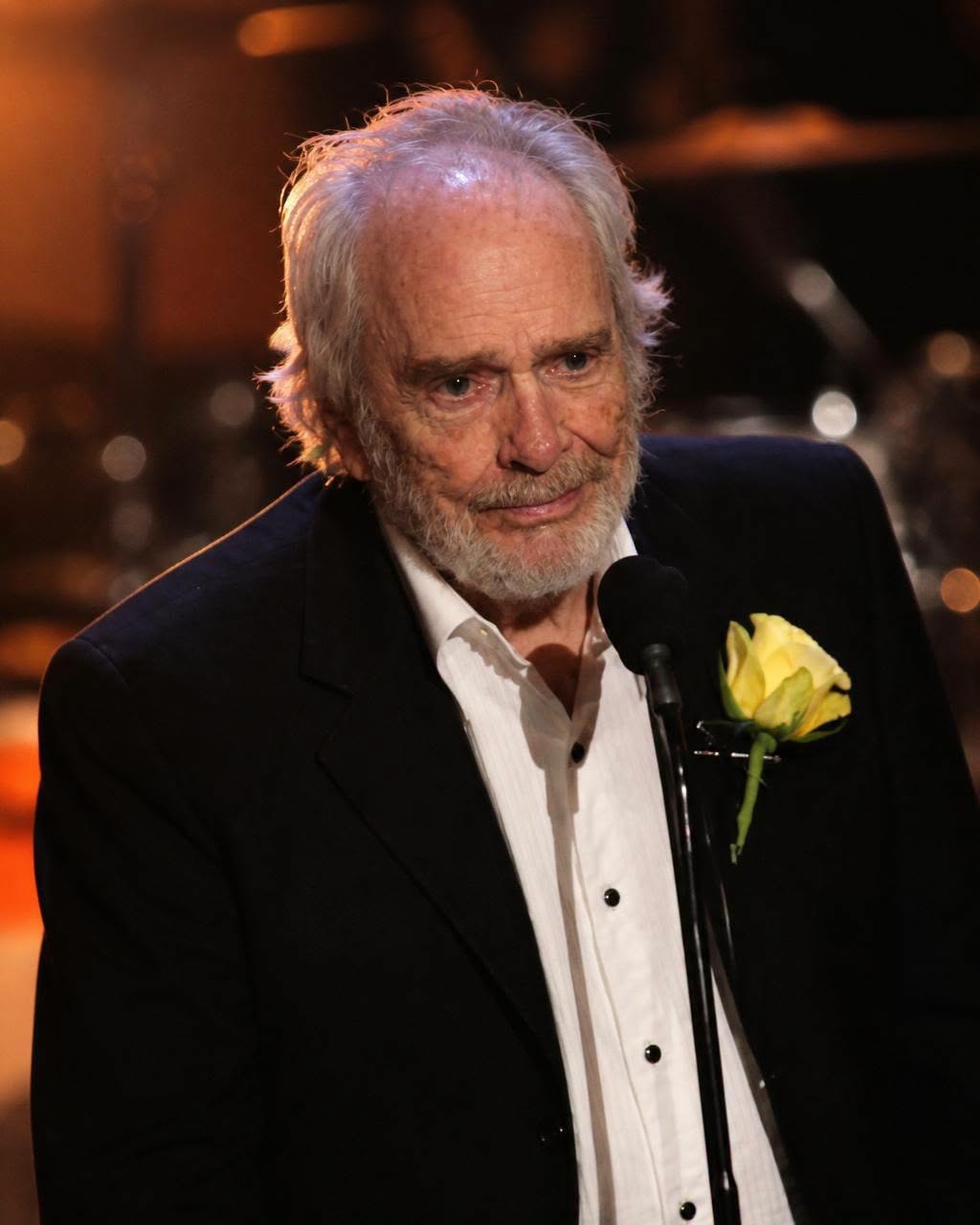
Merle Haggard and the Morning He Chose
On the morning of April 6, 2016, Merle Haggard turned 79 and stayed in bed in Palo Cedro, California. He had already told his family, a week earlier, that this was the morning. It was not a surprise to the people closest to him. It was, in its own quiet way, the final line of a life that had never moved in a straight path. Theresa Haggard, his wife of 23 years, was there with the rest of the family as the day arrived. By then, part of Merle Haggard’s right lung had already been removed years before, and his body had been carrying the cost of a rough road for a long time.
That road began in Depression-era California. Merle Ronald Haggard was born on April 6, 1937, in a converted boxcar home in the Bakersfield area after his parents had left Oklahoma in search of work and a steadier life. His father died when Merle Haggard was nine. After that, the boy’s life kept getting broken into by trouble: juvenile hall, reform school, county jail. He escaped seventeen times, as if the world kept trying to hold him still and he kept refusing.
By the time Merle Haggard was 20, the story had turned sharp. In 1958, drunk and looking for a place he thought was closed, he tried to break into a restaurant that was open after all. San Quentin sent him away for nearly three years. On New Year’s Day in 1959, he sat in the audience and watched Johnny Cash perform inside that prison. He did not tell Johnny Cash about that day until much later, after friendship had already replaced distance. When Merle Haggard was paroled in 1960, he came home and dug ditches for his brother, which is where a lot of legends begin: not in applause, but in honest work.
Then came the songs that changed everything. “(My Friends Are Gonna Be) Strangers.” “Mama Tried.” “Hungry Eyes.” “Okie from Muskogee.” The music sounded like hard-earned memory, plain speech, and a bruised kind of pride. Merle Haggard gave voice to people who rarely heard themselves on the radio, and in doing so he became one of country music’s defining figures. He recorded 38 number-one songs, a run that marked not just success but endurance.
A Life That Kept Returning
In 1972, California Governor Ronald Reagan signed Merle Haggard’s pardon. In 1994, the Country Music Hall of Fame welcomed him in. Those milestones mattered, but they did not erase the years before them. They simply stood beside them, proof that a life can be both damaged and celebrated, both haunted and beloved.
Merle Haggard toured until his lungs would not allow it anymore. He went home. He told his family the day he would die, and on April 6, 2016, he was right. That fact gives his story a strange and unforgettable symmetry: born on April 6, gone on April 6, with a lifetime of scars, songs, and survival in between.
What remains is not only the myth of the outlaw or the image of the rebel. What remains is the music, and the difficult honesty behind it. Merle Haggard did not have an easy beginning, and he did not have an easy ending. But in between those two dates, he built a body of work that still feels alive because it came from real weather, real loss, and real grit.