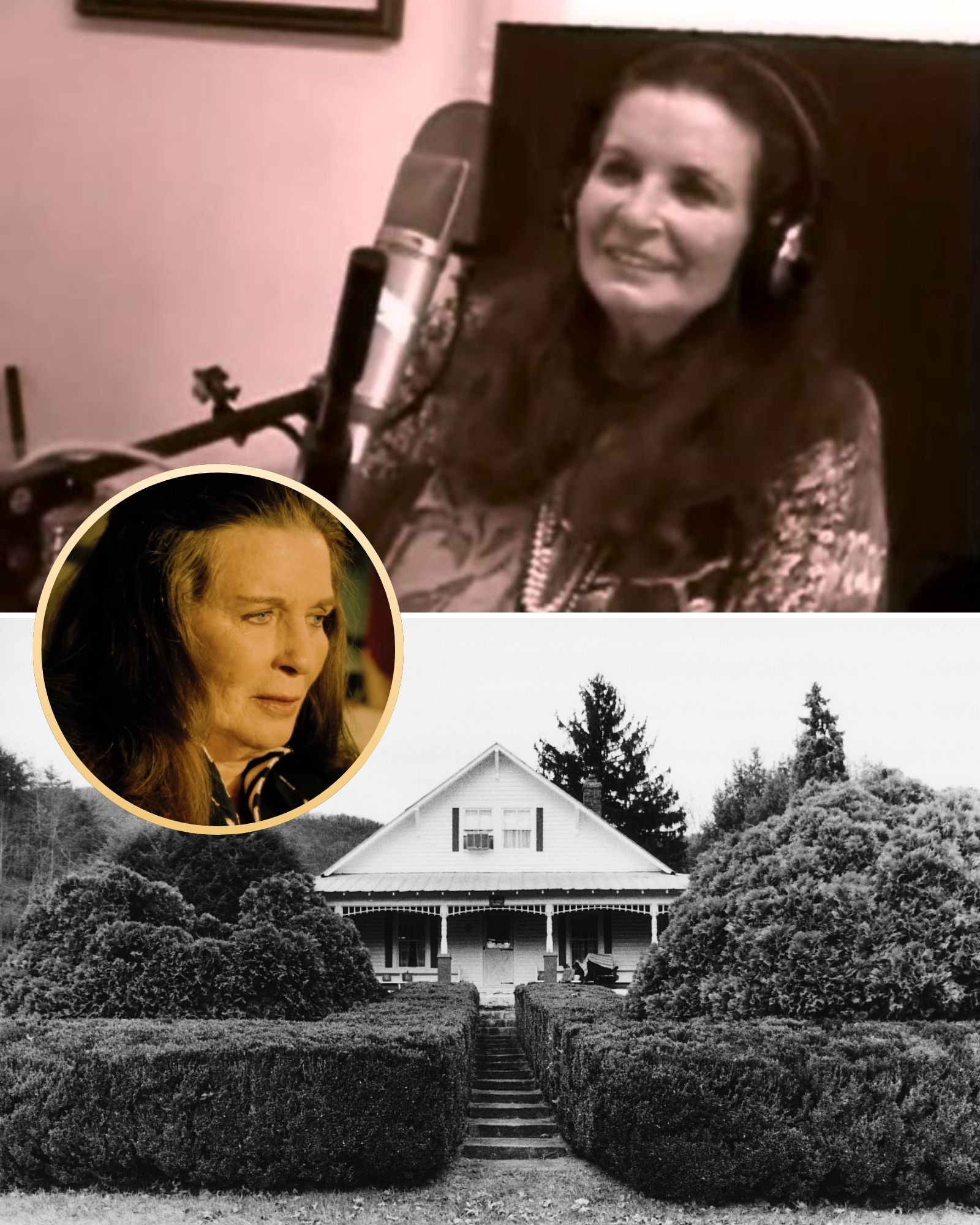
In September 2002, June Carter Cash came back to Maces Spring, Virginia, the small community in Poor Valley where she was born in 1929. She was 73. Her son, John Carter Cash, was producing what would become her final album, Wildwood Flower, and he had brought recording equipment into the old family house where her mother, Maybelle Carter, had lived since she married Ezra Carter in 1926.
Nobody in the room knew it would be the last record June ever made. It was meant as a follow-up to Press On, her 1999 album that had won a Grammy for Best Traditional Folk Album.
The living room in Maces Spring
There was no studio. The family simply turned the living room and the front porch into one. John Carter Cash later told NPR that about half of the album was recorded at the homestead.
We just set up microphones in that living room.
He described feeling surrounded by living history in that house, as if they were repeating something that had been done long before them. Film shot during those September days shows June singing in the living room and out on the porch, then walking the grounds and remembering her childhood there.
Her son said his job was mostly to capture what happened. June, he recalled, came to the sessions open-minded, eager and excited.
The song that started it all
The songs she chose reached back to the beginning. More than half of the thirteen tracks came from the original Carter Family, the trio of her uncle A.P. Carter, her aunt Sara and her mother.
Among them was “Wildwood Flower.” In May 1928, the Carter Family recorded it for Victor in Camden, New Jersey. Sara sang, and 19-year-old Maybelle played the guitar, picking the melody on the low strings while keeping rhythm on the high ones. That style became known as the Carter scratch, and the record became one of the first country songs heard far outside the South. In 2006, the Library of Congress added it to the National Recording Registry.
Seventy-four years after that session, Maybelle’s daughter recorded the same song back in the valley the Carter Family came from, with June on autoharp.
A family affair
As with the Carter Family of the 1920s, and later Mother Maybelle and the Carter Sisters, the sessions were filled with relatives. Johnny Cash sang with her. So did her cousins Joe and Janette Carter, the children of A.P. and Sara, who had kept the family’s music alive at the Carter Family Fold in nearby Hiltons.
Her daughter Carlene Carter and her granddaughter Tiffany Anastasia Lowe added their voices. Her daughter-in-law, Laura Cash, played fiddle and guitar. Lorrie Carter Bennett sang harmony. Marty Stuart, once married to June’s daughter Carlene, sang on “Sinking in the Lonesome Sea.” Old-time masters Norman and Nancy Blake played much of the acoustic music. Stepdaughter Rosanne Cash later wrote the liner notes.
From the cabin to the bedroom
The recording did not end in Virginia. Over the following months, through March 2003, the sessions continued at the Cash Cabin Studio, a small cabin in the woods near the Cash home in Hendersonville, Tennessee, and in the bedroom June shared with Johnny.
Some of the album is playful. June and Johnny sang “Temptation,” a comic duet that had also been the last song they performed together in public, at the Americana Music Association awards in 2002. She told a story about the actor Lee Marvin before “Big Yellow Peaches.” Her son also wove in short clips of June singing as a little girl with her family on the radio.
Other moments are much heavier. On the old Carter Family song “Will You Miss Me When I’m Gone?”, June sings the question and the voices of her family, Johnny’s among them, answer it back. Reviewers at the time noted how raw and unpolished the record sounded, and the slight tremor of age in her voice.
May 15, 2003
June was preparing for the album’s release when she went into the hospital for heart surgery. She died on May 15, 2003, of complications from the operation. She was 73.
The project paused. The painter Marc Burckhardt, who had been hired for the cover, later wrote that work had barely begun when she died. After a few weeks, it started again, and he painted the portrait of June that became the cover.
Three days
Wildwood Flower was released by Dualtone on September 9, 2003, four months after June’s death. Johnny Cash died on September 12, three days later. Because he sings on it, it became the last release of his lifetime.
The album reached No. 2 on Billboard’s Bluegrass Albums chart and No. 33 on the Country Albums chart.
In February 2004, it won the Grammy for Best Traditional Folk Album, and June’s version of “Keep on the Sunny Side” won Best Female Country Vocal Performance. John Carter Cash accepted for both of his parents that year. Speaking of his mother, he told reporters:
She’s laughing and dancing somewhere.
The last song
The album closes with June’s spare version of “Wildwood Flower,” the song her mother had played as a teenager in 1928. Her son told NPR it seemed like the right way to end the record, because the song was who she was, and the music keeps going the way her spirit does.