When The Highwaymen Made “The Road Goes on Forever” Sound Like a Farewell
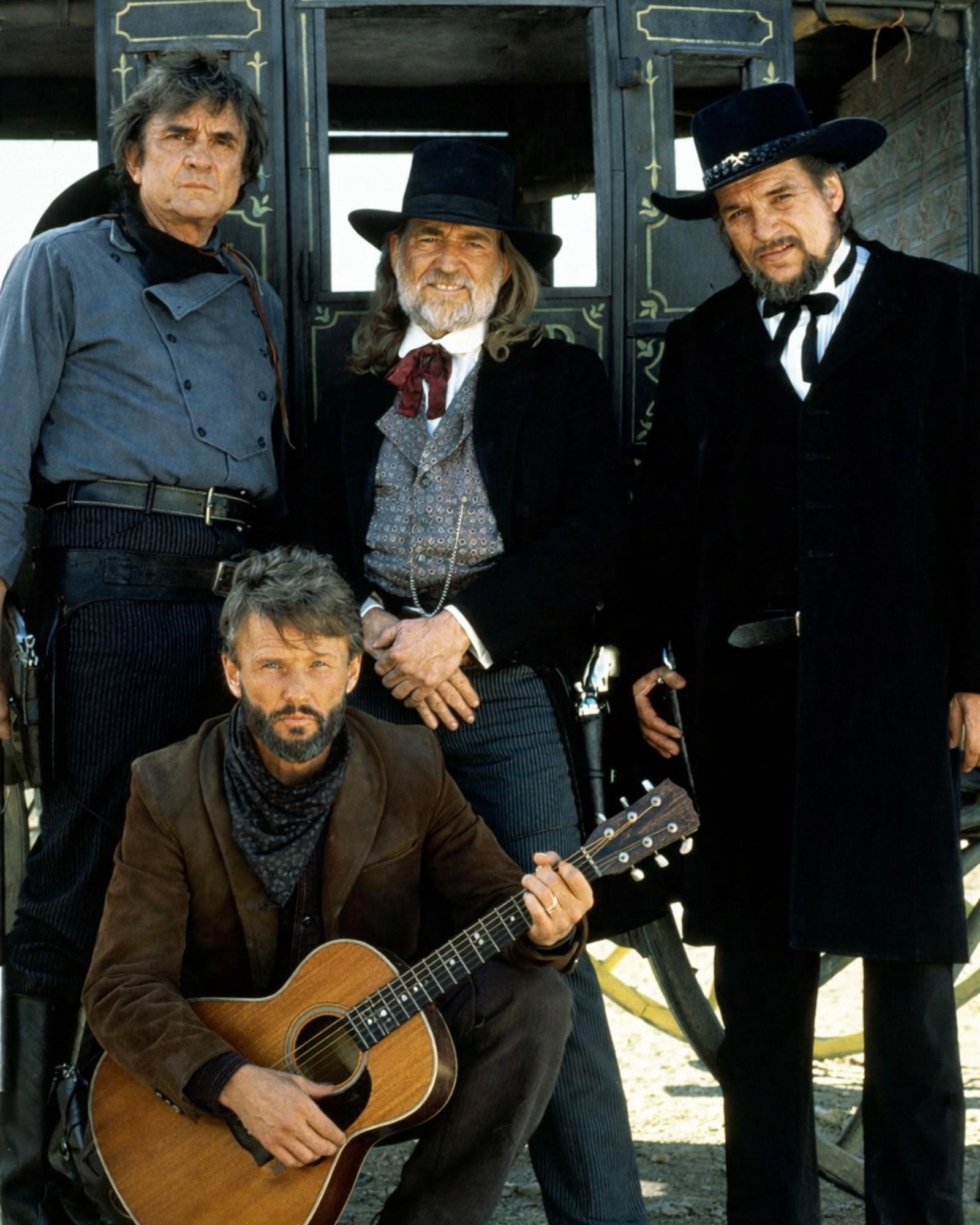
Four names in country music still carry the weight of a thousand hard-earned stories: Willie Nelson, Waylon Jennings, Johnny Cash, and Kris Kristofferson. Each man already had a separate legend before they ever stood side by side as The Highwaymen. Together, they became something even larger than a supergroup. They became a moving conversation between four voices that had seen enough heartbreak, rebellion, humor, and loss to turn almost any song into truth.
By the time The Highwaymen recorded their third and final studio album, The Road Goes on Forever, in 1995, the years had already done what years do. The wild roads were not behind them exactly, but they were no longer pretending to be immortal. Their voices had deepened. Their bodies had slowed. Yet the music still carried a strange kind of fire.
A Song That Felt Bigger Than Its Title
The title track, written by Robert Earl Keen, already had the shape of a modern outlaw tale. But in the hands of Willie Nelson, Waylon Jennings, Johnny Cash, and Kris Kristofferson, it became something more reflective. It was no longer just about momentum or escape. It sounded like memory speaking to itself.
Johnny Cash brought gravity. Waylon Jennings brought that rough-edged growl that made every line feel lived in. Kris Kristofferson gave the performance a cracked poet’s edge, full of ache and wisdom. And Willie Nelson moved through it all with the soft, weathered tenderness that made even resignation sound brave. The result was not polished. It was human.
It sounded less like a promise of forever and more like four men singing against the truth of time, refusing to give in completely.
The Last Ride of a Rare Brotherhood
The Road Goes on Forever was the group’s final studio statement, released in 1995. It arrived after a decade in which The Highwaymen had already proven that country music could be tough without losing feeling, and proud without losing humility. The four men never needed to act young. Their power came from age, scars, and survival.
Over the years, that meaning has only grown sharper. Waylon Jennings died in 2002. Johnny Cash died in 2003. Kris Kristofferson died in 2024. Willie Nelson is still here, still singing, still carrying that road in his voice. That changes the way the song lands now. It is no longer just a performance. It feels like an echo from a room we can never enter again.
What the song means now
When listeners hear “The Road Goes on Forever” today, they may hear the same melody, the same swagger, and the same storytelling. But they also hear absence. They hear a friendship that became history. They hear a quartet of men who understood that music can outlast the body, even when the body cannot outlast time.
So yes, the song feels more like a promise now. Not because the men are still physically riding together, but because the recording keeps them moving. Willie Nelson remains the living reminder of that era, while the voices of Waylon Jennings, Johnny Cash, and Kris Kristofferson continue to return whenever the track plays.
In the end, the road did not go on forever for flesh and bone. But in the music, it still does.