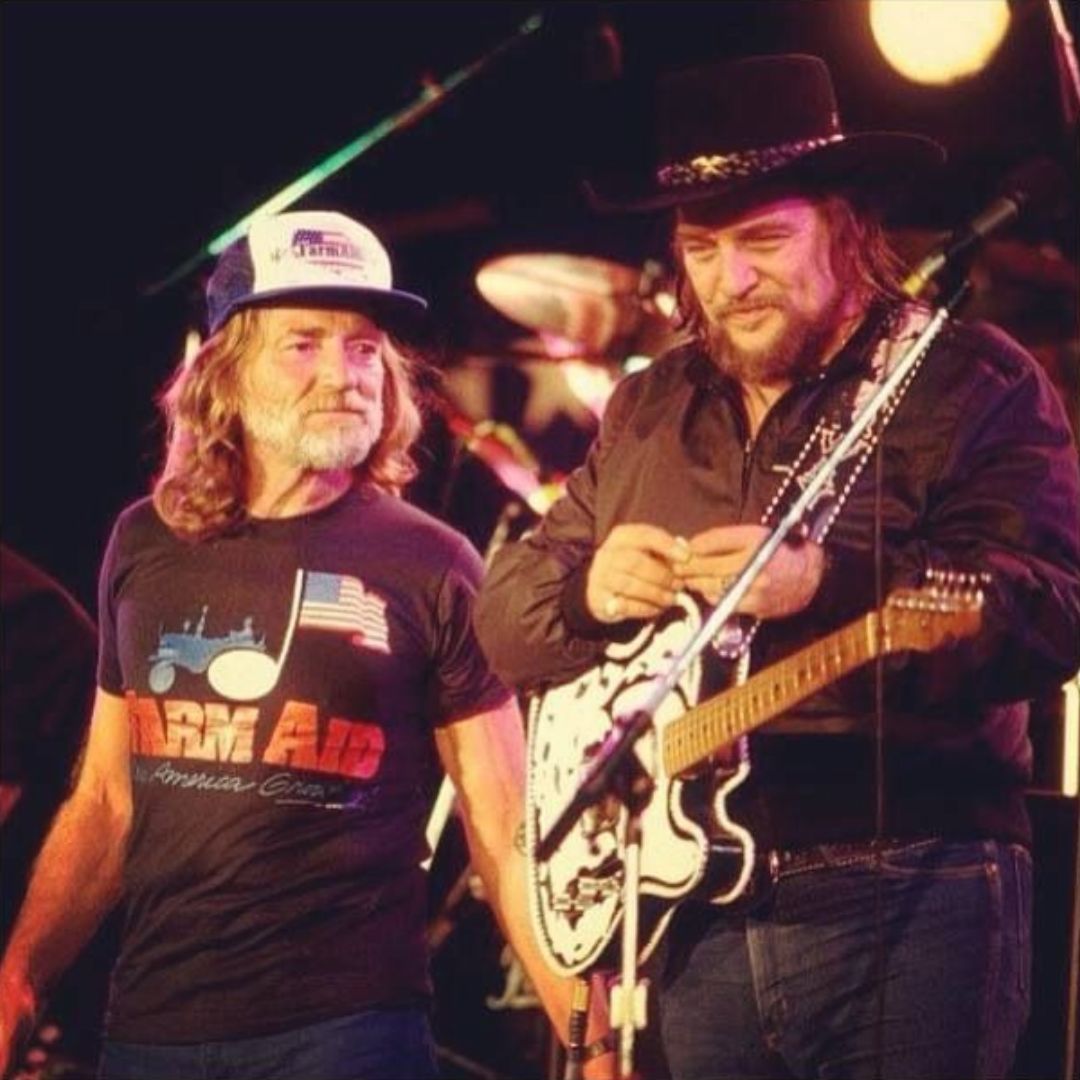
On February 13, 2002, Willie Nelson walked onto a stage in Oroville, California, knowing that one of the closest friends of Willie Nelson’s life was gone.
Waylon Jennings had died earlier that day at home in Arizona. Waylon Jennings was 64, a Country Music Hall of Fame member and one of the defining voices of outlaw country.
At Feather Falls Casino, Willie Nelson faced a sold-out crowd. The concert lasted more than two hours, with over 40 songs. There was no formal eulogy, no lengthy speech about Waylon Jennings, and no interruption to the performance.
But after the music ended, a reporter found Willie Nelson sitting quietly at the kitchen table of the tour bus. What followed was a conversation about a friendship that had begun four decades earlier.
The Night the Music Didn’t Stop
Willie Nelson was 68 years old that February evening. The seven-piece band moved continuously between songs, playing country standards, familiar hits and material that had helped define Willie Nelson’s career.
The set included “Whiskey River,” “Blue Eyes Crying in the Rain,” “On the Road Again” and songs associated with other country legends.
Near the end of the concert, Willie Nelson even stepped away from the guitar to sign autographs while the band continued playing.
Yet the biggest audience reaction came during “Luckenbach, Texas,” the 1977 Waylon Jennings hit featuring Willie Nelson.
The significance of that moment became clearer after the concert.
A Breakfast in Phoenix Changed Everything
Willie Nelson first met Waylon Jennings in Phoenix in 1962. Both musicians were playing local clubs and trying to build careers.
After their performances one night, Willie Nelson and Waylon Jennings met for breakfast. Waylon Jennings wanted advice about moving to Nashville.
Willie Nelson asked how much money Waylon Jennings was earning in Phoenix.
About $400 a week.
That was good money for a working musician in the early 1960s. Willie Nelson advised Waylon Jennings to stay where the money was.
Waylon Jennings eventually moved to Nashville anyway.
The decision helped launch one of country music’s most influential careers. Over the following decades, Willie Nelson and Waylon Jennings became central figures in a movement that challenged Nashville’s established recording practices.
But one of their most famous collaborations began somewhere far less glamorous than a recording studio.
The Poker Game That Gave Country Music a Classic
In 1969, at the Fort Worther Motel in Fort Worth, Texas, Waylon Jennings noticed a newspaper advertisement for Ike and Tina Turner.
The advertisement contained a phrase about a good-hearted woman loving a difficult man. Waylon Jennings immediately recognized the possibilities for a country song.
Willie Nelson was playing poker when Waylon Jennings arrived with the idea.
As the card game continued, Willie Nelson and Waylon Jennings worked on the lyrics. Connie Koepke, Willie Nelson’s future wife, wrote down the words.
The result was “Good Hearted Woman.”
Waylon Jennings recorded a solo version that became a country hit. Then, in 1976, the song returned in a form that surprised listeners.
For the album Wanted! The Outlaws, Willie Nelson’s vocals were added to an existing live recording of Waylon Jennings. The finished record sounded like the two friends were singing together before an enthusiastic crowd, although the featured vocals had been combined afterward.
The duet reached No. 1 on the country chart. The album became the first country album certified platinum by the Recording Industry Association of America.
It was a remarkable outcome for a song that had started with a newspaper advertisement and a poker game.
The Strange Story Behind “Luckenbach, Texas”
There was another irony surrounding the song that received the loudest applause on February 13, 2002.
Waylon Jennings never particularly liked “Luckenbach, Texas.”
Written by Chips Moman and Bobby Emmons, the song became one of the biggest hits of Waylon Jennings’s career, spending six weeks at No. 1 in 1977.
But Waylon Jennings later admitted in an autobiography that the song had never been a personal favorite. One objection was having to sing a song that mentioned Waylon Jennings by name.
Nevertheless, “Luckenbach, Texas” became inseparable from the public image of Waylon Jennings and Willie Nelson.
And on the night Waylon Jennings died, that was the song that brought the strongest response from Willie Nelson’s audience.
What Willie Nelson Said After the Show
Alan Sheckter, writing for the Chico News & Review, spoke with Willie Nelson aboard the tour bus after the concert.
When asked why there had been no formal tribute to Waylon Jennings during the performance, Willie Nelson answered simply:
“Oh, I mentioned him.”
Willie Nelson explained that Waylon Jennings was already present in the songs Willie Nelson performed every night. The friendship needed no lengthy explanation for people who understood their history.
The reporter also asked what Willie Nelson would miss most.
Willie Nelson remembered the music, the concerts and the arguments.
Those arguments mattered. Willie Nelson and Waylon Jennings had spent decades disagreeing about songs, ideas and almost everything else while continuing to make music together.
The friendship was not built on always agreeing. It had survived years of touring, recording, success and the stubborn personalities that helped make both musicians famous.
That February night, Willie Nelson did not give the audience a conventional farewell to Waylon Jennings.
Instead, Willie Nelson kept playing the music that had connected their lives.
And when the crowd erupted for “Luckenbach, Texas,” a song Waylon Jennings had never especially loved, the bond between those two unmistakable voices was still being celebrated.
For Willie Nelson, the memories of Waylon Jennings were not confined to a speech. They lived in the songs, the stages and the arguments that had filled 40 years of friendship.