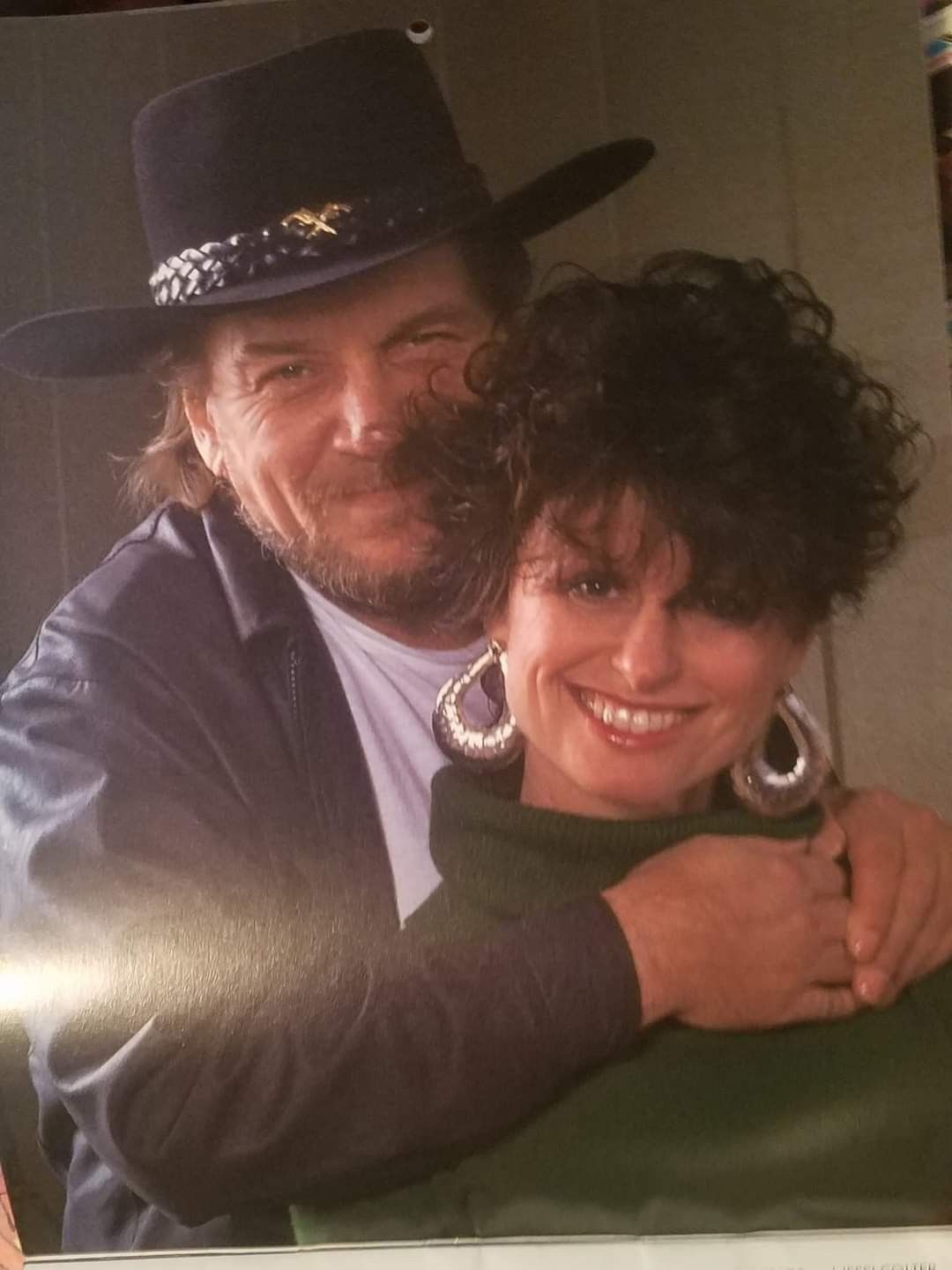
On February 3, 1959, Waylon Jennings escaped a plane crash that would change music history forever. Forty-three years later, on February 13, 2002, the country legend died at home in Chandler, Arizona, at 64.
Between those two February mornings lay one of country music’s most remarkable lives. But the story of Waylon Jennings’ final months wasn’t about fame, records, or the rebellious image that made Waylon Jennings an outlaw country icon.
It was about Jessi Colter, an old piano, the hymns of childhood, and a conversation that Jessi Colter had wanted to have for decades.
The Plane Ticket That Changed Everything
In February 1959, Waylon Jennings was playing bass for Buddy Holly during the Winter Dance Party tour. After a performance in Clear Lake, Iowa, Buddy Holly arranged a small plane to reach the next concert.
Waylon Jennings had a seat on that plane. But J.P. Richardson, known as the Big Bopper, was ill and struggling with the uncomfortable tour bus. Waylon Jennings offered the seat to J.P. Richardson instead.
The plane crashed shortly after takeoff, killing Buddy Holly, Ritchie Valens, J.P. Richardson, and pilot Roger Peterson.
Waylon Jennings later acknowledged that the tragedy continued to haunt him. Survival had given Waylon Jennings a future, but the memory of that night never entirely disappeared.
The Woman Who Knew the Man Behind the Outlaw
By the time Waylon Jennings married Jessi Colter in 1969, the singer had already lived through heartbreak, difficult relationships, and the demanding life of a touring musician.
Jessi Colter had grown up surrounded by gospel music. Jessi Colter’s mother preached, and church hymns were part of Jessi Colter’s earliest musical memories.
Waylon Jennings had a different relationship with religion. Jessi Colter later recalled that Waylon Jennings associated childhood religious teachings with fear rather than comfort.
Throughout the marriage, Jessi Colter hoped that Waylon Jennings would eventually find the same spiritual peace that had become important in Jessi Colter’s own life.
The years were not always easy. Waylon Jennings struggled with addiction before quitting drugs in 1984. Later came serious health problems, hospital visits, and growing physical limitations.
By Thanksgiving 2001, Waylon Jennings was back in the hospital. Jessi Colter sensed that the moment had finally arrived for a conversation long postponed.
The Thanksgiving Question Jessi Colter Had Waited Years to Ask
In a deeply personal account later published by Guideposts, Jessi Colter described sitting beside Waylon Jennings’ hospital bed that Thanksgiving.
Waylon Jennings noticed that Jessi Colter had something important to say.
Jessi Colter finally asked whether Waylon Jennings was ready to accept the Lord and become what Jessi Colter called God’s man.
Instead of avoiding the conversation, Waylon Jennings smiled. According to Jessi Colter, Waylon Jennings had anticipated the question.
Waylon Jennings asked what accepting that faith would require. Jessi Colter explained, and Waylon Jennings repeated the words of acceptance.
For Jessi Colter, the moment carried extraordinary meaning. After years of patience, prayer, and conversations about belief, the couple shared an intimate expression of faith.
Jessi Colter remembered Waylon Jennings taking Jessi Colter’s hand and speaking with unusual tenderness.
It wasn’t a public performance or a dramatic farewell speech. It was simply a conversation between two people who had spent more than three decades together.
One Last Christmas, One Familiar Piano
Christmas 2001 brought family and friends together around Waylon Jennings. Medical equipment was now part of daily life, and Waylon Jennings’ health remained fragile.
During that Christmas season, Waylon Jennings made a request that stayed with Jessi Colter.
Waylon Jennings wanted Jessi Colter to play the piano and sing the old church hymns Jessi Colter had learned as a little girl.
Those songs reached back to Jessi Colter’s childhood, long before Nashville, hit records, or the outlaw country movement.
For Jessi Colter, the request reflected the spiritual change Jessi Colter believed had taken place during their final Thanksgiving together.
February 13, 2002: The Final Morning
On the morning of February 13, Waylon Jennings had been looking forward to watching the Winter Olympics.
Jessi Colter had an appointment but returned home to prepare Waylon Jennings’ usual protein shake.
Jessi Colter found Waylon Jennings appearing to be asleep. When Jessi Colter leaned over to kiss Waylon Jennings’ forehead, Jessi Colter realized something was terribly wrong.
Paramedics attempted resuscitation, but Waylon Jennings had died.
Country music had lost one of its defining voices, the singer behind songs including Luckenbach, Texas and I’ve Always Been Crazy.
Yet Jessi Colter’s memories preserve something beyond the familiar outlaw legend.
The man who had survived Buddy Holly’s final flight, challenged Nashville’s rules, and helped transform country music spent his last Christmas asking his wife to sing the hymns she had known since childhood.
And for Jessi Colter, that quiet request was part of a much larger story about love, patience, and the conversation that finally happened before time ran out.