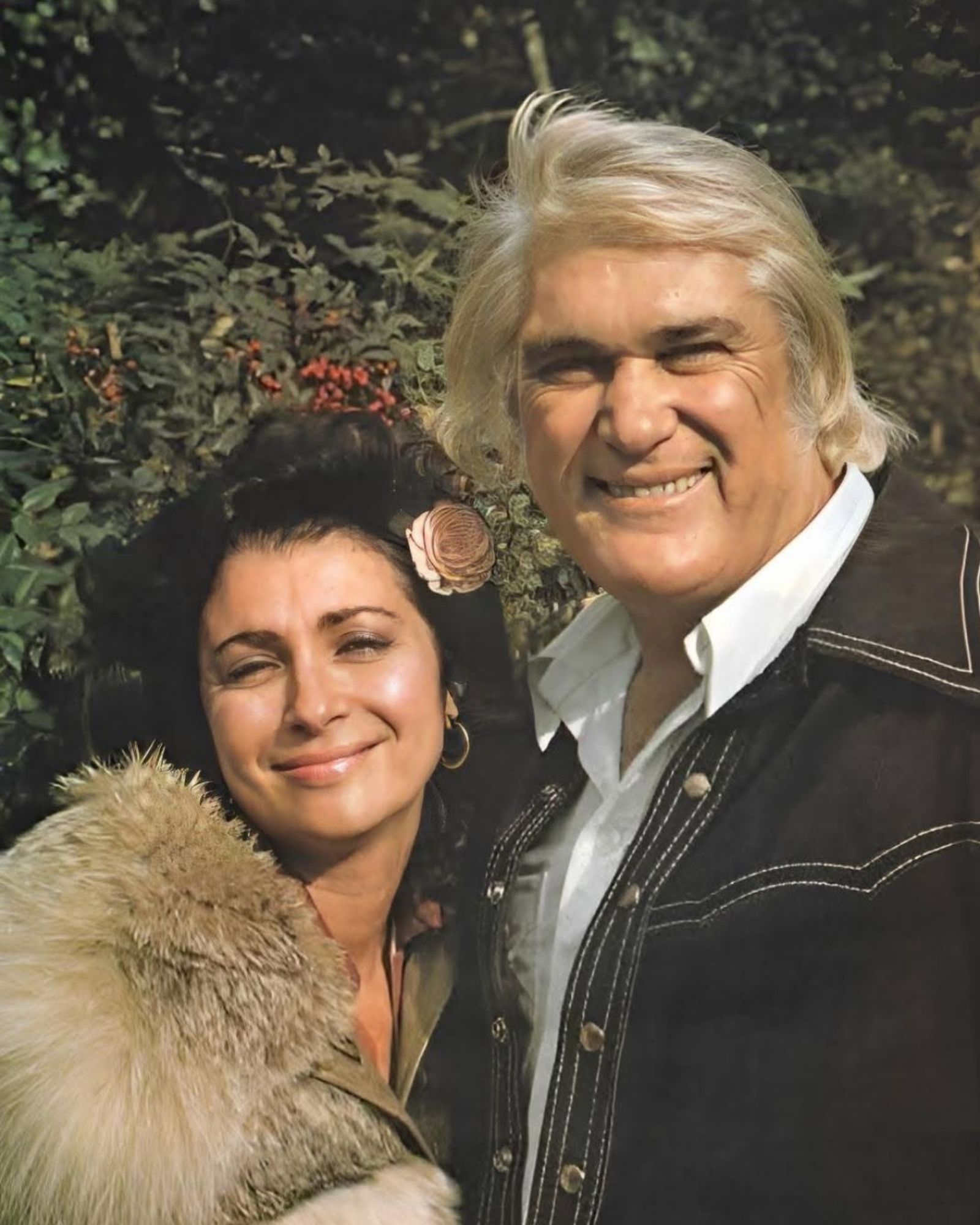
Long before he was the Silver Fox, before “Behind Closed Doors” and “The Most Beautiful Girl,” Charlie Rich was a young farmer in West Memphis, Arkansas, with a growing family and a little Webcor tape recorder in the house. He played and sang into it at home. He did not take those tapes anywhere.
His wife did. And she did not tell him first.
A Farm Across the River
Charlie Rich and Margaret Ann Greene met in high school in Forrest City, Arkansas, and married in 1952. In a 1992 interview with Terry Gross on NPR’s Fresh Air, Charlie Rich said he was 19 and she was 18. While he was in the Air Force, stationed in Oklahoma, the two of them played clubs with a jazz and blues group called the Velvetones. Charlie played piano and saxophone. Margaret Ann sang lead.
When Charlie Rich left the Air Force in 1956, the young couple had two children and a third on the way, and no steady paycheck. An uncle helped set Charlie up in farming across the river from Memphis. The farming did not go well. Years later, Margaret Ann Rich summed it up with a dry line: “As a farmer, Charlie was a pretty good piano player.”
The Tape She Didn’t Tell Him About
Sun Records in Memphis was the hottest small label in America, the home of Elvis Presley, Johnny Cash, Carl Perkins, Roy Orbison and Jerry Lee Lewis. Charlie Rich later admitted he did not know much about the recording business, and he was busy trying to make a living on the farm.
So Margaret Ann Rich gathered some of his home recordings and took them to Sun herself. When Terry Gross asked Charlie Rich in 1992 whether his wife had done it secretly, he answered simply that she had.
She played the tape for Bill Justis, Sun’s musical director, the saxophonist behind the instrumental hit “Raunchy.” By Charlie Rich’s own account, Bill Justis was gracious to her. But he also handed her a Jerry Lee Lewis record and gave her a message to carry home:
Go tell Charlie when he can play that bad, come see me.
Jerry Lee Lewis was the hottest act on the label, and “bad” was a compliment. The problem with Charlie Rich was not a lack of talent. Sun had found his early demos too jazzy to sell. When Newsweek profiled him in 1973, the magazine put it more bluntly: Margaret Ann had been told her husband played too well.
Learning to Play “That Bad”
Charlie Rich took the advice. He worked the rock and roll edge into his playing, and by 1958 he was a regular session musician at Sun, playing on records by Jerry Lee Lewis, Johnny Cash, Bill Justis, Carl Mann and others. He also wrote for the label’s stars, including “The Ways of a Woman in Love” for Johnny Cash and “Break Up” for Jerry Lee Lewis.
He said he wrote “Lonely Weekends” thinking Elvis or Jerry Lee might record it. Sam Phillips decided to cut it on Charlie Rich himself instead. Released on the Sun subsidiary Phillips International, it became his first hit by 1960.
The Woman Behind the Silver Fox
Margaret Ann Rich was more than the person who carried the tape. She was a songwriter, too, and the two of them wrote songs together for decades. When Charlie Rich made his stripped-down 1992 album Pictures and Paintings, it included songs written by the couple.
Their marriage was not always easy. Fame came slowly, through many lean years in the 1960s, and Charlie Rich struggled with drinking. At one point Margaret Ann packed up the children and left. He convinced her he would change, and she came back.
The big success finally arrived in the 1970s. In 1974, the Country Music Association named Charlie Rich Entertainer of the Year. Nearly two decades later, he looked back on how it all began:
I don’t know where I’d be now, maybe driving a tractor or something.
In July 1995, Charlie Rich and Margaret Ann were driving home together from Florida when he died in his sleep at a motel in Hammond, Louisiana. He was 62. They had been married 43 years. When Margaret Ann Rich died in 2010, she was buried next to him in Tennessee.
Plenty of country legends were discovered by a producer, a disc jockey or a lucky break. Charlie Rich was discovered because his wife believed in a tape he had made at the kitchen table, and walked it into Sun Records without asking his permission.
Do you remember the first time you heard “Lonely Weekends” or “Behind Closed Doors” on the radio?