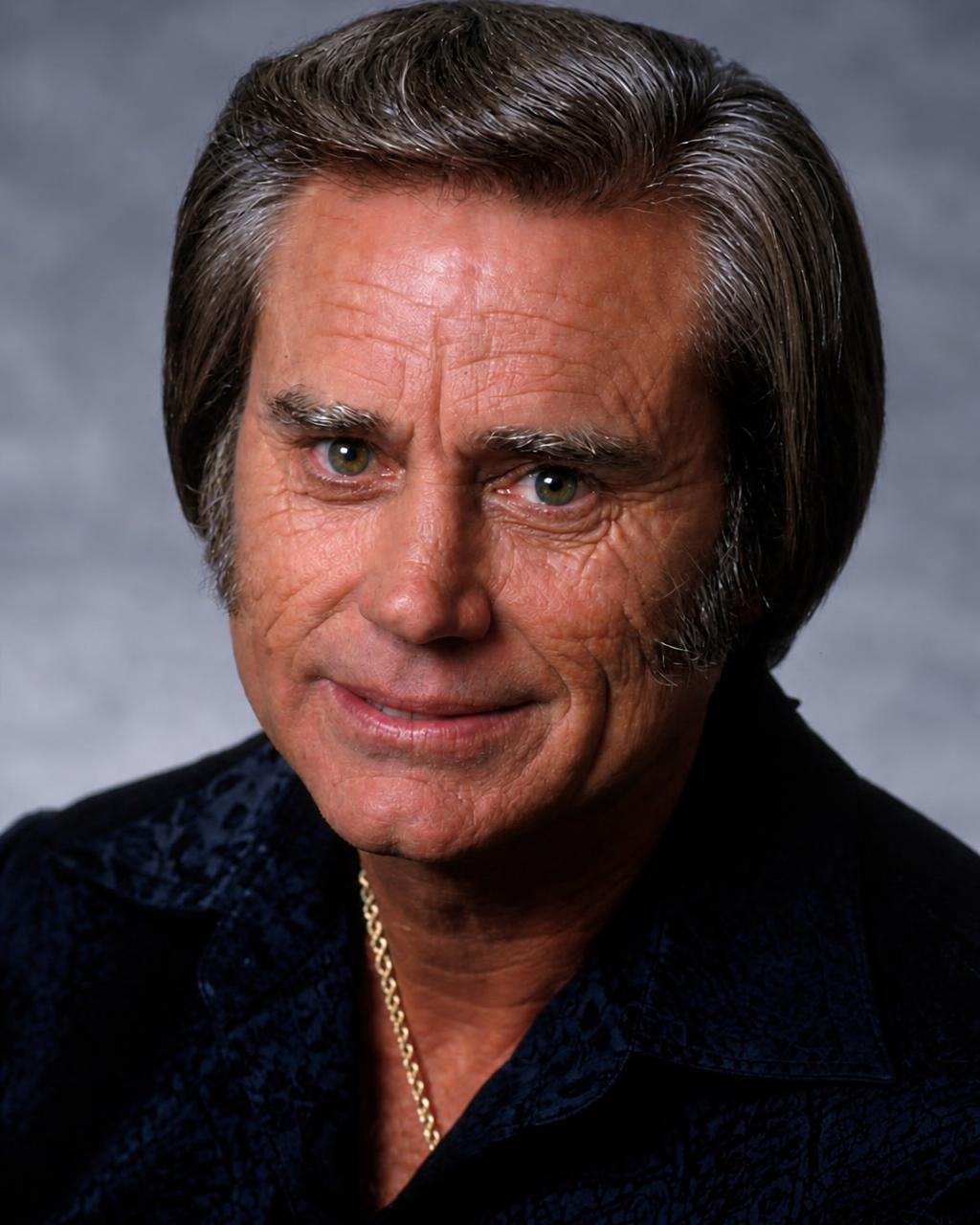
George Jones Sold Out His Farewell Show — Then Missed It by 210 Days
In country music, some endings arrive quietly. George Jones’ did not.
In late 2012, George Jones announced a farewell tour that would end with a final Nashville concert at Bridgestone Arena on November 22, 2013. The date sold out quickly, and the plan had all the feel of a victory lap: one last big night, one last thank-you, one last chance to hear a voice that had shaped the genre for decades. Even after years of hard living and hard lessons, George Jones was still working, still performing, still making a place for himself on the road at age 81.
For fans, the show was supposed to be a celebration. For George Jones, it was also personal. He had spent much of his career trying to outrun the cruel nickname “No Show Jones,” a label born from missed concerts and unpredictable behavior in his earlier years. Yet by the end of his life, he had become something larger than the joke people once made at his expense. He was a survivor, a master singer, and one of country music’s defining voices.
Then came April 26, 2013.
George Jones died that morning at Vanderbilt University Medical Center in Nashville after being hospitalized with fever and irregular blood pressure. The news landed hard because it felt impossible to separate the man from the moment. The farewell show had not happened yet. The sold-out date was still months away. In a painful twist, George Jones missed the concert that had been built to honor the last chapter of his touring life by 210 days.
That kind of absence changes the shape of a story.
By November, the arena show went on without George Jones, turning into a tribute that gathered the kind of respect he had earned over a lifetime in music. Friends, peers, and younger stars stood in for the man who was supposed to be center stage. The night became less about a final bow and more about memory, gratitude, and the strange way music keeps going after the singer is gone.
How did it feel? It felt like the end of an era, but also like a reminder that George Jones had already given country music everything he had. The disappointment was real. So was the love.
That is why the story still stings. George Jones sold out the farewell show, built the moment, and never reached it. But in another sense, he was there all along — in the songs, in the stories, in the ache of every note he ever sang.
And maybe that is the deepest part of the loss: not just that George Jones died before the final concert, but that country music had to learn, one more time, how to say goodbye to a man who had spent his life singing about heartbreak before it happened.