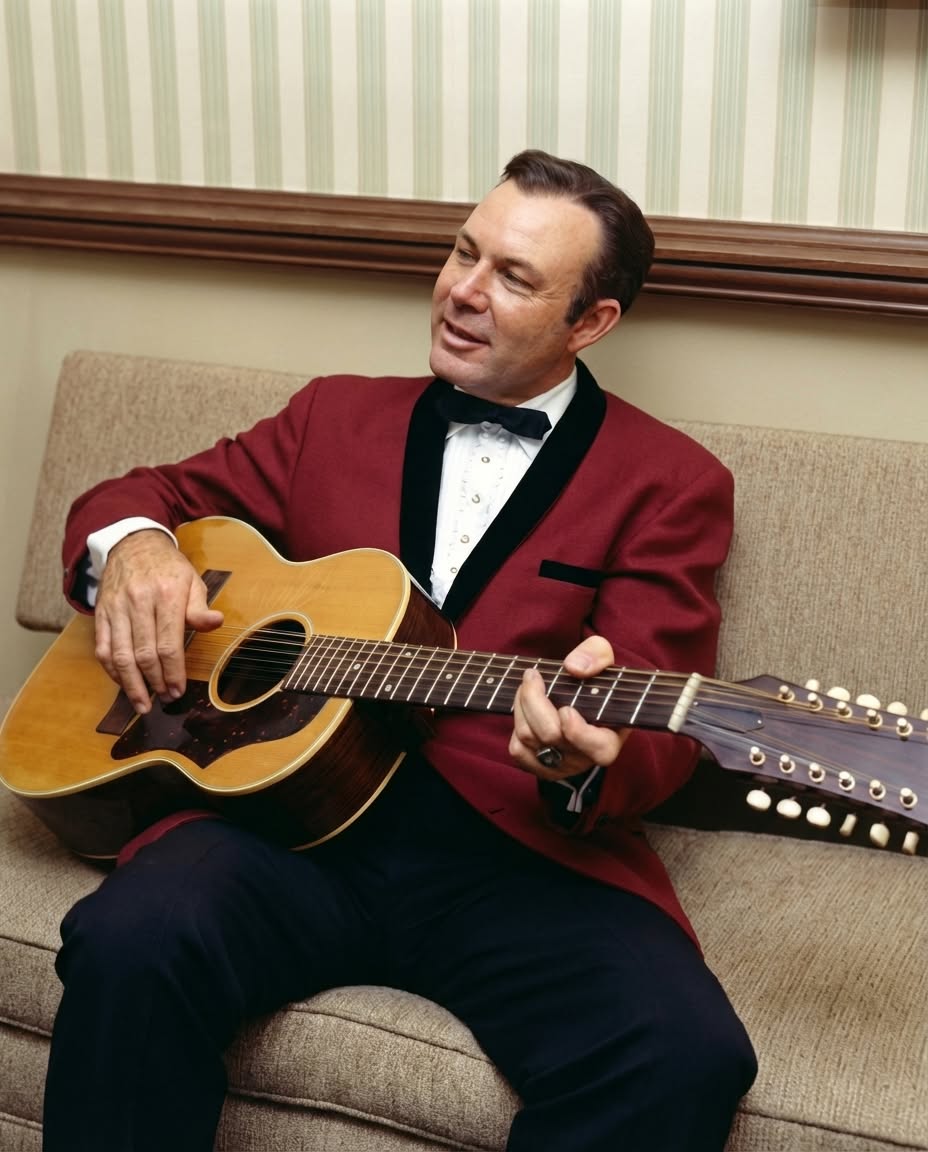
Jim Reeves and the Quiet Power of a Voice That Never Left
Jim Reeves died in a plane crash on July 31, 1964, near Nashville, Tennessee, at the age of 40. That fact is still startling, even after so many years, because his voice never behaved like something that could vanish. It sounded steady, calm, and close enough to feel personal. Long after the accident, listeners kept hearing not just a singer, but a mood: gentle, unhurried, and deeply human.
Reeves was one of country music’s great stylists. Raised in Texas, he built a career that moved from local radio and early recordings into national success. By the late 1950s and early 1960s, he had become a major figure in the Nashville Sound, a smoother, more polished style that helped country music reach wider audiences. Songs such as Four Walls and He’ll Have to Go showed what made Jim Reeves different: he did not force emotion. He let it arrive slowly.
The Voice People Leaned Toward
There are singers who fill a room by sheer power, and then there are singers who make a room go still. Jim Reeves belonged to the second group. His baritone was warm and controlled, with a softness that made every line feel carefully placed. When he sang about love, regret, or distance, he sounded like he had already lived through the feeling and was offering it back with kindness instead of drama.
That may be why his biggest records stayed alive in memory. He’ll Have to Go became a defining hit, and its success helped turn Jim Reeves into an international name. Even listeners who were not country fans could understand the appeal. The performance was intimate, almost conversational, as if Jim Reeves were speaking across a table rather than singing from a stage.
After the Crash, the Music Kept Moving
Jim Reeves did not live to see how long his recordings would endure. Yet his songs continued to circulate through radios, record players, and later generations of playlists. In the years after his death, his music kept finding people who needed a softer kind of country sound. Some discovered him through their parents. Others found him by accident and stayed because the voice felt honest.
That is the quiet miracle of Jim Reeves. He left behind no loud mythology, no theatrical persona that depended on being the center of attention. Instead, he left songs that still feel composed, reassuring, and near. The effect is subtle but lasting. A voice like that does not shout its way into history. It settles there.
A Legacy Built on Calm
Six decades later, Jim Reeves still sounds modern in one important way: he understood restraint. He knew that tenderness could be powerful, and that silence around a phrase could make the phrase stronger. His recordings remain a reminder that country music has always had room for grief, but also for grace.
Jim Reeves was gone before the world was ready to stop listening. But the music stayed. And every time that smooth voice begins again, it feels a little like a room getting quiet on purpose.