Johnny Cash’s First Train Song and His Last Train Song
Johnny Cash spent his life circling the same deep themes: travel, loss, faith, home, and the long road between trouble and grace. In 1955, one of his earliest recordings, “Hey Porter”, used a train ride as a way to talk about going home to Tennessee. Nearly fifty years later, in 2003, his final completed recording, “Engine 143”, also rode the rails — but this time, the journey felt heavier, more solemn, and closer to the end of the line.
A Voice That Kept Moving
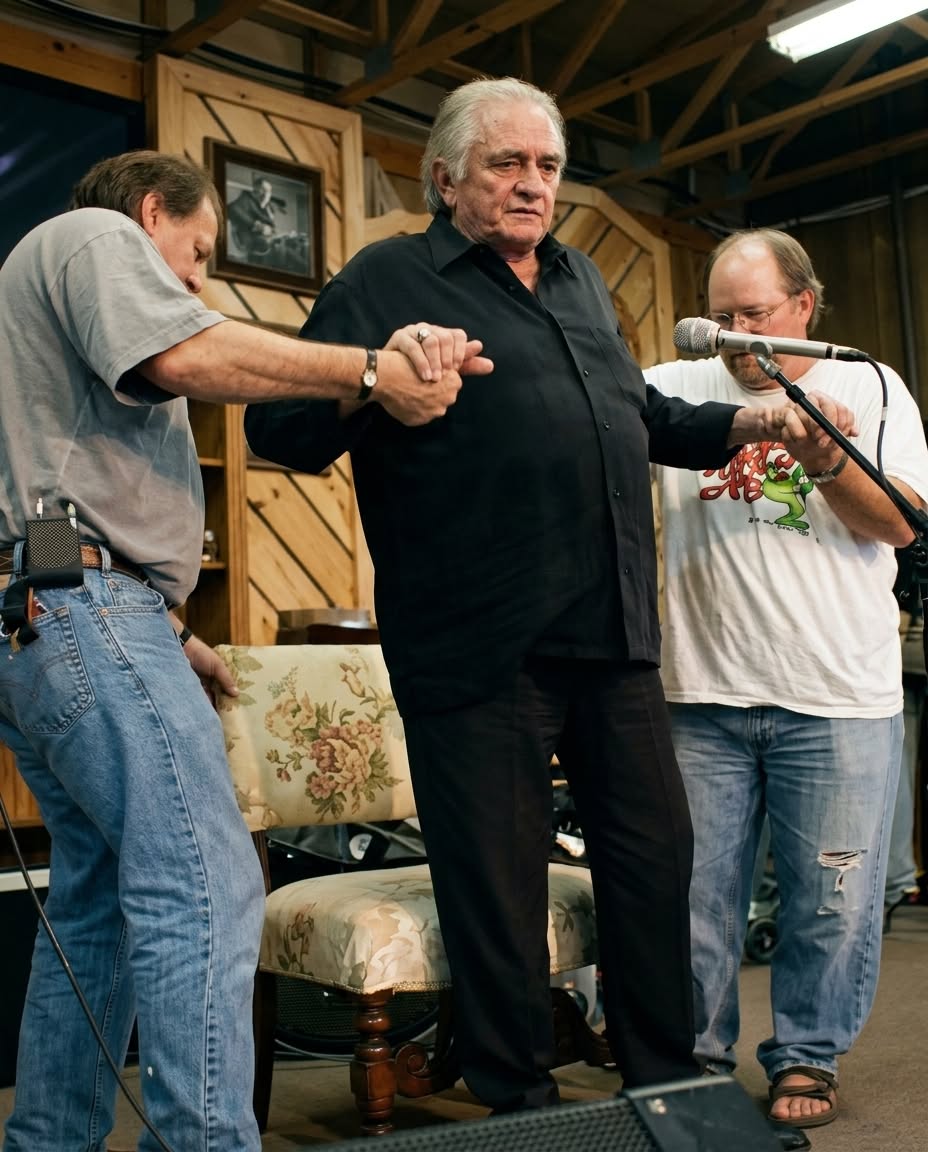
By the spring of 2003, Johnny Cash was living through grief that was impossible to hide. June Carter Cash died on May 15, 2003, and producer Rick Rubin later recalled that Johnny Cash called him the next day and said he needed to keep working. That need became a lifeline. Even as his health declined, he kept returning to the studio, determined to sing through the pain instead of disappearing into it.
Those sessions were not easy. Johnny Cash was older, frailer, and carrying heartbreak that seemed to sit in every pause between lines. Yet he kept showing up. He recorded with the same sense of purpose that had driven him from the beginning: not to chase trends, but to tell the truth in a voice that could still cut through silence.
The Final Session
On August 21, 2003, Johnny Cash recorded “Engine 143”. The song told the story of a railroad engineer racing toward disaster, a dramatic tale that had long been part of American folk tradition. Its closing line, “Nearer, my God, to Thee,” gave the performance a final, almost spiritual weight. It felt less like a routine cover and more like a farewell sung in plain sight.
That recording has stayed with listeners because it seems to echo the shape of Johnny Cash’s whole career. The first train song pointed toward home. The last train song pointed toward something beyond home. One began with motion and longing; the other ended with surrender and faith.
What the Song Means Now
People often talk about legends as if their endings were neat and perfectly written. Johnny Cash’s final months were not neat at all. They were marked by grief, frailty, and a stubborn will to keep creating. That is what makes the story powerful. He did not leave behind a polished myth. He left behind work that still feels human.
When Johnny Cash sang about a train in 1955, he was talking about getting back to Tennessee. When he sang about a train in 2003, he was facing the mystery of where a life goes after the last stop. The contrast is unforgettable because it feels so honest. The same artist who once asked a porter how much farther it was to home ended by singing like a man who had accepted that the final destination was no longer on any map.
That is the quiet beauty of Johnny Cash’s last recording. It was not just a song about death. It was a song about movement, faith, and the search for peace at the end of a long journey.