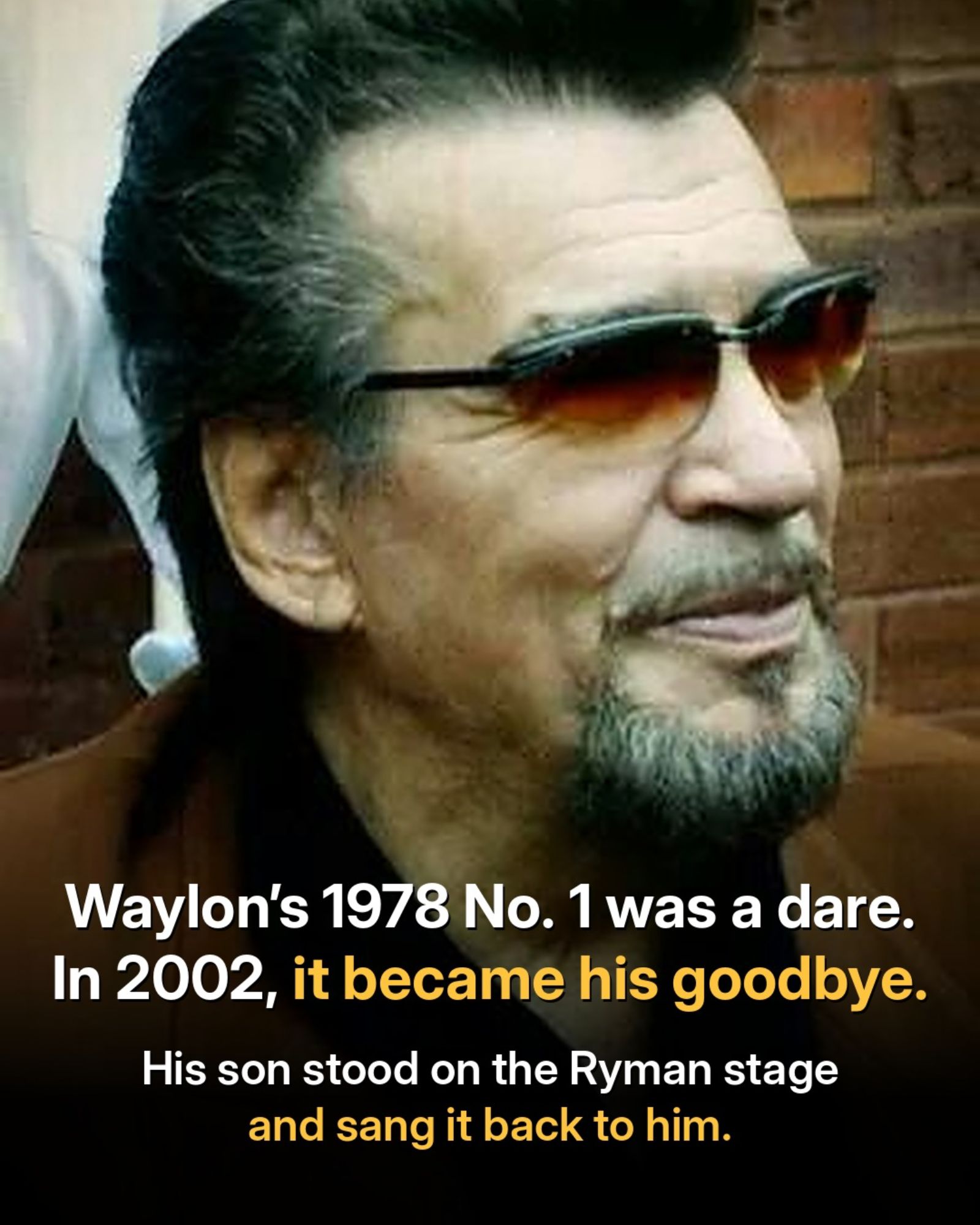
Scroll to the end of the article to hear the song.
Some songs get rewritten. Others change meaning without anyone touching a word. This is the story of one that changed meaning that way.
A Song Written With Its Chin Up
By 1978, Waylon Jennings was one of the biggest names in country music, and one of the most talked about. A highly publicized arrest the year before had followed him everywhere. Reporters wanted a confession and critics wanted an apology. What Waylon Jennings gave them was a song.
He wrote “I’ve Always Been Crazy” alone. Released in June 1978 as the title track of his new album, it spent three weeks at No. 1 on Billboard’s Hot Country Songs chart. On the radio it sounded like pure Waylon: a low, steady voice and a band that rolled instead of rushed, with a man refusing to look away.
The song is part apology and part dare. Waylon Jennings owns the trouble his restless nature has caused him, and he admits he has been blamed for things he did and for things he never did. He isn’t proud of everything, he says, but he never set out to hurt anyone. Life hasn’t been easy, but he isn’t going to complain. Near the end he admits that nobody can say whether that wild streak in him was a gift or a curse. Then he adds the line that made fans grin for decades: he still hasn’t found a reason to change.
In 1978, listeners heard swagger. They heard an outlaw at the height of his fame answering everyone at once.
The Last Big Night at the Ryman
In January 2000, Waylon Jennings walked onto the stage of the Ryman Auditorium in Nashville for what became the final major concert of his career. His health was failing and he performed seated, but the voice was still there. Friends joined him through the night. One of them, Travis Tritt, traded lines with him on “I’ve Always Been Crazy.”
Nobody in the room knew that it would be the last time Waylon Jennings sang that song on that stage. The concert was released later under the title Never Say Die.
February 2002
On February 13, 2002, Waylon Jennings died at his home in Chandler, Arizona. He was 64. His family held a private burial in Arizona and planned a public farewell in Nashville.
On March 23, 2002, friends, family and fans filled the Ryman again. The stage was set as if he had just stepped away. His signature flying “W” hung behind the band, and his guitar stood with a black cowboy hat resting on top.
The service had a name, printed on the program: “I’ve Always Been Crazy: A Celebration of the Life and Legacy of Waylon Jennings.”
The Song Comes Home
Then his son, Shooter Jennings, took the stage with his band. Before he sang, the host told the crowd something that hit the room hard:
“Jessi said that Waylon wanted Shooter to sing ‘I’ve Always Been Crazy’ at his funeral.”
Two years after Waylon Jennings had sung it on that stage for the last time, his son stood on the same boards and sang it back to him.
Same Words, Different Song
Nothing in the song had changed, but everyone listening had.
The admission that he never meant to hurt anyone no longer sounded like a defense in front of reporters. It sounded like a man summing up his whole life in one honest sentence. The idea that nobody could say whether his wild side was a blessing or a burden no longer sounded like a dare. It sounded like a question he had left for the people who loved him to answer. And the line about never finding a reason to change now sounded like the closing words of a life lived exactly as he had promised.
The next year, a tribute album honoring Waylon Jennings carried the same title, and Shooter Jennings recorded the song again for it. By then, many fans could no longer hear it as just a hit from 1978.
Why It Still Lands
Most farewell songs are written as farewells. This one wasn’t. Waylon Jennings wrote it in the middle of the fight, with no idea it would one day be sung over his own memory. Maybe that is why it works. It never tries to make him look better than he was. It tells the truth the way he liked it told, plainly and without apology.
Put it on today and listen to the last verse. It’s the same voice and the same words, but now it sounds like a man saying goodbye.