No Show Jones: How George Jones Turned Absence Into a Final Act of Faith
In Nashville in 1979, George Jones was not just missing shows. He was disappearing from his own life. Fifty-four concerts were gone from the calendar in a single year, and with every missed stage, the damage spread further. Promoters across the South had lawsuits ready. Debts were stacking up. His personal life was unraveling. People who loved him could not always find him. Even the man himself seemed unsure where the next day would take him.
George Jones later spoke about that time with painful honesty. “All my life it seems like I’ve been running from something. If I knew what it was, maybe I could run in the right direction.” It was the kind of statement that made sense only after the worst had already happened. By then, the nickname “No Show Jones” had stuck, and it did not come from nowhere.
The Year Everything Fell Apart
By the end of the 1970s, George Jones was trapped in a cycle that made every promise harder to keep. He owed money. He was in conflict with the people around him. He was filing for bankruptcy and vanishing for days at a time. Reports said he claimed to be a million dollars in debt. Tammy Wynette, his ex-wife, was still owed child support. Their connection had been powerful, personal, and painful, and even after their marriage ended, the fallout kept going.
Behind the scenes, the strain was visible to everyone. Promoters no longer trusted him. If they booked George Jones at all, they wanted full payment in advance. Some shows went on without him. Opening acts stretched their sets. House bands played instrumentals while the crowd waited for a star who would never walk out. Fans who had spent their savings on tickets and travel had to go home disappointed.
George Jones knew the cost of that disappointment. He did not forget the empty seats, the angry crowds, or the people who believed in him and were left waiting. That regret stayed with him.
“It was true,” George Jones said years later about one of the wildest stories from that era. “I didn’t have a car.”
The story was that Tammy Wynette had hidden all the car keys in the house, and George Jones responded by climbing onto a riding lawn mower and driving to the nearest liquor store. Whether people laughed or shook their heads, the larger truth was impossible to miss: George Jones was lost, and everyone around him knew it.
The Voices, the Debt, and the Desperation
George Jones described quarreling voices he called “the Duck” and “the Old Man.” Those details only deepened the sense that he was fighting battles no audience could see. Johnny Cash and Waylon Jennings quietly sent money to help keep him alive. That was the strange contradiction of George Jones in those years: a country legend loved by peers, yet collapsing in public view.
Then came the breaking point. In the fall of 1983, George Jones was straitjacketed and committed to Hillcrest Psychiatric Hospital. He was malnourished, delusional, and physically worn down. It was a grim chapter, but it was also the moment when something changed. For the first time, George Jones wanted to stop.
The First Real Return
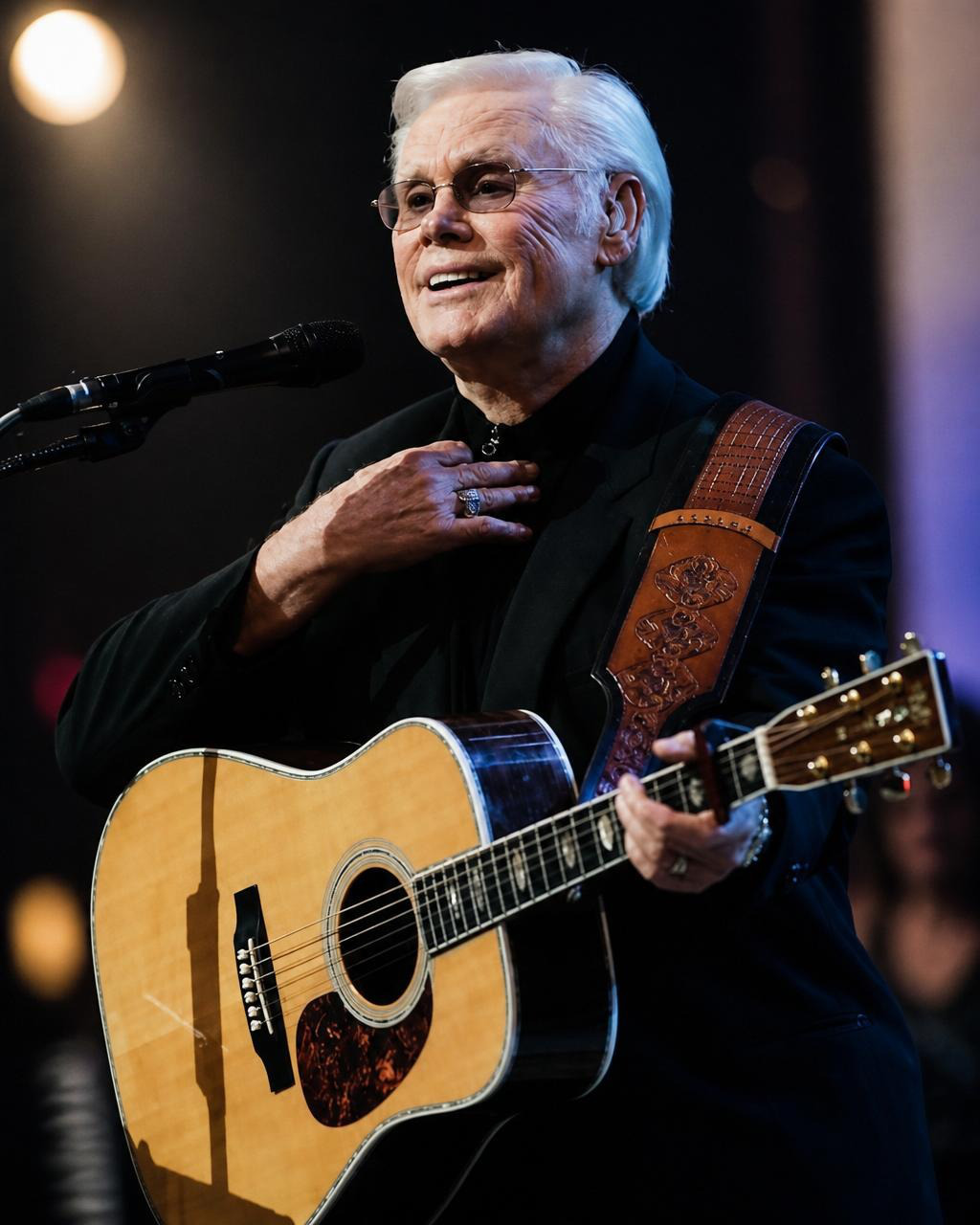
In March 1984, in Birmingham, Alabama, George Jones walked back onto a stage for his first sober show since the early 1970s. He was fifty-two years old. His wife, Nancy, was in the audience. She had married George Jones on March 4, 1983, fully aware of the man she was taking on. She stayed anyway.
That night did not erase the past. It did not fix every broken promise. But it proved that George Jones could still do the hardest thing of all: show up.
The road after that was not smooth. George Jones relapsed more than once. The struggle remained real, and the damage from earlier years did not vanish. But there was movement. There was effort. There was a man who had spent years running now trying, sometimes painfully, to stand still long enough to be counted on.
The Last 29 Years
In 1999, George Jones survived a near-fatal car accident. His body had to be pulled from a crushed vehicle with the jaws of life. It was another moment that could have taken everything. Instead, it became the final push toward permanent change. After that, George Jones quit for good.
When George Jones died on April 26, 2013, at the age of eighty-one, Nancy said, “God put me with him to help him get the devil out of him. God put me there to do a job and I did it.” It was a fierce statement, but not an unfair one. Nancy had lived through the chaos and stayed through the recovery.
George Jones was sober for the last fourteen years of his life. More than that, he was present. He showed up for the music, for the people who still believed in him, and for the life he had nearly lost. The man once known as “No Show Jones” spent the final chapter of his story becoming reliable in a way the world had stopped expecting.
And that is what makes his story endure. Not the missed concerts alone, not the debt, not the collapse. It is the fact that after so many years of absence, George Jones made a long, hard return. For the last twenty-nine years of his life, he kept coming back. In the end, that may have been his greatest song.