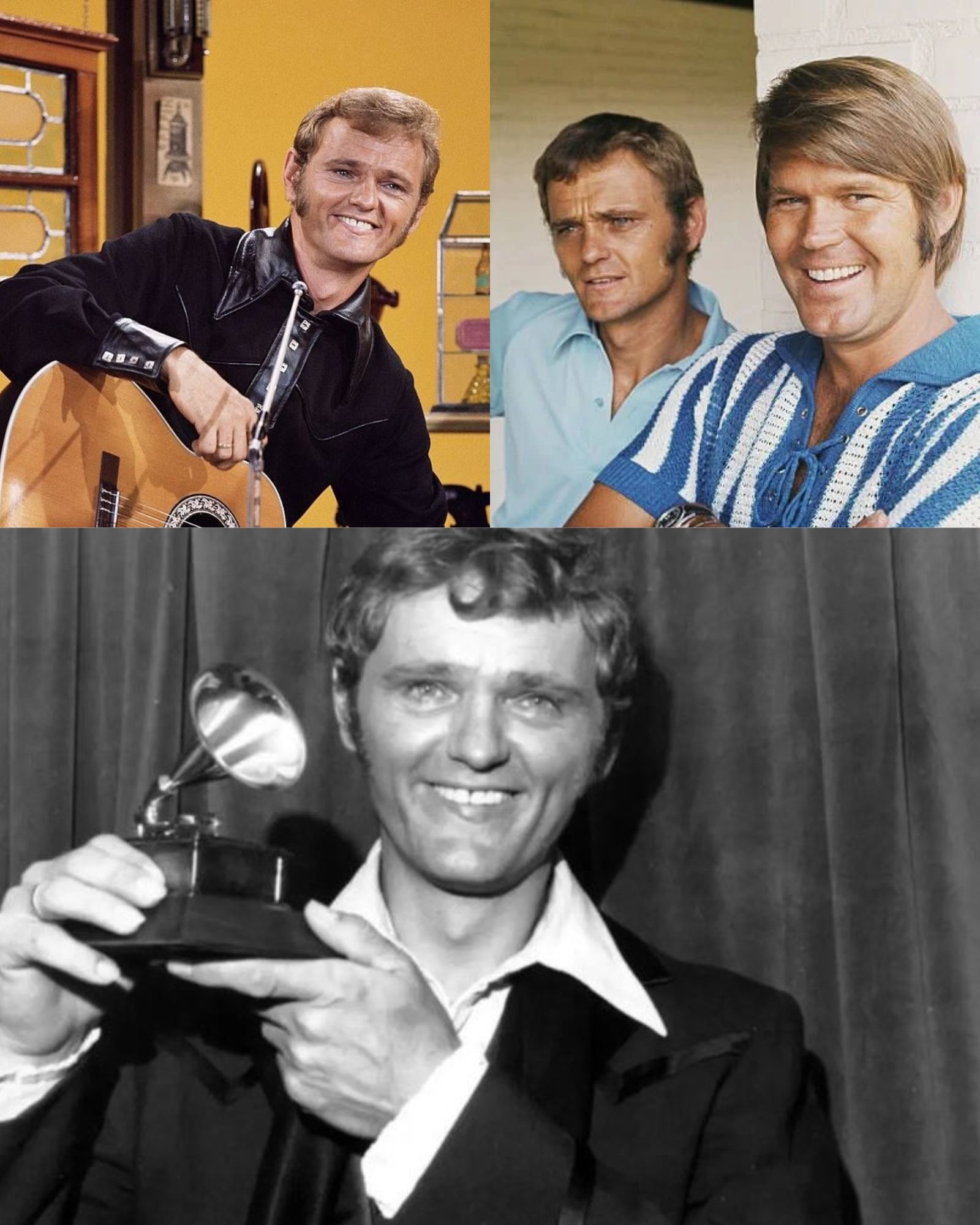
Jerry Reed was one of those rare entertainers who could turn almost anything into a good story. A gifted guitarist, a natural comedian, and a songwriter with an unmistakable sense of humor, Jerry Reed had a way of making audiences smile even when things didn’t go according to plan.
According to a story later recounted by country music writer Doug Davis, one unexpected moment on The Glen Campbell Goodtime Hour helped inspire one of the biggest hits of Jerry Reed’s career.
And it reportedly began when Jerry Reed forgot a line.
An Unexpected Moment on Glen Campbell’s Television Show
In the early 1970s, Jerry Reed was a familiar presence on The Glen Campbell Goodtime Hour. Glen Campbell and Jerry Reed shared a love of guitar playing, quick humor, and the kind of country entertainment that made television audiences feel right at home.
Jerry Reed was especially good at thinking on his feet. That ability became important during one television appearance when, according to the account published by Doug Davis in 2009, Jerry Reed suddenly lost his place.
Rather than letting the mistake interrupt the performance, Jerry Reed improvised a remark:
“When you’re hot, you’re hot.”
The audience reportedly loved it.
For most performers, such a moment might have been nothing more than a funny memory. But Jerry Reed recognized something useful in those few words.
According to the account, Jerry Reed began developing a song around the expression after returning home.
The exact television broadcast has not been independently identified, but the story has endured as part of the history surrounding the recording.
From a Funny Remark to a Story About Gambling
Jerry Reed didn’t simply write a song repeating the phrase. Jerry Reed built an entire comic adventure around it.
The result was “When You’re Hot, You’re Hot,” released by RCA Victor in 1971 and produced by Chet Atkins.
The recording opens with a man enjoying an extraordinary run of luck in a back-alley dice game. Every roll seems to go his way. His friends keep losing, and his confidence grows with every winning throw.
Then a police officer arrives.
The game comes to an abrupt end, and the lucky gambler finds himself in trouble.
But the funniest part is still ahead.
When the gambler appears in court, he discovers that the judge is an old fishing acquaintance. For a moment, it seems his luck might have returned.
Unfortunately, the judge remembers something else: the gambler owes him money.
Instead of receiving a friendly favor, the gambler ends up with a much harsher punishment than his companions.
It was classic Jerry Reed storytelling: a ridiculous situation, colorful characters, perfectly timed dialogue, and a punchline that made the entire adventure worth hearing.
The Song Became Bigger Than Anyone Might Have Expected
By the spring of 1971, Jerry Reed was already enjoying growing national recognition. The previous year, “Amos Moses” had introduced an even wider audience to Jerry Reed’s unusual blend of country music, rhythmic guitar playing, and humorous storytelling.
But “When You’re Hot, You’re Hot” took that success even further.
In June 1971, the song reached No. 1 on Billboard’s country singles chart. It remained there for five weeks.
Even more remarkably, the recording crossed over to mainstream pop radio, climbing to No. 9 on the Billboard Hot 100.
For a country song built around a dice game and a courtroom confrontation, that was an extraordinary achievement.
Jerry Reed’s conversational delivery was part of the appeal. Much of the recording sounded like a man telling a funny story to friends, with the guitar providing the rhythm and energy that carried everything forward.
A Grammy Award for a Song That Began With a Mistake
On March 14, 1972, Jerry Reed received the Grammy Award for Best Country Vocal Performance, Male, for “When You’re Hot, You’re Hot.”
The honor confirmed what audiences had already discovered: Jerry Reed could make a spoken, humorous country song just as memorable as a conventional ballad.
What makes the story especially charming is the contrast between its reported beginning and its eventual success.
A forgotten line on a television program supposedly became the starting point for a recording heard by millions.
And Jerry Reed turned those few improvised words into something that still makes listeners smile more than half a century later.
For longtime country music fans, “When You’re Hot, You’re Hot” remains a reminder of what made Jerry Reed special. Jerry Reed never needed an elaborate story to entertain an audience. Sometimes, a few well-chosen words, a lively guitar, and a little humor were more than enough.