Johnny Cash’s Last Four Months: How Music Kept Him Going
When June Carter Cash died on May 15, 2003, Johnny Cash was already in failing health. He was grieving deeply after 35 years of marriage, and the loss hit him hard. Still, even in that fragile season, he kept reaching for the one thing that had always organized his life: music.
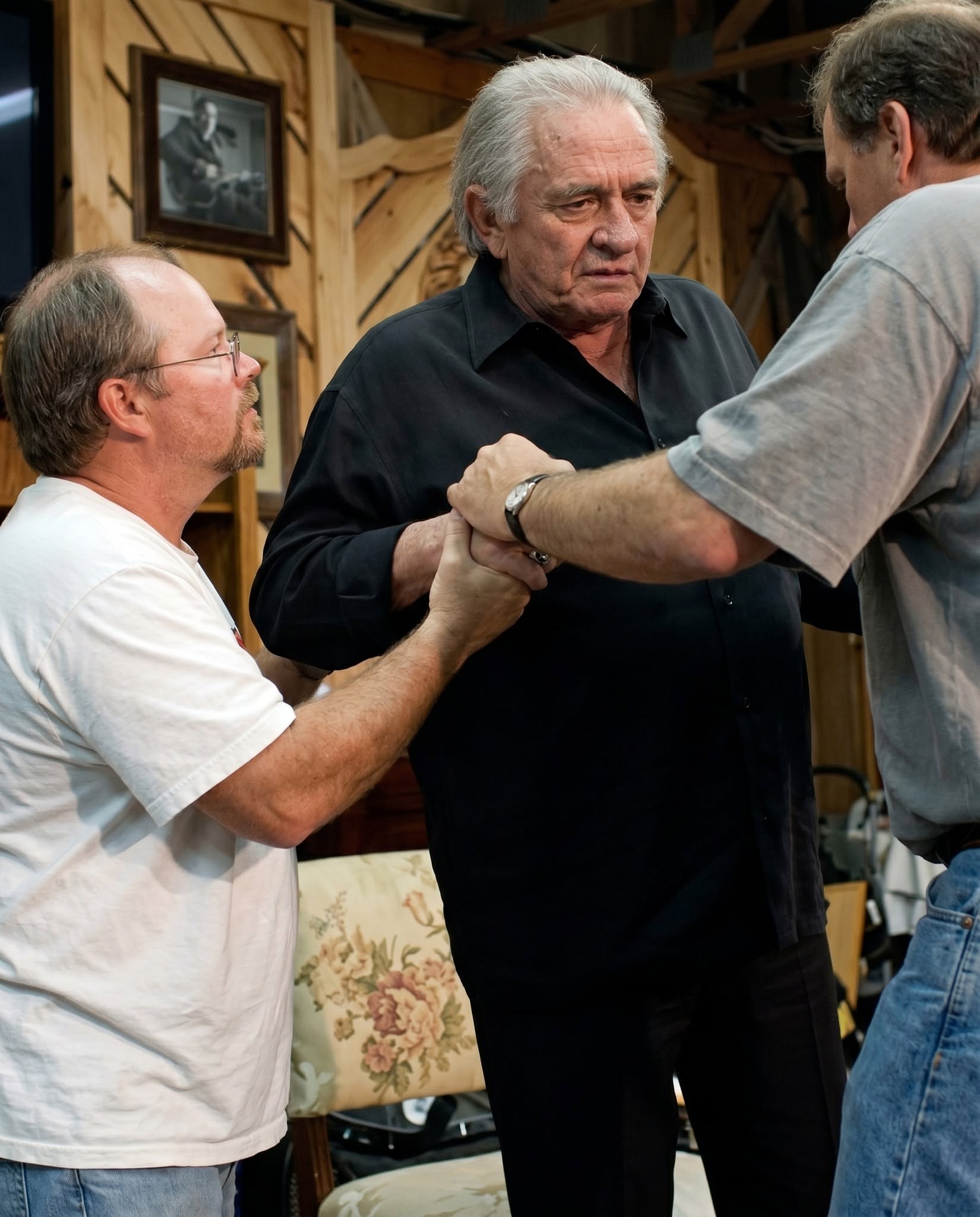
In the months that followed, Johnny Cash worked with producer Rick Rubin in a steady, determined way. By then, Cash was nearly blind, often using a wheelchair, and living with serious illness. But he did not want silence. He wanted a reason to get up and keep moving. According to people close to him, he told Rick Rubin to keep him working because without something to do, he feared he would die.
That fear became fuel. The studio turned into a place of discipline, memory, and survival. Song after song, Johnny Cash kept recording, shaping performances that felt stripped down and honest. In those final months, he completed roughly 60 songs, an astonishing burst of work for a man whose body was failing but whose artistic instinct remained strong.
A final return to the stage
Even as his condition worsened, Johnny Cash returned to the stage one more time in July 2003. That appearance carried a heavy emotional weight. He read a tribute to June Carter Cash before performing, and the moment felt less like a routine concert and more like a farewell spoken in public.
That was part of the power of Johnny Cash’s late recordings. They were not polished attempts to hide weakness. They were direct, unguarded, and deeply human. Listeners could hear a man carrying loss, illness, and memory all at once. Each take seemed to hold both pain and purpose.
The last session
Johnny Cash’s final recording session came on August 21, 2003. Just 22 days later, on September 12, 2003, Johnny Cash died at the age of 71. The timing gives those last recordings a lasting emotional force. They were not made as a planned finale, yet they now sound like one.
What remains remarkable is not only how much he recorded, but why he kept going. Johnny Cash was not simply finishing an album. He was holding on to a rhythm that gave his life shape. The sessions became a form of endurance, and perhaps a form of grief too.
By the end, the songs did more than document his final days. They carried him through them.
That is why Johnny Cash’s final work still resonates. It sounds like a man refusing to disappear into silence, using every song he had left to keep going. In those recordings, Johnny Cash left behind not just music, but a human story of love, loss, and stubborn creative will.