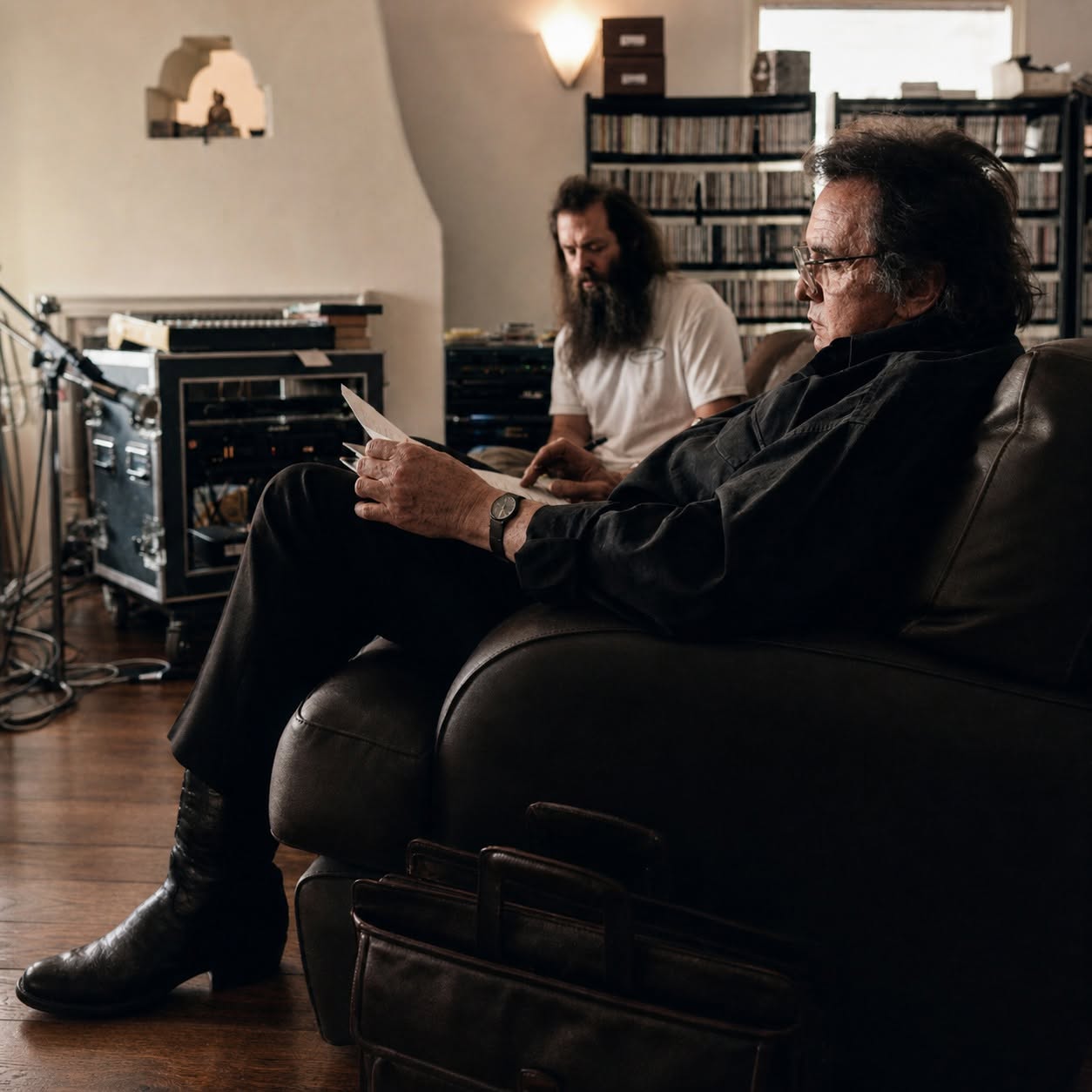
Johnny Cash, Rick Rubin, and the Quiet Return of a Legend
By 1992, Johnny Cash was not the center of country music anymore. The man who had once filled prisons, arenas, and radio charts was working smaller rooms and reaching a different kind of audience. His late-career years were difficult, and the industry that once leaned on his name had moved on. He had been dropped by Columbia, spent time recording for Mercury, and by the early 1990s his commercial momentum had faded. Yet the story of Johnny Cash was never only about chart position. It was about endurance.
That changed when Rick Rubin entered the picture. Rubin came from a world Cash did not belong to on paper: hip-hop, heavy metal, and alternative rock. He had built a reputation for stripping music down to its core, and that instinct mattered more than genre. According to accounts of their first meeting, Rubin approached Cash with a simple idea: let the voice lead, and let everything else fall away. Cash was used to being directed by labels and producers, but Rubin offered something different — trust.
The result was American Recordings, released on April 26, 1994. It was spare, intimate, and startlingly direct. The album featured Cash largely alone with his guitar, and it arrived when he was 62 years old. That same recording project earned him a Grammy for Best Contemporary Folk Album at the 37th Annual Grammy Awards. For an artist many had written off, the record became a reminder that a strong voice can outlast trends, formats, and expectations.
What made the revival so powerful was not just the comeback itself, but its honesty. Cash did not sound polished for the market. He sounded lived-in. He sounded like a man who had seen enough to know that restraint can be more powerful than spectacle. The partnership continued with later albums, and one of the most unforgettable moments came years later with “Hurt,” a cover that many listeners came to experience as something larger than a song. It felt like a final confession, delivered without ornament.
Johnny Cash had already become a legend long before Rick Rubin arrived. He was inducted into the Country Music Hall of Fame in 1980, and he was still shaping the story of American music decades later. But the late-career chapter matters because it showed something rare: reinvention without disguise. Johnny Cash did not become younger. He became clearer. And in that quiet, he found his way back to the center.
Some legends fade into memory. Johnny Cash stepped into a smaller room and came back sounding larger than ever.