George Jones and the Night He Finally Showed Up
For years, George Jones carried one of country music’s cruelest nicknames: “No Show Jones.” It followed him through canceled dates, disappointed fans, and the long shadow of alcohol and drug trouble that strained his career and personal life. Promoters never quite knew whether George Jones would make it to the stage, and audiences often bought tickets with hope mixed with uncertainty.
But that story did not end there.
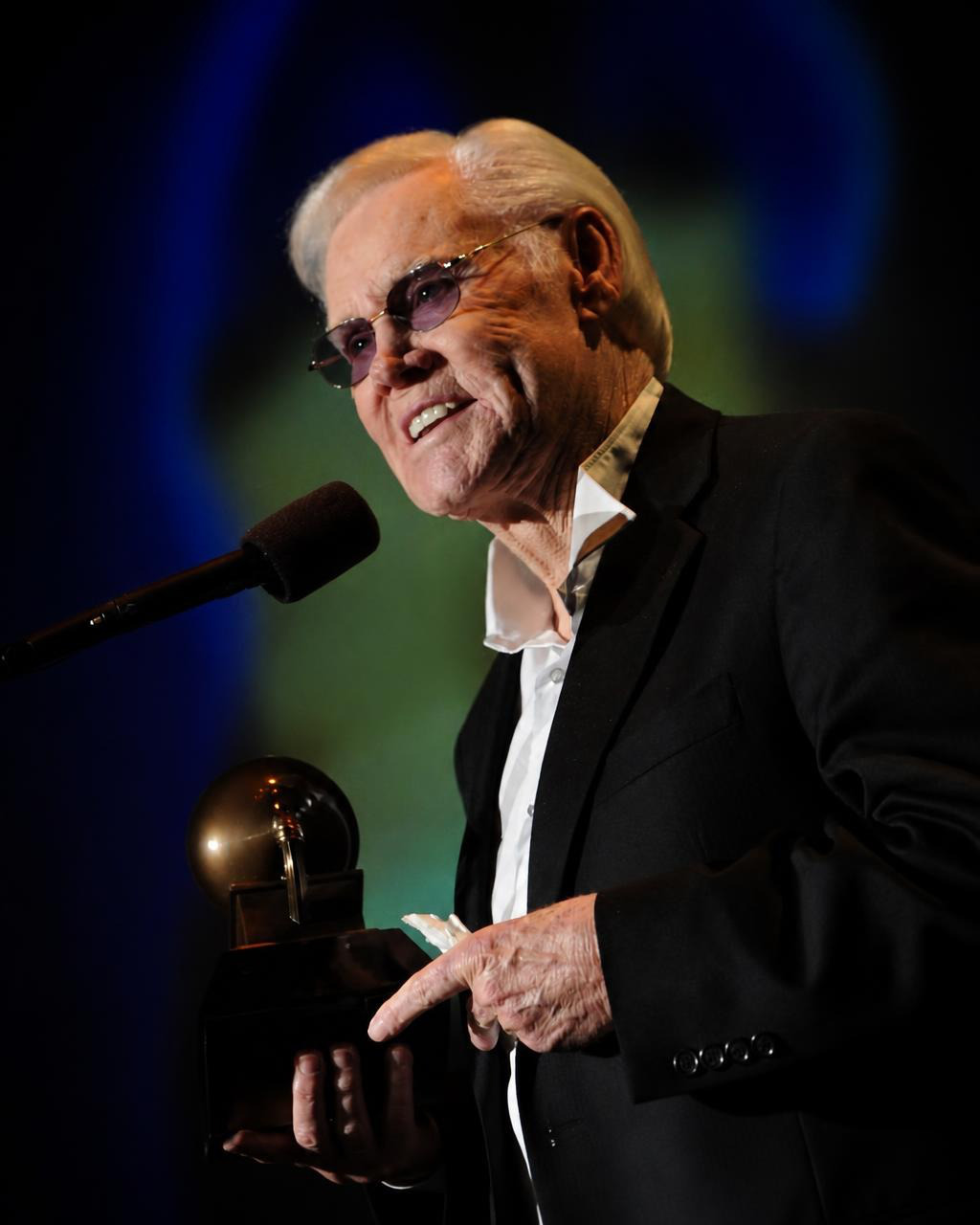
On February 11, 2012, George Jones walked into a Los Angeles ceremony with his wife, Nancy, beside him. He was there to receive the Recording Academy’s Lifetime Achievement Award, a quiet but powerful recognition of a life that had shaped country music for generations. George Jones was 80 years old, and after decades of chaos, the moment felt like a kind of mercy.
This was not the version of George Jones the public had once feared. This was a man who had survived the damage, made peace with his past, and found his way back to the people who had never stopped listening. Nancy Jones had been a steady force in that return. With her support, George Jones became sober and slowly rebuilt the trust that had been broken over the years.
His voice, of course, had never stopped mattering. Songs like He Stopped Loving Her Today, The Grand Tour, and Choices had already secured George Jones a place among the greats. But on that night, the honor was not only about one unforgettable hit. It was about endurance. It was about the strange, hard road from regret to redemption.
A Career Marked by Brilliance and Breakage
George Jones was known for the emotional honesty in his singing, the kind that made every line sound lived-in. Yet behind that gift was a difficult history. His struggles often spilled into public view, and the cost was real: missed concerts, tense relationships, and a reputation that could make even loyal fans worry. “No Show Jones” was a joke people repeated, but for George Jones it was a wound.
Still, the story was never only about failure. It was also about return. By the time he reached that stage in Los Angeles, George Jones had already spent years proving that a damaged life could still produce lasting beauty. The Recording Academy’s Lifetime Achievement Award gave shape to what country music fans had always known: George Jones was bigger than his worst days.
The Moment That Changed the Ending
There was no wild entrance, no attempt to rewrite history. Just George Jones, older now, standing beside Nancy Jones and accepting the kind of honor that can only come after a lifetime of work, pain, and survival.
That simplicity made the evening even stronger. The applause was not only for George Jones the performer, but for George Jones the man who had stayed long enough to be recognized. It was a full-circle moment, one that turned a once-painful nickname into a distant memory.
And then, a year later, George Jones was gone. But the final image remains: not the legend who might fail to appear, but the artist who did show up when it mattered most.
For decades, people wondered if George Jones would arrive. On one of the most important nights of his life, he did.