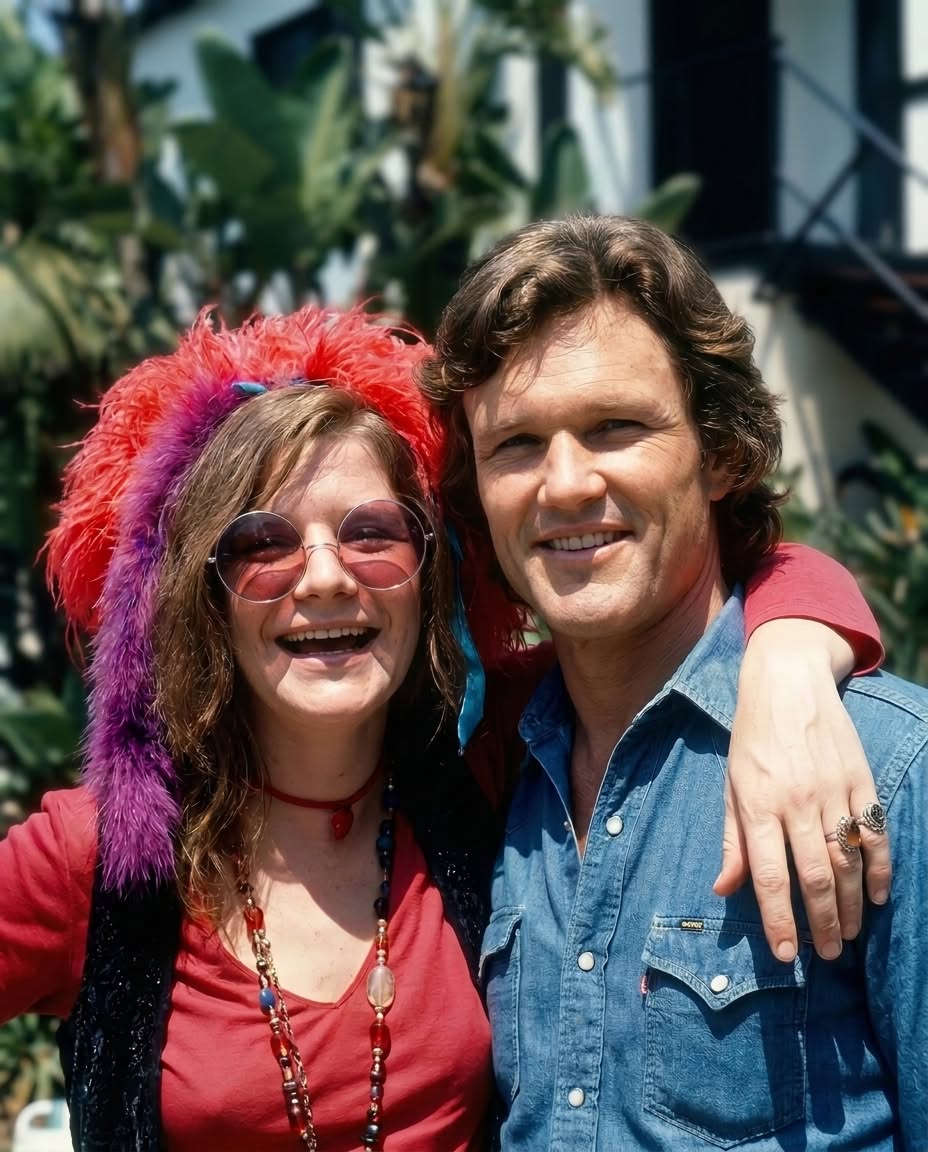
The Day His Song Went to Number One — and He Couldn’t Celebrate
In October 1970, the music world received devastating news: Janis Joplin was gone. She died on October 4, 1970, at age 27, and the loss felt immediate, like a stage light snapping off in the middle of a song. One day she was there, all fire and grit and unmistakable power. The next, there was only silence. Janis Joplin had recorded “Me and Bobby McGee” shortly before her death, and the song would later become the only one of her recordings to reach No. 1 on the Billboard Hot 100.
What makes the story linger is that the hit did not arrive as a simple victory lap. “Me and Bobby McGee” was written by Kris Kristofferson and Fred Foster, but Janis Joplin made it unforgettable with a performance that carried both ache and freedom. The song appeared on her posthumous album Pearl, released in 1971, after her passing. By the time radio listeners embraced it, the record had become something larger than a single: it was a final message from an artist who had already left the room.
For Kris Kristofferson, that success came with a strange emotional weight. He had written a song that was suddenly everywhere, but the voice people heard belonged to someone who was no longer alive. Instead of feeling like a standard chart triumph, the moment carried the ache of memory. The song’s famous theme of freedom seemed to land differently once Janis Joplin was gone. What had once sounded like motion and release now sounded, in a deeper way, like farewell.
A Song Changes Its Meaning
That is often how great songs work: they begin as craft, then become history. Kris Kristofferson wrote the lyrics, but Janis Joplin made them personal. Her version moved with a lived-in honesty that made every line feel earned. When “Me and Bobby McGee” rose to No. 1 after her death, the chart position told one story, but the feeling around the record told another. This was not just a hit. It was a voice preserved in the middle of loss.
Some songs do not stay with the writer forever. Sometimes they belong to the moment, to the singer, and to the people left behind.
Kris Kristofferson would go on to be remembered as one of the great songwriters of his era, but “Me and Bobby McGee” remains one of the clearest examples of how success can carry sorrow inside it. A No. 1 record usually signals celebration. In this case, it also marked a goodbye. The song climbed the charts, but the person who made it soar was already gone.
That is why the story still matters. A hit can be counted. A memory cannot. And sometimes the most powerful victory in music is also the hardest one to celebrate.