Waylon Jennings and the Empty Chair That Said Everything
People like to tell clean stories about legends, but Waylon Jennings lived a messier one. He was too stubborn to be shaped, too honest to pretend, and too busy making records to care whether Nashville approved. By the time the Country Music Hall of Fame called his name in 2001, the argument over his place in country music was already over. Waylon Jennings had spent decades winning it on his own terms.
Long before the honor, Waylon Jennings had already built a career out of refusing to be trimmed down. He rose from West Texas poverty, played bass for Buddy Holly, and became one of the defining voices of the outlaw movement. His catalog was deep, his influence wider than the numbers could hold: dozens of albums, multiple number-one records, Grammys, and a place in history as one of the first country artists to reach platinum-level sales.
That independence had a price. Nashville did not always know what to do with him. The story that followed him for years was simple and sharp: producers wanted him smaller, neater, safer. Waylon Jennings kept pushing back. He did not need permission to sound like himself, and he did not build a career by asking for it.
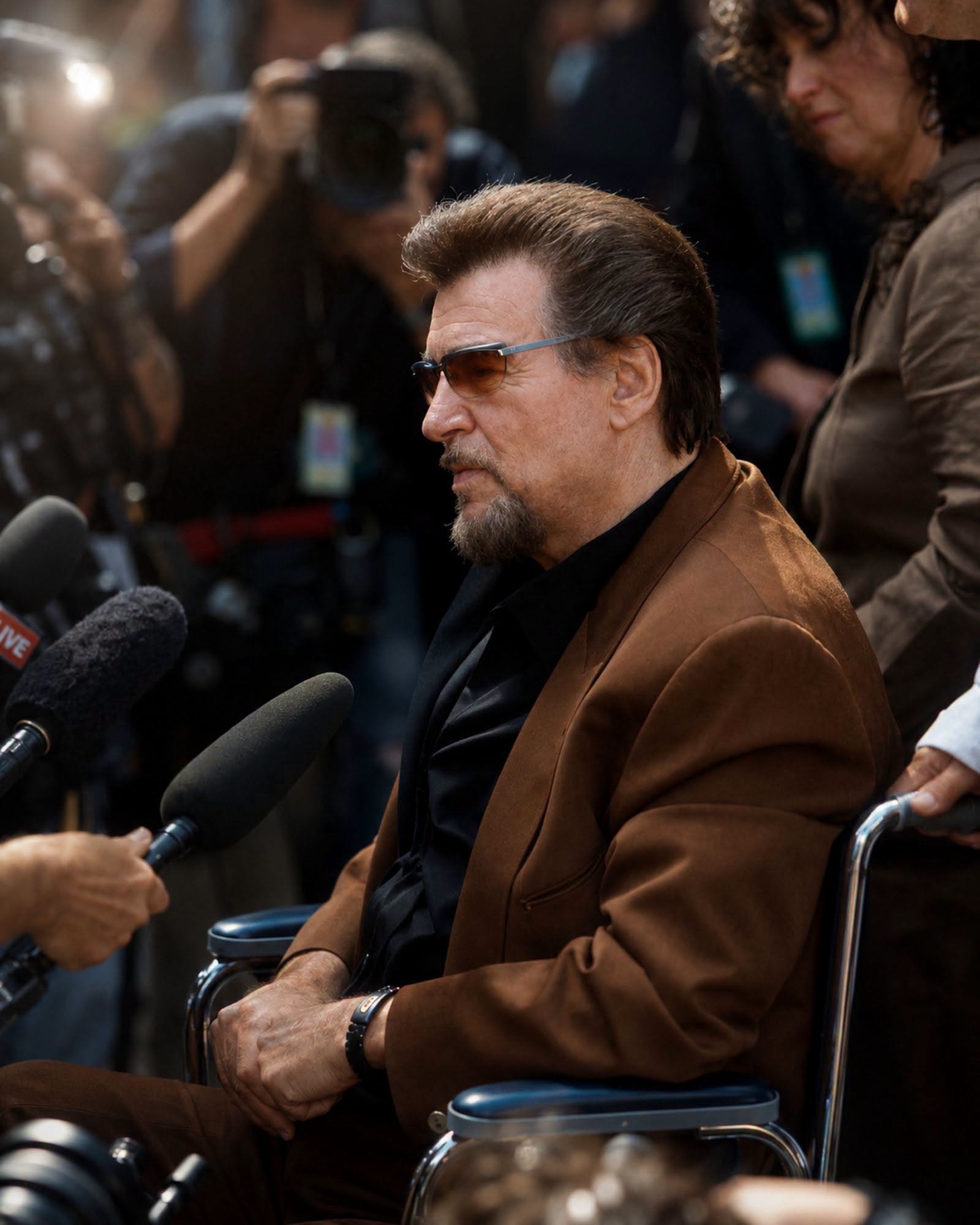
Then came October 4, 2001, when the Country Music Hall of Fame inducted its class of 2001 and Waylon Jennings was officially included. He did not attend. Instead, his son Buddy accepted the honor for him. That decision carried the kind of quiet dignity Waylon Jennings often preferred over ceremony. It was not a performance. It was a family moment, and that was enough.
“I let one of my sons go there and accept it. I think it meant something to my kids, and that’s enough.”
By then, Waylon Jennings was already living with serious health problems and using a wheelchair. In February 2002, he died in Arizona at age 64. The date was February 13, 2002, only months after the Hall of Fame ceremony.
The empty chair at that induction was not an insult. It was a final, quiet statement from a man who had never needed to stand in the center of the room to be heard. Waylon Jennings had spent his life proving that resistance can become legacy. In the end, the honor came, the applause came, and the chair stayed empty. Somehow, that felt exactly right.