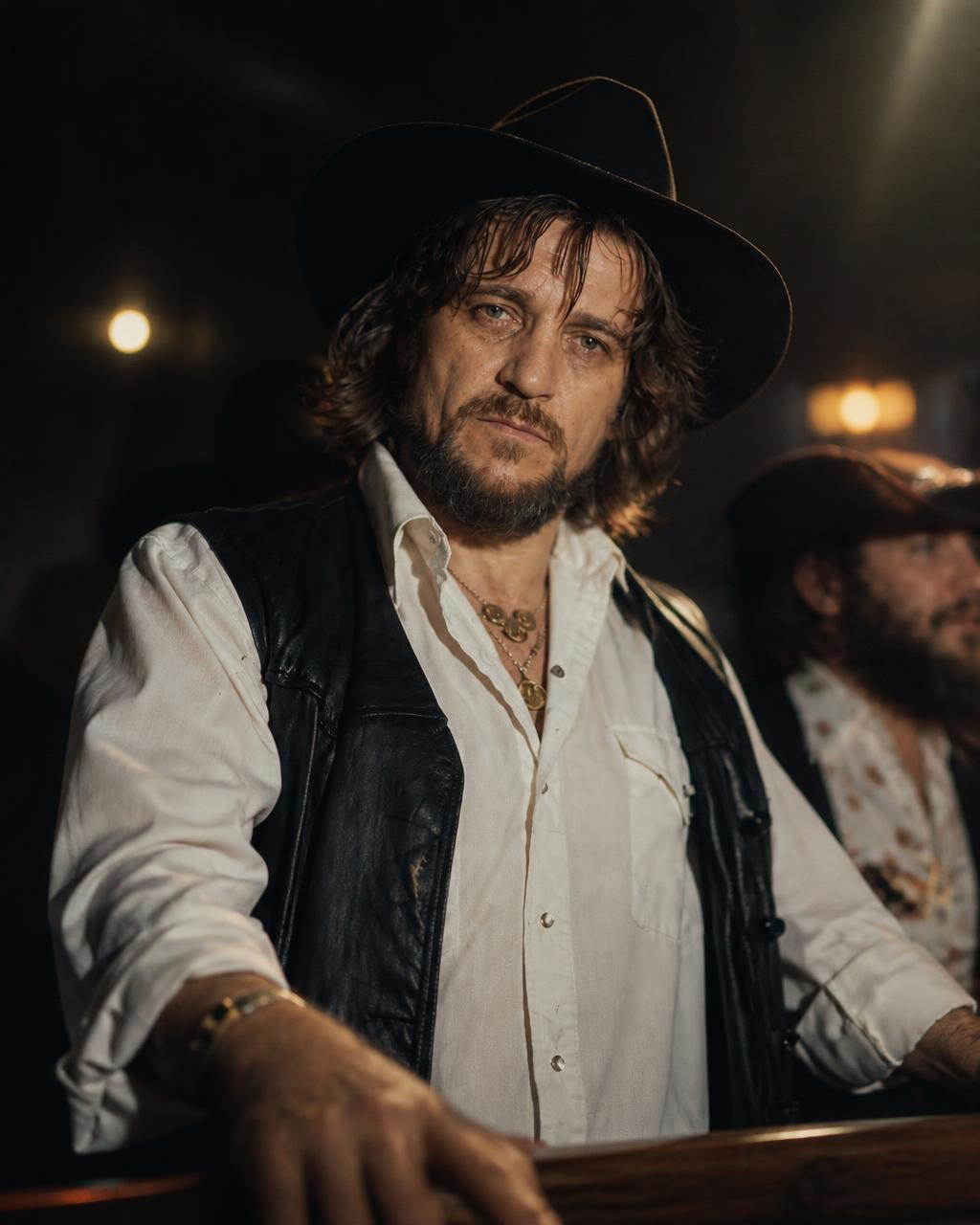
The Most Dangerous Voice Country Music Ever Loved
Waylon Jennings did not sing like a man trying to win approval. He sang like a man who had already made peace with the consequences. His baritone sat low, rough-edged, and unhurried, and somehow that was exactly the point. He did not decorate a lyric. He let it land.
In an era when Nashville often polished country music until it gleamed, Waylon Jennings pushed in the opposite direction. He wanted his own band, his own sound, and more control over how his records were made. That fight mattered. By the early 1970s, he had forced open a space for a harder, freer style that helped define outlaw country, a movement that prized grit over gloss and instinct over rules.
A Voice That Refused to Hurry
What made Waylon Jennings unforgettable was not just the tone of his voice, but the attitude inside it. He often seemed half a step behind the beat, as if he were leaning back in a chair while the band stayed alert around him. The effect was magnetic. He did not sound like he was performing for you. He sounded like he was telling you something he had lived through already.
That confidence gave his songs a strange kind of danger. Even when the lyrics were tender, there was steel underneath them. Even when the melody was simple, the delivery carried a weight that made every line feel lived-in. Country music had plenty of great singers, but Waylon Jennings made restraint sound rebellious.
The Outlaw Breakthrough
By 1976, that rebellion had become history. Wanted! The Outlaws, the compilation featuring Waylon Jennings, Willie Nelson, Jessi Colter, and Tompall Glaser, became the first country album to sell a million copies and earn platinum certification. It was more than a commercial milestone. It was proof that listeners were ready for a country sound that felt raw, direct, and unapologetic.
Waylon Jennings had already lived enough life by then to make that music believable. He had known loss early, including the haunting memory of giving up his seat on a plane connected to Buddy Holly’s band before that plane crashed in 1959. That kind of burden does not leave a person lightly. It can settle into the voice. In Waylon Jennings, it did.
What He Left Behind
Waylon Jennings continued recording and performing for years, but his legend was already sealed. He was the singer who refused to be sanded down. He was the artist who helped country music make room for rougher edges, louder honesty, and a little more truth in the delivery.
Waylon Jennings did not sound dangerous because he shouted. He sounded dangerous because he meant it.
Waylon Jennings died on February 13, 2002, at the age of 64. The music remained, and so did the feeling he left in it: steady, weathered, and impossible to fake. That is why his voice still matters. It carried not just songs, but a life.