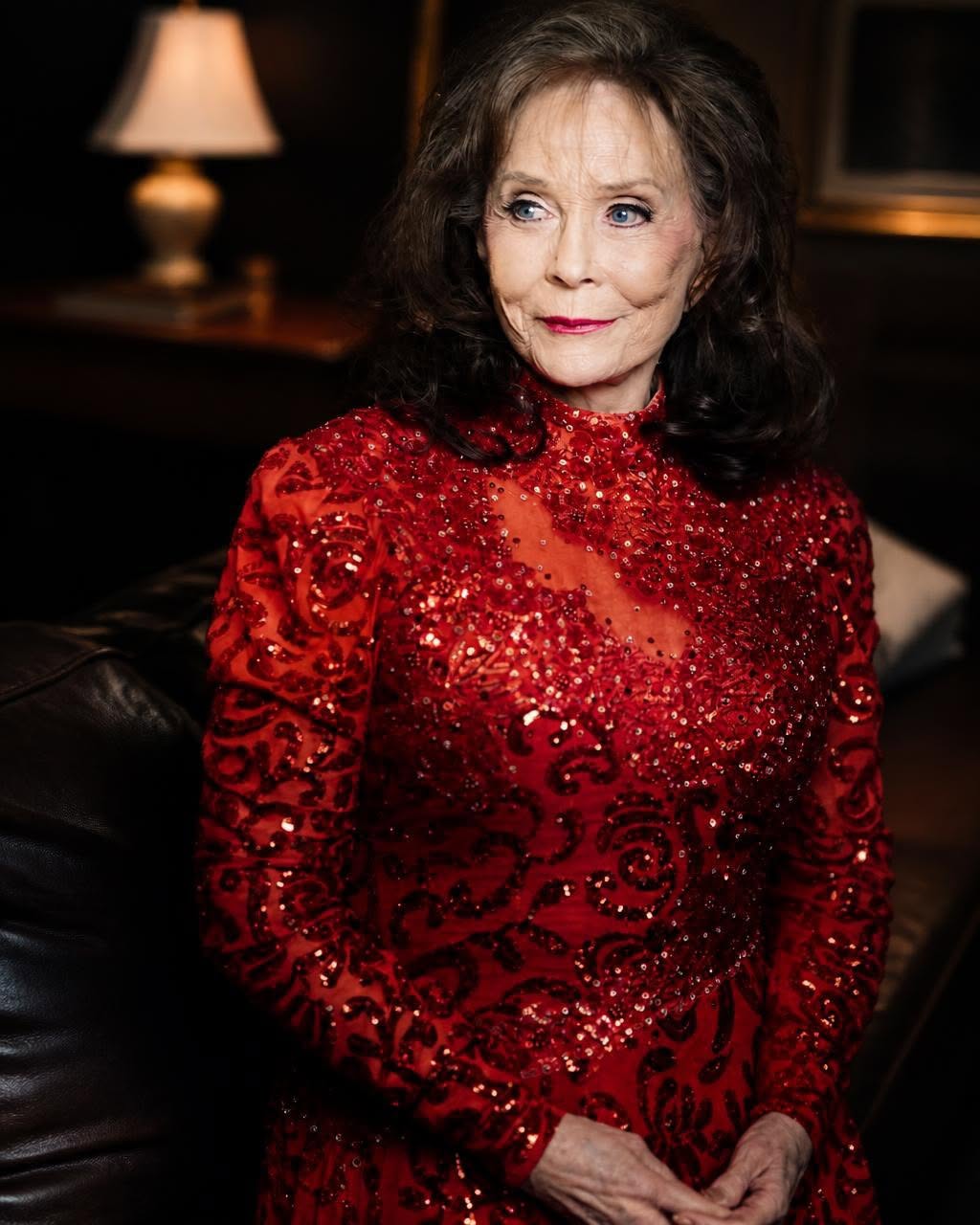
Loretta Lynn and the House She Turned Into a Home
On October 4, 2022, Loretta Lynn died in her sleep at her ranch in Hurricane Mills, Tennessee, ending a life that had already become part of American music history. She was 90. The woman the world knew as a country legend had begun as Loretta Webb, born in Butcher Hollow, Kentucky, in 1932, the second of eight children in a coal miner’s family. Her story was never polished at the edges. It was built from work, loss, and the stubborn will to keep singing anyway.
When Loretta Lynn was still a teenager, she married Oliver Lynn and moved with him to Washington State, where he worked in the timber industry. He bought her a guitar, and Loretta Lynn taught herself to play it. That guitar became more than an instrument. It became a doorway. In a house already crowded with children, Loretta Lynn began shaping the songs that would later make her one of country music’s most fearless voices.
A Voice That Refused to Stay Quiet
By the time Loretta Lynn made her first records, she was no longer just telling her own story. She was telling the story of women who had been asked to stay silent for too long. Loretta Lynn sang about marriage, drinking, double standards, divorce, and the hard choices that came with family life. Some radio stations refused to play her songs. Some listeners were offended. But the resistance only seemed to prove that Loretta Lynn had found the subjects people were most afraid to discuss.
In 1972, Loretta Lynn made history as the first woman to win the Country Music Association’s Entertainer of the Year award. That honor mattered because it recognized not just fame, but force. Loretta Lynn had become a star by being unafraid to sound like herself.
When “The Pill” Shook the Airwaves
One of Loretta Lynn’s most talked-about songs was “The Pill,” released in 1975. The song faced radio bans in several places, yet it still crossed over into the pop charts and became her highest-charting pop record. The reaction showed how unusual it was for a country singer to speak so directly about birth control and women’s control over their own lives. Loretta Lynn did not write songs to be harmless. She wrote them to be heard.
Loretta Lynn once made the personal political simply by singing about real life.
Her home life carried its own weight. Loretta Lynn and Oliver Lynn had six children, and grief touched the family deeply over the years. By the time Loretta Lynn died, she had buried two of her children and had also lost Oliver Lynn, who died in 1996. Still, she kept the ranch in Hurricane Mills, a place that became both sanctuary and symbol. In a powerful way, Loretta Lynn had bought her world outright and made it her own.
The Final Chapter, and the Lasting Echo
What makes Loretta Lynn unforgettable is not only that she rose from poverty to fame. It is that she never let fame erase where she came from. The mountain girl from Kentucky stayed visible in the woman who filled arenas, challenged radio programmers, and helped widen country music for the women who came after her. Even the songs that were banned became part of her legacy.
And then there was the song that never needed defending: “You Ain’t Woman Enough,” “Coal Miner’s Daughter,” and the address that became its own kind of anthem, the simple, unforgettable line that pointed listeners straight to Hurricane Mills. Loretta Lynn had turned a life into music, and music into memory. Long after the final note faded, the story remained standing.