Waylon Jennings, Sitting Down at the Ryman and Still Owning the Room
By the middle of 1999, the people around Waylon Jennings knew he was living with serious health problems. He did not make a scene about it. He kept moving, kept writing, and kept booking work the way he always had: with determination, with pride, and with a stubborn refusal to disappear.
What Waylon Jennings booked next became one of the most memorable live moments of his final years. He put together the biggest band he had ever fronted, reaching back to old friends and trusted players. Richie Albright, his longtime drummer and steady right hand, came back into the circle. Robby Turner joined on steel guitar, and Reggie Young, one of country music’s great session guitarists, was added to the mix. Then Waylon Jennings did something he had never done before: he hired a horn section. Thirteen musicians in all, gathered under the name Waymore Blues Band. Waylon Jennings said it was the band he had always wanted.
A Night at the Ryman
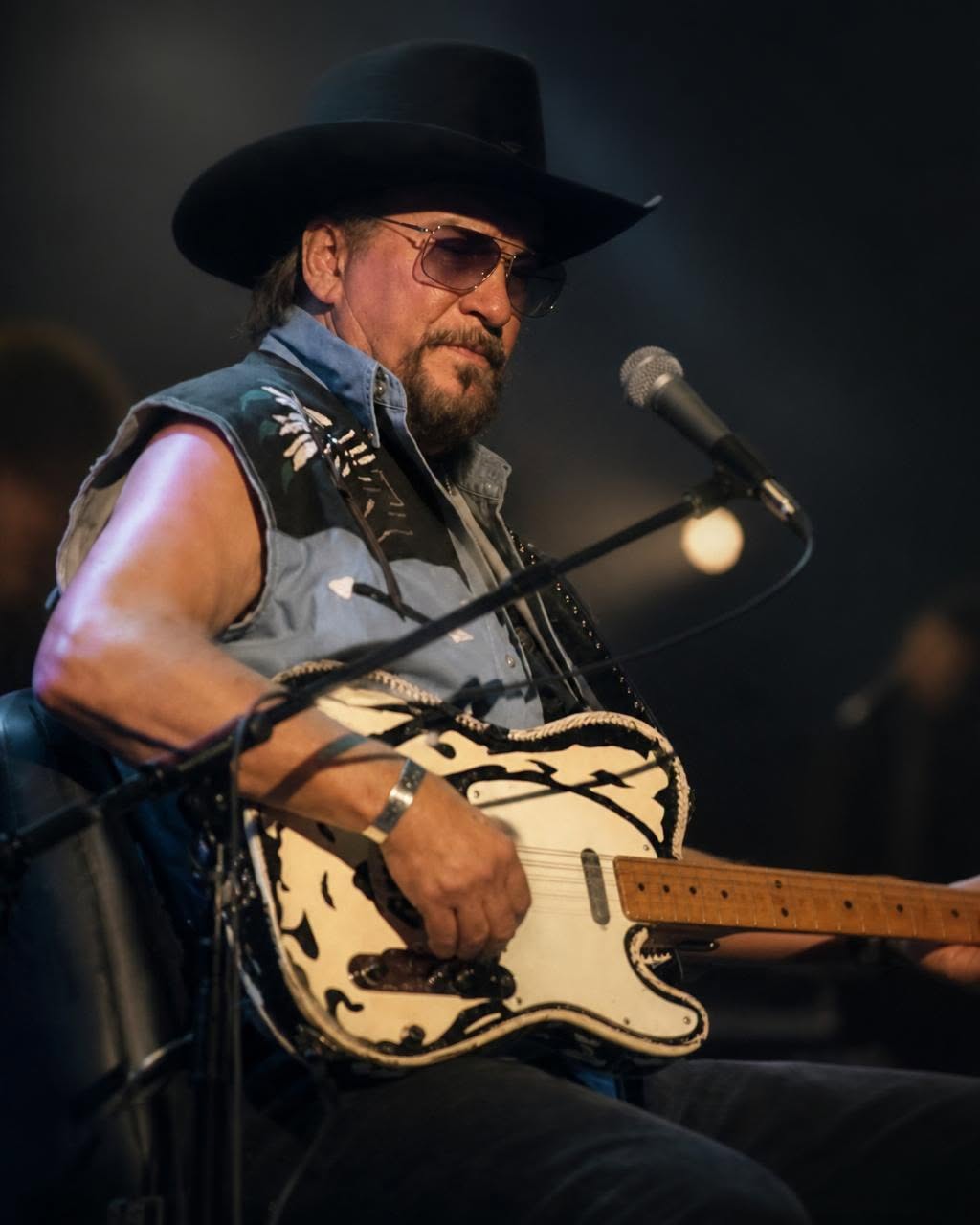
On January 5 and 6, 2000, Waylon Jennings and the Waymore Blues Band played Nashville’s Ryman Auditorium. It was not billed as a farewell, and that mattered. Waylon Jennings was too ill to stand, so he performed sitting down. Even so, the performance carried the force of a man who still knew exactly who he was.
Waylon Jennings opened with “Never Say Die,” a song he wrote in the final stretch of his life. The title alone felt like a message. It was not an act of denial. It was a statement of character.
Jessi Colter came out for four songs, bringing warmth and history to the stage. John Anderson, Travis Tritt, and Montgomery Gentry each joined in as well, turning the show into a gathering of generations. The room could see that Waylon Jennings was not at full strength, but the music kept its own dignity. The audience came for a legend, and Waylon Jennings gave them one.
Humor in the Middle of Hard Truth
There was pain behind the scenes, but Waylon Jennings still found room for humor. At one point, he joked with the women in the audience not to worry about him. His line was raw, funny, and unmistakably Waylon Jennings: once you’ve had a cripple, you never go back. It was the kind of joke that could only land because it came from a man willing to laugh at himself first.
That balance of toughness and wit had always been part of Waylon Jennings’ appeal. He never pretended to be fragile, and he never asked for pity. Even then, sitting in a chair under the lights, he sounded like a man still in charge of the story.
The Lasting Image
Waylon Jennings died in February 2002, but those Ryman shows remain one of the clearest final portraits of him: a singer facing decline without surrendering his voice, his humor, or his bandleader’s instinct. The music was big. The room was full. And Waylon Jennings, even sitting down, still looked like someone who had decided to finish on his own terms.