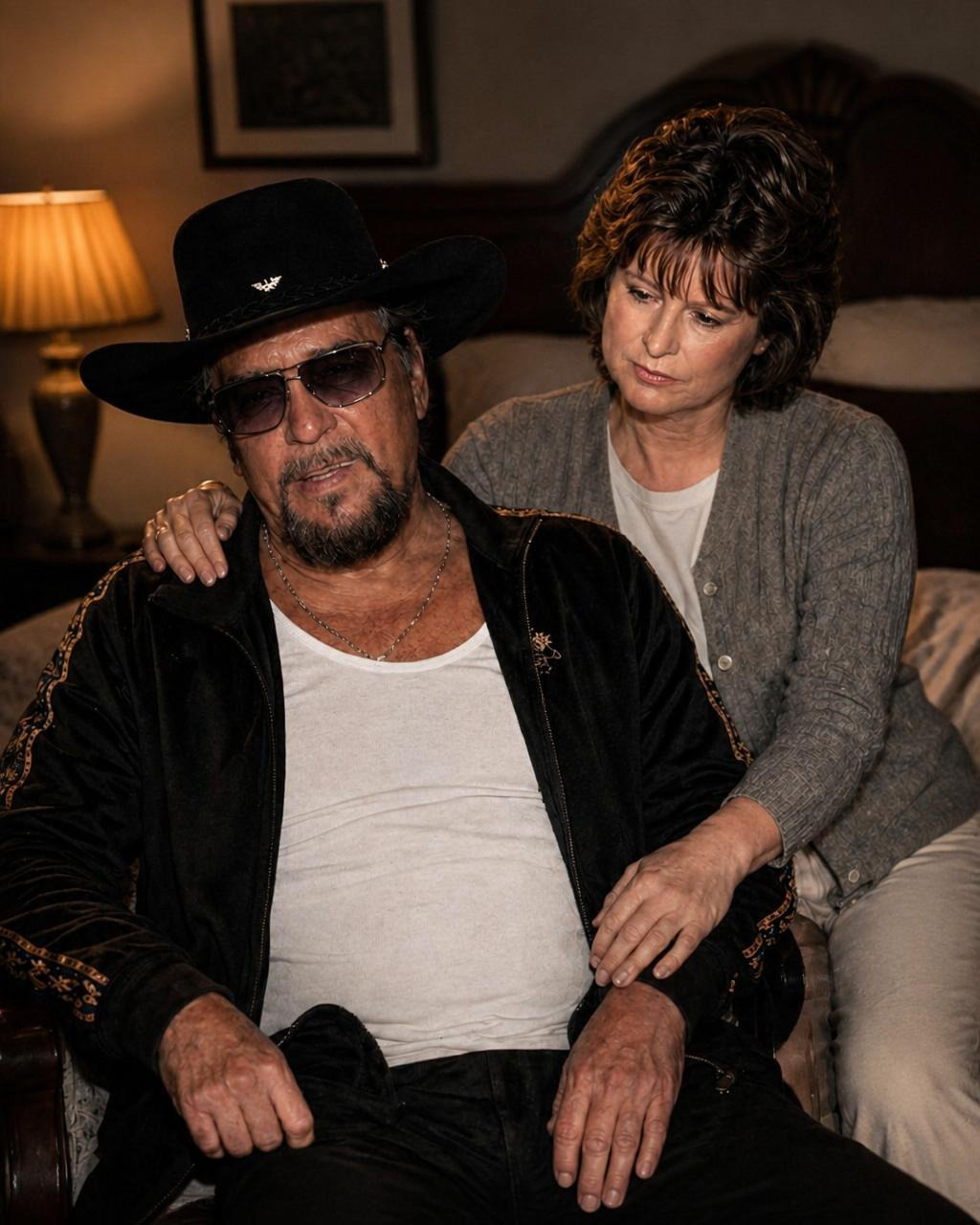
Waylon Jennings: The Morning the Outlaw Fell Quiet
On the morning of February 13, 2002, Waylon Jennings did not wake up in a house in Chandler, Arizona. He was 64 years old. Jessi Colter had been his wife for 33 years, and by then the family had already lived through enough hard chapters to know that silence could mean something serious. Just a few months earlier, in December 2001, doctors had taken his left foot. In October 2001, country music had honored him in Nashville with a place in the Country Music Hall of Fame, but Waylon Jennings did not travel there to see his name on the wall.
His life had always moved between struggle and reinvention. Waylon Jennings was born on June 15, 1937, near Littlefield, Texas, on someone else’s farm. By the age of 12, he was already working at a local radio station. He quit school at 16. That was the first sign of a man who did not fit neatly into any plan handed to him.
In 1958, Buddy Holly produced Waylon Jennings’s first single, “Jole Blon.” Soon after, Waylon Jennings was playing bass for Buddy Holly, still young and still working for another man’s dream. That chapter could have defined him forever, but it did not. After Buddy Holly’s death, Waylon Jennings kept moving, first through Texas and later into Nashville, where he found both opportunity and frustration.
Fighting for a voice
In 1965, RCA signed Waylon Jennings, and Nashville tried to shape him from the outside in. The songs, the session players, the tempos, the arrangements — nearly every part of the machine told him what country music was supposed to be. For years, Waylon Jennings pushed against that system. He even shared an apartment in Nashville with Johnny Cash, another man who understood the pressure of being boxed in by the business.
Then came the turning point. In 1972, Waylon Jennings renegotiated his contract and asked for something that changed everything: the right to choose. He wanted his own band, his own songs, and his own way of recording. That demand became the foundation of the outlaw era.
The years that followed
What came next was not just success, but identity. Albums like Honky Tonk Heroes helped define a new sound. Wanted! The Outlaws became a landmark release and the first country album to sell a million copies. Then came “Luckenbach, Texas (Back to the Basics of Love),” and the wider audience that came with it. Waylon Jennings also became a familiar television voice, narrating The Dukes of Hazzard for years, a role that brought him into family living rooms far from the honky-tonk world that made him.
By 2001, the honors had started to catch up with the legend. In October of that year, Waylon Jennings was inducted into the Country Music Hall of Fame. But he did not attend. Health problems were taking their toll, and the man who had spent a lifetime pushing forward was forced to slow down.
A final, quiet ending
The story of Waylon Jennings is often told through rebellion, grit, and volume. Yet the ending was private. In Chandler, Arizona, on February 13, 2002, the music stopped. What remained was the long echo of a singer who refused to stay inside anyone else’s limits. Waylon Jennings did not just sing country music. He helped change what country music was allowed to be.