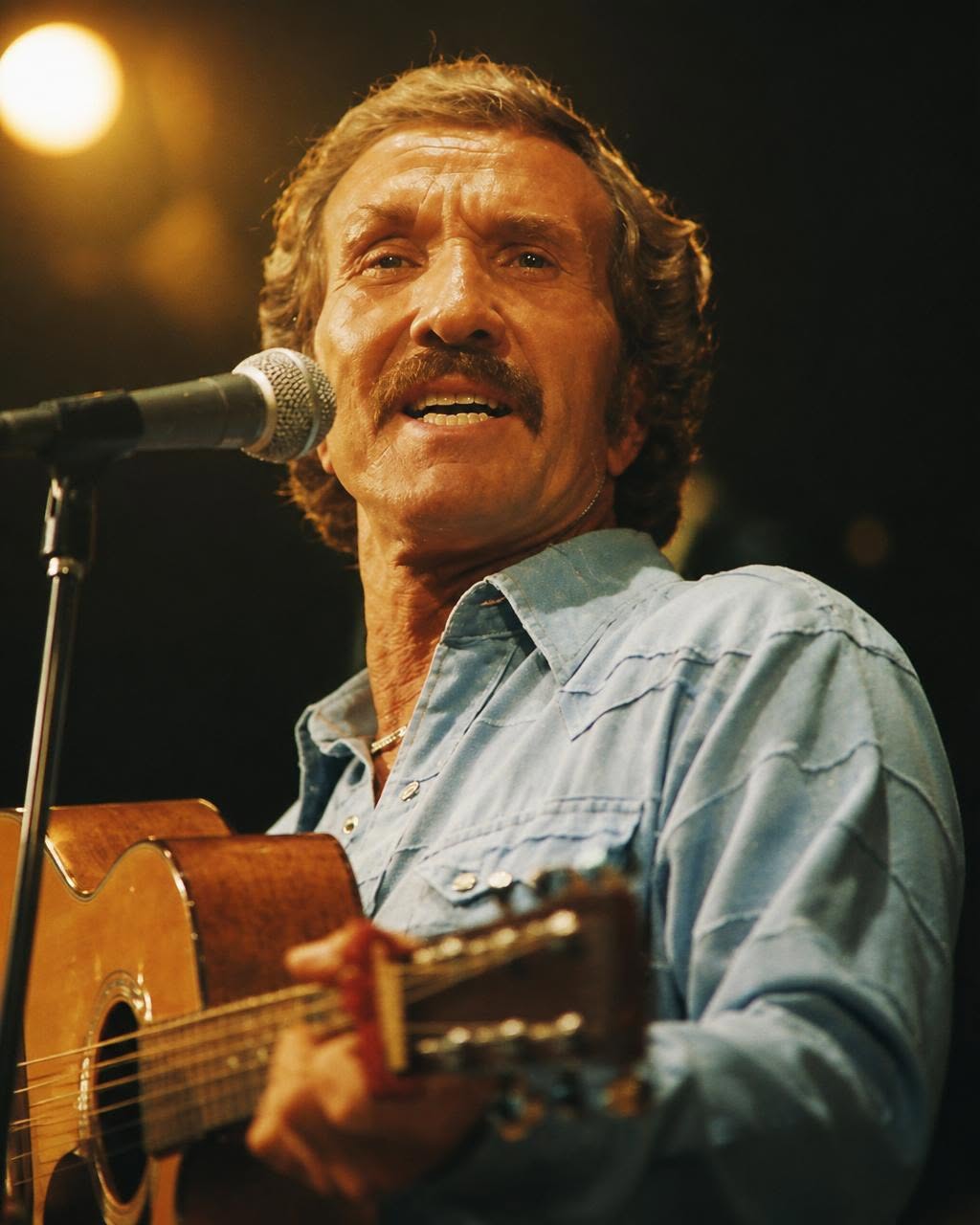
Marty Robbins: A Quiet Goodbye After a Life Loud With Songs
On a cold day in Nashville, Woodlawn Funeral Home became a place of deep affection and heavy silence. About 1,500 people came to say goodbye to Marty Robbins, and the number mattered because it showed just how widely his music had reached. The main chapel overflowed. Three smaller chapels filled too. People stood in the hallway, waiting for a chance to honor a man whose voice had carried them through love, loss, travel, and memory.
Just two months earlier, Nashville had welcomed Marty Robbins into the Country Music Hall of Fame. That honor arrived late in his life, but not too late to matter. He was still working, still writing, still performing in the spirit that had defined him for decades. In a career that stretched across 29 years, Marty Robbins recorded 18 No. 1 hits, placed 43 songs in the Top 10, and wrote more than 500 songs. That kind of output does not happen by accident. It comes from discipline, instinct, and an unusual gift for turning ordinary feeling into something people can carry with them.
A room full of legends
The funeral brought together many of the people who had helped shape country music. Johnny and June Carter Cash were there. So were Eddy Arnold, Roy Acuff, Charley Pride, Porter Wagoner, Ricky Skaggs, and Little Jimmy Dickens, the man who had discovered Marty Robbins nearly 30 years earlier. Their presence turned the service into more than a farewell. It felt like a final gathering of an entire era.
Reverend W.C. Lankford gave the only eulogy. He said the doctors had done an awfully good job of mending Marty Robbins’ heart — then turned the thought around and said Marty Robbins himself had mended thousands of broken hearts each year through songs that touched the very soul of America.
The tribute was simple, and that simplicity gave it power. Brenda Lee sang “One Day at a Time.” A young woman from Marty Robbins’ church sang a medley of hymns. Nothing felt overstated. Nothing needed to be. The music, the faces, and the silence said enough.
The final chapter stayed private
After the service, Marty Robbins was buried privately in the hills of middle Tennessee. No crowds followed. No cameras stayed behind. The contrast was striking: the singer who had filled arenas and written songs that traveled across generations was laid to rest quietly, out of sight. It was a final act of dignity for a man whose public life had been so large and whose personal ending was kept small and tender.
Those last eight weeks after the Hall of Fame induction might have been precious to him. He spent them working, which says something important about Marty Robbins. Recognition did not slow him down. It gave him one more reason to keep going. For fans, that detail is moving because it captures the whole shape of his life: not just fame, but effort; not just success, but devotion.
Marty Robbins left behind more than records. He left a body of work that made people feel understood. That is why so many came to Woodlawn Funeral Home, and why so many still remember him now. Some artists entertain a generation. A few help carry its heart. Marty Robbins did both.