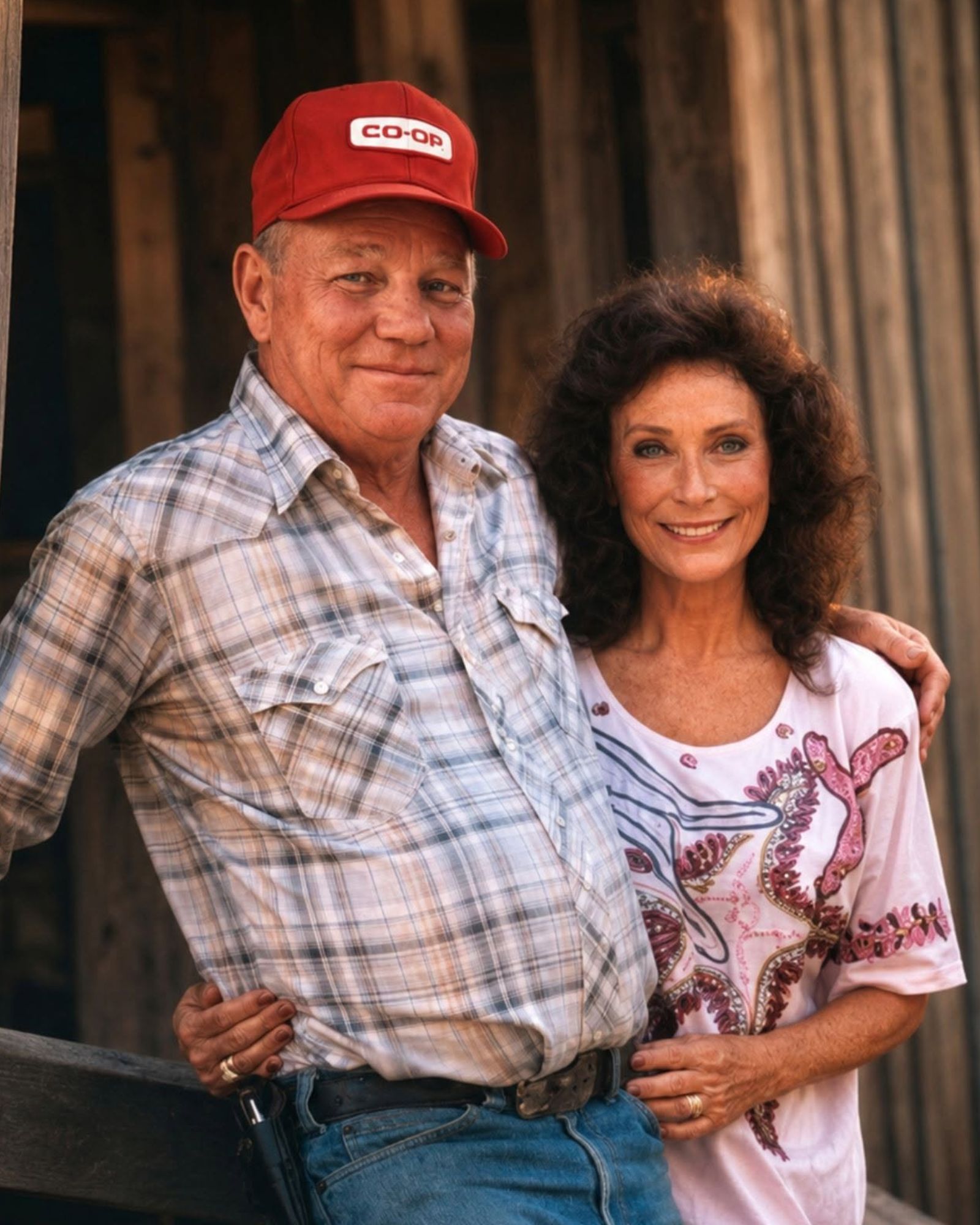
She Was 64 When She Buried the Man She Had Been Writing About for Thirty Years
Before Loretta Lynn became a legend, she was a young wife with a voice, a stubborn streak, and a husband who believed enough in her to buy her first guitar. Oliver “Doolittle” Lynn also believed in pushing her forward, sometimes harder than she wanted, and the road he helped open came with pain, jealousy, and a lifetime of complicated memories.
He bought that guitar for seventeen dollars, encouraged her to sing in public, and drove her from station to station while her records rode in the trunk. In the early years of Loretta Lynn’s career, Doolittle Lynn was not just a husband; he was the man standing close to the music, helping to build the career that would make her famous. But he was also a drinker, and he was not faithful. Loretta Lynn never pretended the marriage was simple.
Turning Hurt Into Songs
What made Loretta Lynn different was not that she suffered. It was that she wrote. Again and again, she turned private heartbreak into songs that sounded plainspoken and true. “Don’t Come Home A-Drinkin’ (With Lovin’ on Your Mind),” “You Ain’t Woman Enough,” and “Fist City” all carried pieces of her marriage inside them. The songs were sharp, funny, angry, and alive in a way that made listeners feel she was telling the truth from the middle of her own kitchen.
Loretta Lynn later said that singing those songs onstage was how she told him. She said it eased her heart just to have said it.
That is the part of the story that stays with people. Loretta Lynn did not simply leave or forgive in neat, easy terms. She stayed for forty-eight years. She raised six children. She built a life out of loyalty, work, and endurance, even when the marriage was bruised by betrayal. Her art held both love and anger at the same time, and that honesty is part of why her music lasted.
The Last Goodbye
Oliver “Doolittle” Lynn died on August 22, 1996, at their place in Hurricane Mills, Tennessee. Loretta Lynn was 64. By then, she had already spent decades writing about the marriage that shaped her. The songs were not just confessions; they were her way of preserving the truth as she lived it.
Eight years later, she wrote one more song about him: “Miss Being Mrs.” It was a quiet reminder that grief is rarely clean. Even after everything, there can still be tenderness. Even after disappointment, a person can miss the shape of a life that once felt like home.
That is why Loretta Lynn’s story still reaches people. It is not a perfect love story. It is something messier, older, and more human. A woman was given a guitar, a push toward the stage, and a marriage that gave her both inspiration and heartbreak. She turned all of it into country music, and by doing so, she made her private life part of the American songbook.