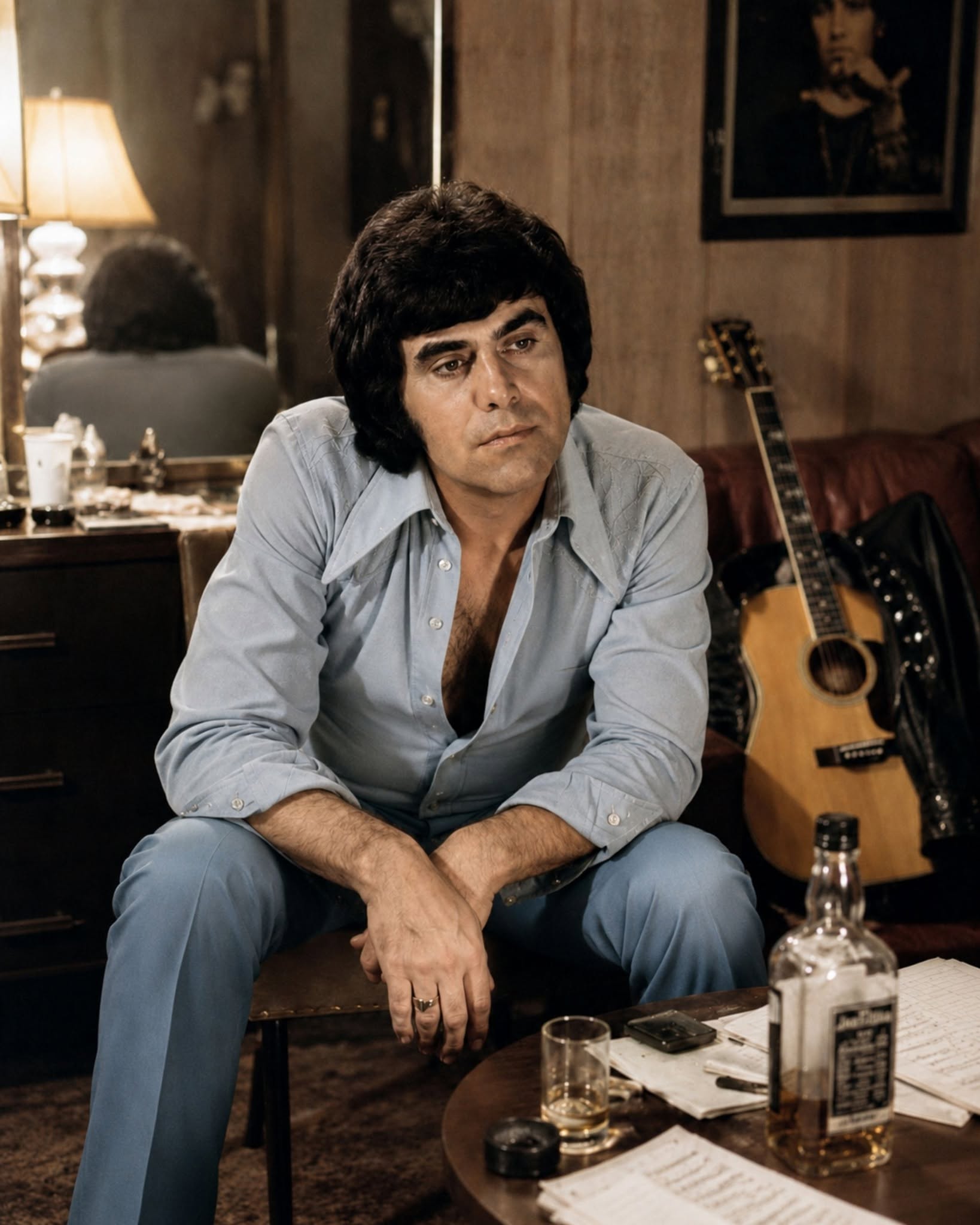
There are country music funerals, and then there are farewells that feel like the whole town has come to a stop. When Mel Street was laid to rest in Nashville, the gathering carried the weight of a life that had been heard by millions more after his death than during it. Friends, admirers, and fellow artists filled the room, and the tribute became its own kind of final stage.
Mel Street came from Grundy, Virginia, and worked ordinary jobs before Nashville ever treated him like a name worth remembering. He was an electrician. He worked as an auto body mechanic. Long before the spotlight, he was just a coal-country kid with a hard-earned voice and a stubborn sense that songs could tell the truth better than people sometimes did.
That voice eventually reached the national charts. “Borrowed Angel” became his signature hit, rising to No. 7 in 1972. In all, Mel Street landed 13 top-20 country hits, building a catalog that made him a favorite among listeners who loved plainspoken heartbreak and honky-tonk honesty. His records did not always arrive with the biggest publicity machine behind them, but they found their way into homes, jukeboxes, and late-night television moments that kept his name alive.
The respect he earned from other singers mattered just as much. George Jones, one of country music’s most admired voices, was among the people who honored Mel Street. At the funeral, George Jones stood before the mourners and sang “Amazing Grace.” It was a simple gesture, but also a deeply human one: an idol singing for the man who had spent years admiring him back.
Sometimes a career is measured not only by the hits a singer scores, but by the silence he leaves behind when he is gone.
Mel Street died in 1978 at 43, and the sadness around his name never fully faded. Yet his music kept traveling. A greatest-hits collection released later sold strongly through television advertising, a reminder that audiences were still discovering him, still catching up to what had already been there. That kind of afterlife in music is bittersweet. It means the work endured, but the artist was no longer here to hear the applause.
In the end, Mel Street’s story is not only about loss. It is about a singer who worked his way from small jobs to a lasting place in country music, and about a room in Nashville where the people who knew the cost of a song gathered to honor him. He never sold out that kind of room while he was alive. But in death, his voice filled it anyway.