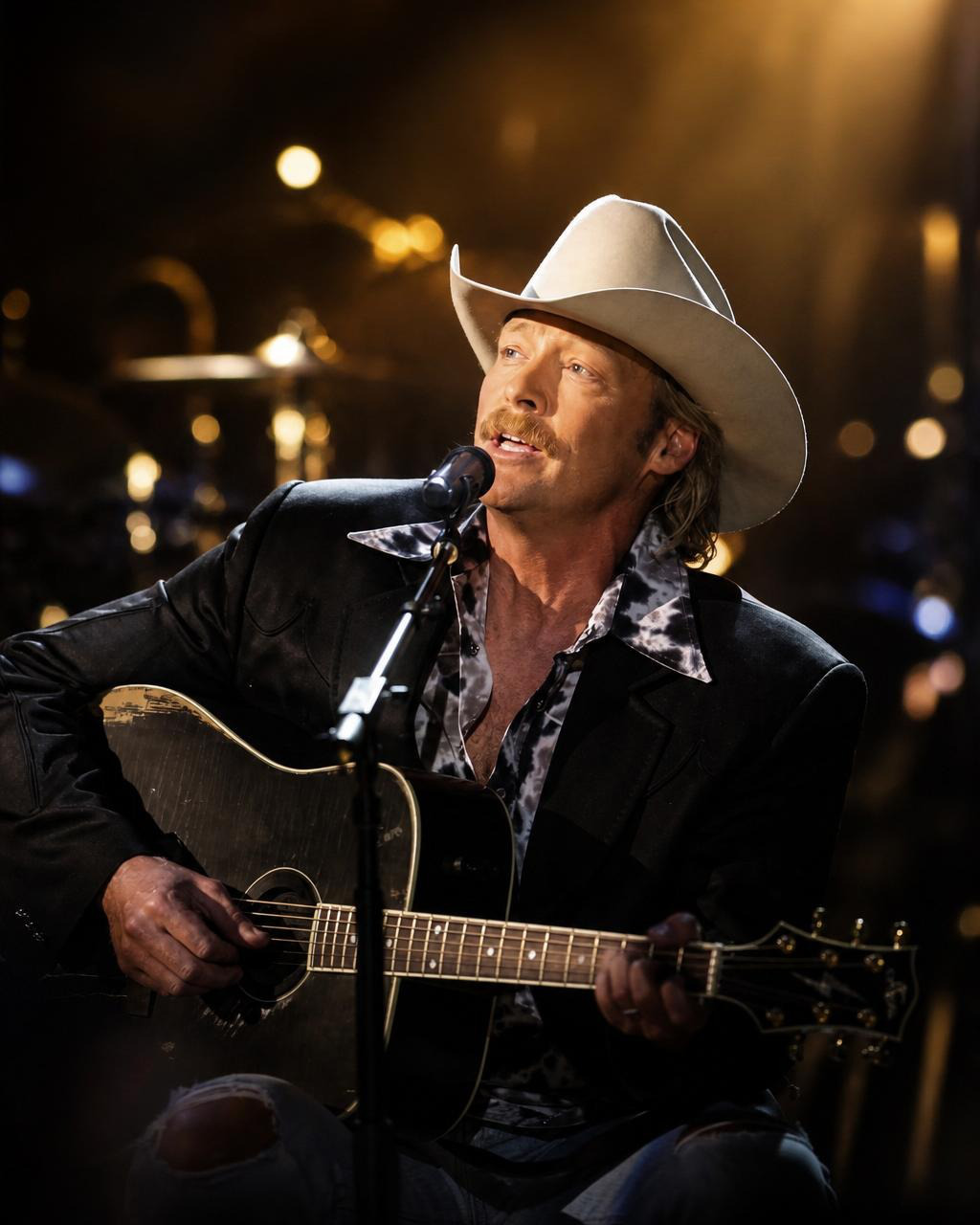
What Alan Jackson Did for George Jones at the 1999 CMA Awards
Some moments in country music are remembered because they were polished, and some are remembered because they felt raw enough to leave a mark. The 1999 CMA Awards gave fans one of the second kind. It began with George Jones, a legend whose song “Choices” had been nominated for Single of the Year, and it ended with Alan Jackson turning a regular stage performance into a public statement that country fans still talk about years later.
A song, a request, and a refusal
The CMA reportedly asked George Jones to trim “Choices” down to a shorter version for the broadcast. Jones declined and stayed home. For him, the issue was bigger than a performance slot. The song was personal, and it carried the weight of the life he had already lived. Asking him to cut it down felt, to many fans, like asking the message to shrink along with the runtime.
That is where Alan Jackson entered the story. Jackson was scheduled to sing “Pop a Top,” but halfway through the performance he stopped and switched into “Choices” instead. The crowd responded immediately. What had begun as a regular awards-show set became a tribute, a protest, and a defense of traditional country music all at once.
Sometimes a song says more when somebody is willing to risk the spotlight for it.
Why the moment hit so hard
Alan Jackson’s move landed because it did not look rehearsed for applause. It looked like a singer making a choice in real time. He sang the chorus, received a standing ovation, and then left the stage. He did not come back to his seat for the rest of the night. That detail mattered. It made the gesture feel less like a performance gimmick and more like a line drawn in front of the entire room.
People have argued about the intent ever since. Some saw a stunt. Others saw loyalty. But the scene is hard to reduce to a simple label because it carried both emotion and risk. Jackson was not just honoring George Jones; he was also challenging the idea that a legend’s song should be compressed to fit a broadcast clock.
George Jones hears it from home
George Jones watched the broadcast at home, and the reaction around the moment was deeply emotional. The tribute reportedly moved George Jones and Nancy Jones to tears. For them, it was not just about one night in Nashville. It was about being seen and defended by another artist who understood what George Jones represented to country music.
That is what gives the story its lasting power. The night was not a victory lap, and it was not a clean, corporate tribute. It was messy, human, and very country. One singer refused to shrink his song. Another singer answered by borrowing the moment and giving it back to the man who inspired it.
More than a stunt
Cynics may always call it a stunt, but the deeper truth is harder to dismiss. Alan Jackson used a live television moment to stand beside George Jones without apology. Whether people loved it, hated it, or argued about it later, the performance still worked because it came from conviction. In an era when awards-show moments can feel carefully manufactured, this one felt alive.
So what do you call it? Maybe you call it a protest. Maybe you call it a tribute. Maybe you call it one country legend refusing to let another be minimized. Whatever name fits best, the 1999 CMA moment remains unforgettable because Alan Jackson did what many people only wish they had the courage to do: he let the song speak, and then he walked away.