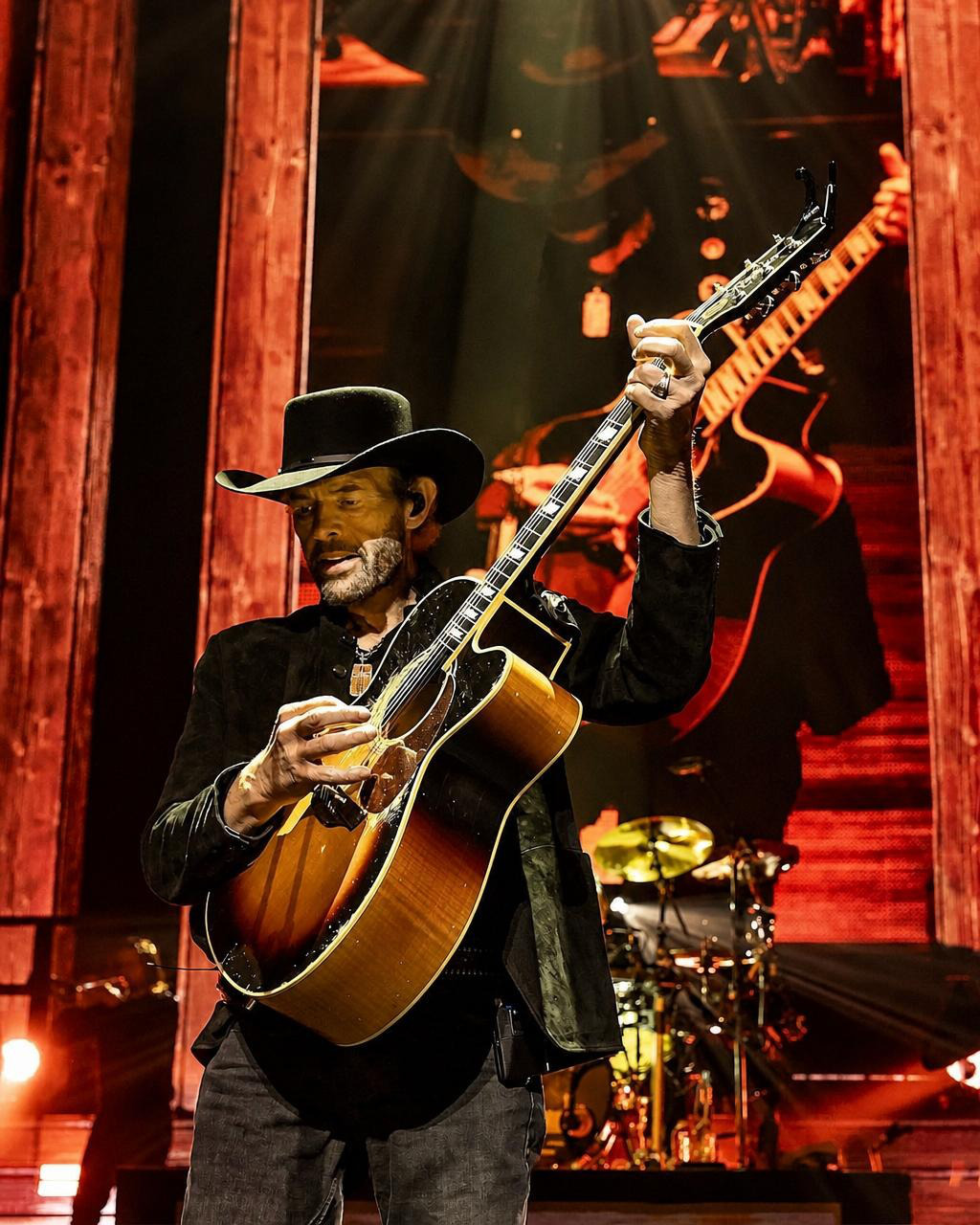
Behind Closed Doors: The Quiet Farewell to Toby Keith
They kept it small on purpose. No cameras. No public line outside the door. No spectacle, no stage, no victory lap. The family chose a private goodbye in Oklahoma for Toby Keith, the larger-than-life country star whose songs had already lived loudly in the hearts of millions. Those who came were the people who knew him best: family, bandmates, and crew, the kind of circle that only grows after years on the road and a lifetime of earned trust.
That quiet service carried its own kind of power. It matched the man it honored. Toby Keith was known for swagger, humor, and the kind of voice that could fill an arena, but the final tribute was simple and human. In lieu of flowers, the family asked for donations to OK Kids Korral, the Oklahoma City home he helped build for families whose children are fighting cancer. It was a fitting request for someone who had spent so much of his life turning success into something useful for others.
A Legacy Built Before the Last Song
Toby Keith’s career was a heavy-hitting run by any measure: 20 No. 1 hits, 11 USO tours, and about 200 shows for American troops overseas. Those numbers tell part of the story, but not all of it. They speak to reach, discipline, and a kind of American showmanship that made him one of country music’s defining figures. Yet behind the hits was a man who also knew how to give back in a way that mattered far beyond the spotlight.
OK Kids Korral was one of those gifts. It was built to give families a place to stay while their children received treatment, and Toby Keith was deeply connected to it. The contrast made his story even more striking: he was battling cancer himself while helping create a place of comfort for other families facing their hardest days.
The Timing No One Could Plan
Then came the part nobody could have scripted. The Country Music Hall of Fame ballot closed on February 2. Toby Keith died on February 5. On the morning of February 6, the Country Music Association woke to news of his death, and a few hours later the voting results were delivered. Toby Keith had been elected.
It was the kind of timing that lands like a punch to the chest. CMA chief executive Sarah Trahern said the news was heartbreaking because the organization had missed the chance to tell him. His daughter Krystal Keith said he knew the voting was underway, but he never received the call. The honor came, as honors sometimes do, one day too late.
The Reaction That Followed
Friends and fellow artists responded the way country music often does when one of its own is gone: with plain words, gratitude, and grief. Blake Shelton wrote that Toby Keith was the toughest man he ever met and that there would never be another Toby Keith. At an Oklahoma basketball game that same week, every drink was served in a red Solo cup, a small gesture that said a lot without needing a speech.
And in a deeper sense, the tribute was already in motion. Toby Keith had earned his place while he was still here. The Hall of Fame election did not create his legacy; it confirmed it. Country music simply learned the news too late to hand him the phone.
He earned it while he was still here.
That may be the most honest ending of all. A quiet funeral. A public legacy. And a final honor that arrived after the man himself had already left the room.