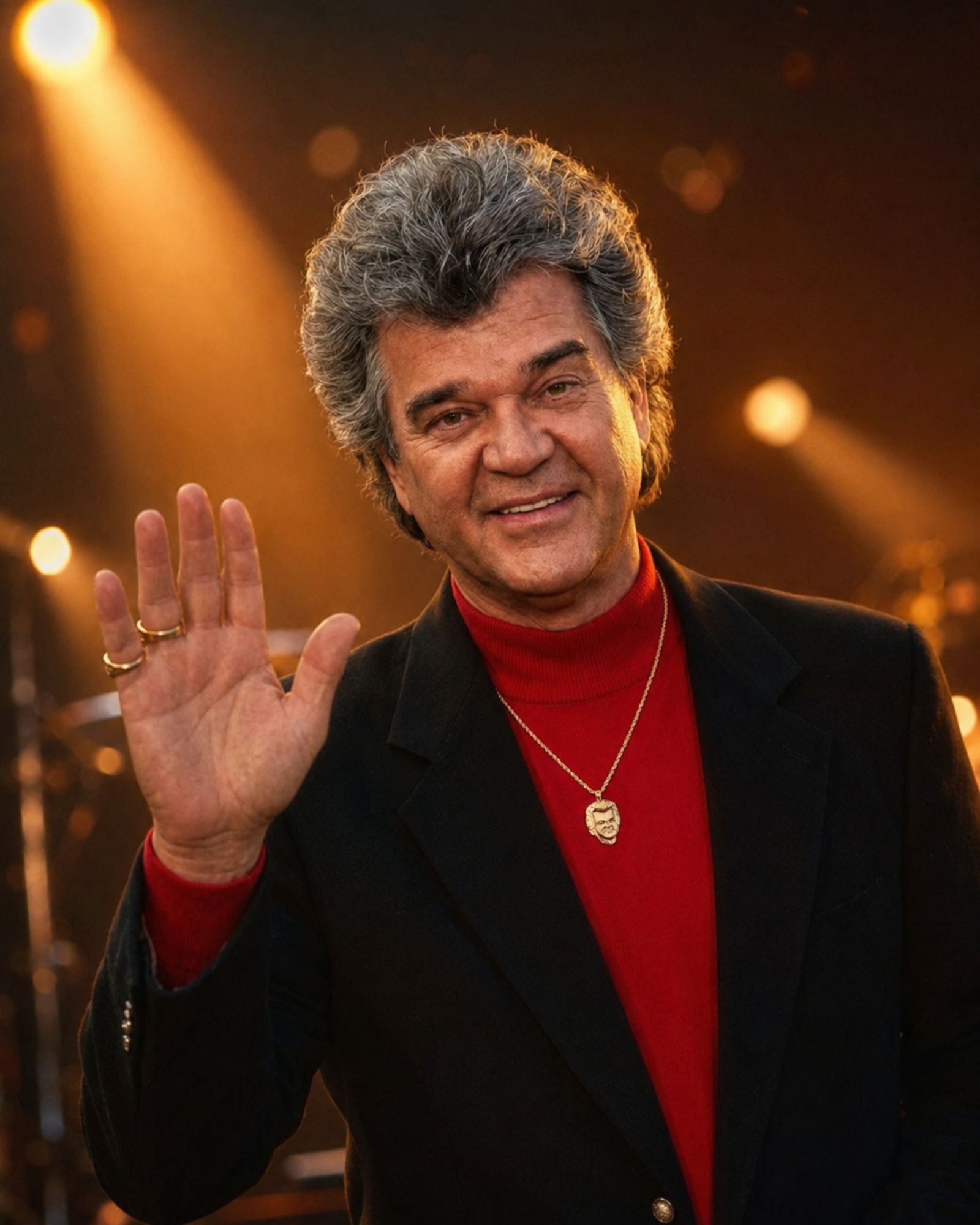
Conway Twitty’s Final Night in Branson: A Voice That Never Really Left
On June 4, 1993, Conway Twitty did what he had done for decades: he walked onto a stage and gave a crowd everything he had. In Branson, Missouri, the country star performed at the Jim Stafford Theatre before a packed audience, still carrying the kind of presence that made him one of the most beloved voices in country music. By the time the show ended, the fans had cheered, the lights had faded, and the night seemed to belong to the music alone.
What happened next turned a joyful evening into a heartbreaking final chapter. Conway Twitty was traveling by bus toward Nashville, where he was expected for the upcoming Fan Fair celebration, when he became seriously ill on the road near Springfield, Missouri. He suffered a medical emergency and was taken to Cox South Hospital. Conway Twitty died early on June 5, 1993, at age 59. The cause was reported as a ruptured abdominal aortic aneurysm. That sudden loss shocked the country music world and left fans trying to make sense of how quickly a life so full of sound could end in silence.
Part of what makes Conway Twitty’s story linger is that the ending felt so close to the beginning of the song. He did not fade away from the stage long before the end of his career. He was active, performing, and still meeting audiences face to face. That matters, because Conway Twitty was never just a name on a record sleeve. He was a performer who understood the emotional pull of a live crowd and the intimacy of a lyric sung at the right moment.
A career built on connection
Born Harold Lloyd Jenkins, Conway Twitty became one of the defining voices of country music after first finding success in pop and rockabilly. Over time, he built a career marked by hits, reinvention, and a deep respect for the audience. Songs like “Hello Darlin’,” “It’s Only Make Believe,” and “Louisiana Woman, Mississippi Man” helped shape his legacy, but so did the way he delivered them: direct, emotional, and unmistakably human.
His influence reached far beyond chart numbers. Conway Twitty helped bridge generations of listeners, and his music continued to live in jukeboxes, radio stations, and family memories long after his final show. For many fans, that is the enduring image: not the sudden loss on a highway, but the man on stage, singing one more time as if the night could last forever.
Conway Twitty’s final hours remind us how fragile life can be, and how lasting a voice can become.
More than three decades later, the story still carries weight because it is both tragic and strangely complete. Conway Twitty left the world the way he had spent so much of it — in motion, connected to an audience, and surrounded by music.